You are studying cells. A quiz asks: is a vacuole prokaryotic or eukaryotic? You freeze. Many students do.
The question looks easy, but the answer has a small twist. People search for “vacuole prokaryotic or eukaryotic” for a few reasons. They have homework. They have an exam. Or they read that some bacteria have “vacuole-like” parts and now feel lost.
Textbooks often say prokaryotes have no organelles. Yet some articles talk about bacterial “vacuoles.” So which is right?
This guide clears up the mess. You get the quick answer first. Then you learn where the word comes from, how to use it, what mistakes to avoid, and where you will see it in real life.
The words stay simple. By the end, you will know the answer and why it is true. You will also know the one exception that shows up in advanced classes.
Vacuole Prokaryotic or Eukaryotic Quick Answer
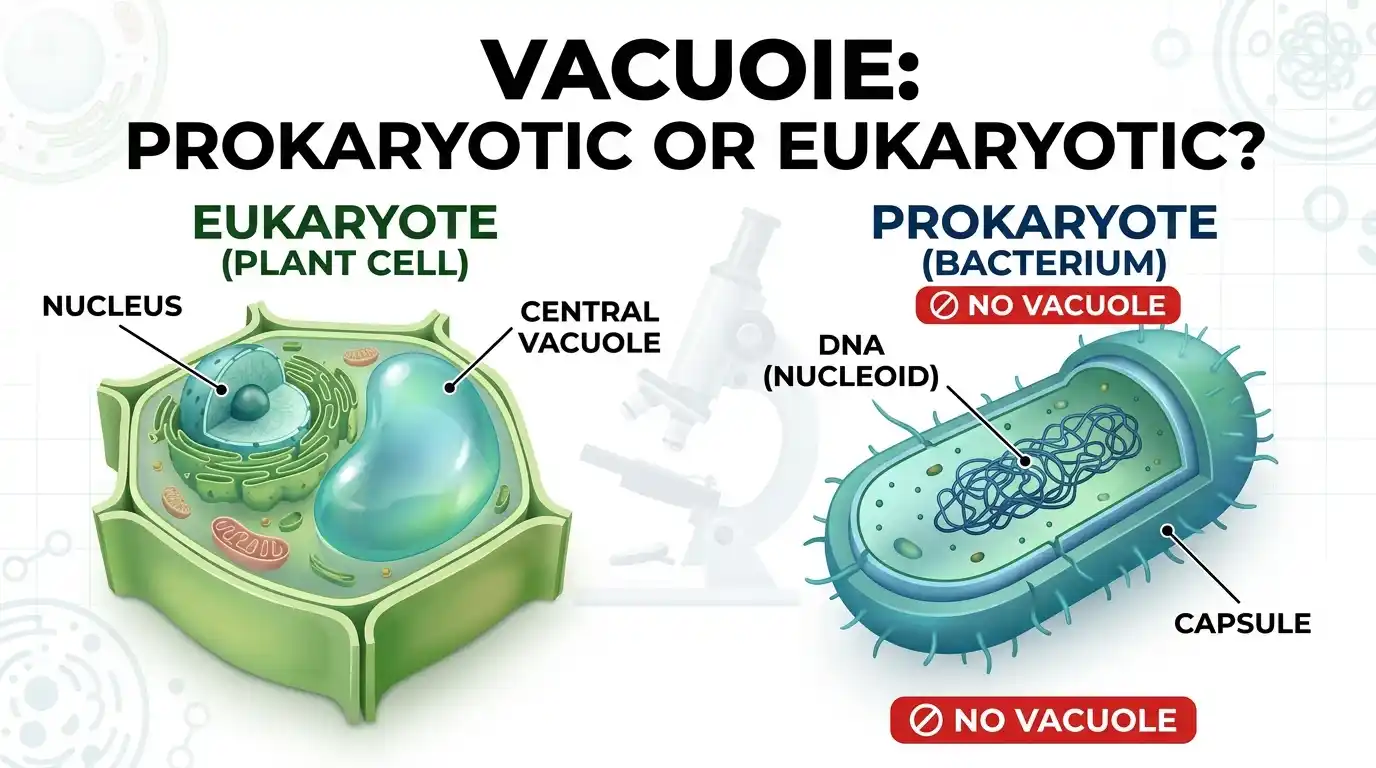
A vacuole is eukaryotic.
Vacuoles are found in eukaryotic cells. These are cells with a nucleus and other membrane-bound parts. Prokaryotic cells, like bacteria and archaea, do not have true vacuoles.
Here are some examples:
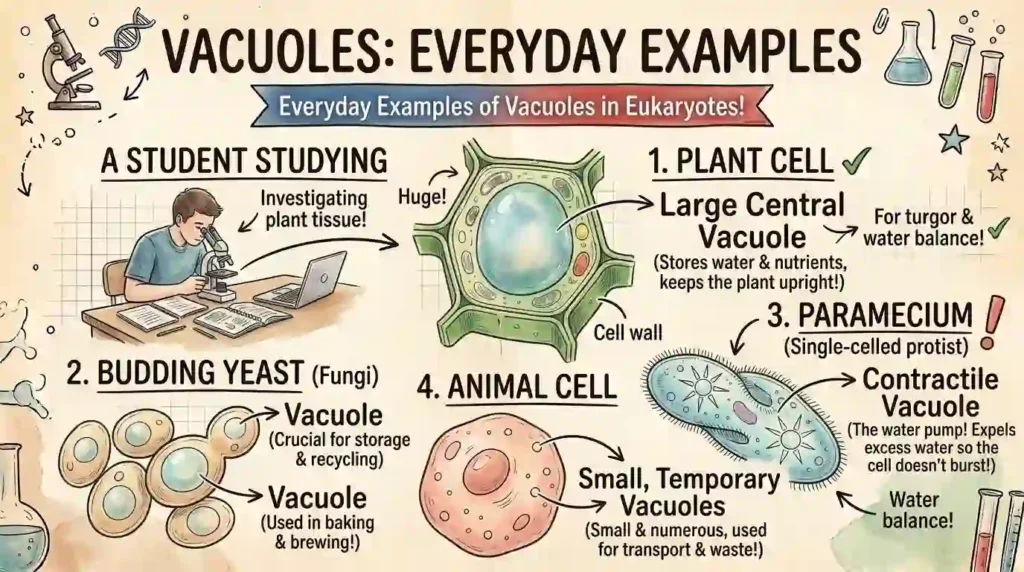
- Plant cells have a large central vacuole. It stores water and helps the cell stay firm.
- Fungal cells, like yeast, have vacuoles that store nutrients and break down waste.
- Protists, like Paramecium, have contractile vacuoles that pump out extra water.
- Animal cells have small vacuoles that store and move material.
The one exception: a few giant bacteria, such as Thiomargarita, have a large membrane-bound space inside. It looks like a vacuole and stores nitrate. Scientists call it “vacuole-like.” Other bacteria and archaea make gas vesicles. These are made of protein, not a membrane. They help cells float, but they are not true vacuoles.
For tests, the answer is simple: eukaryotic.
The Origin of Vacuole
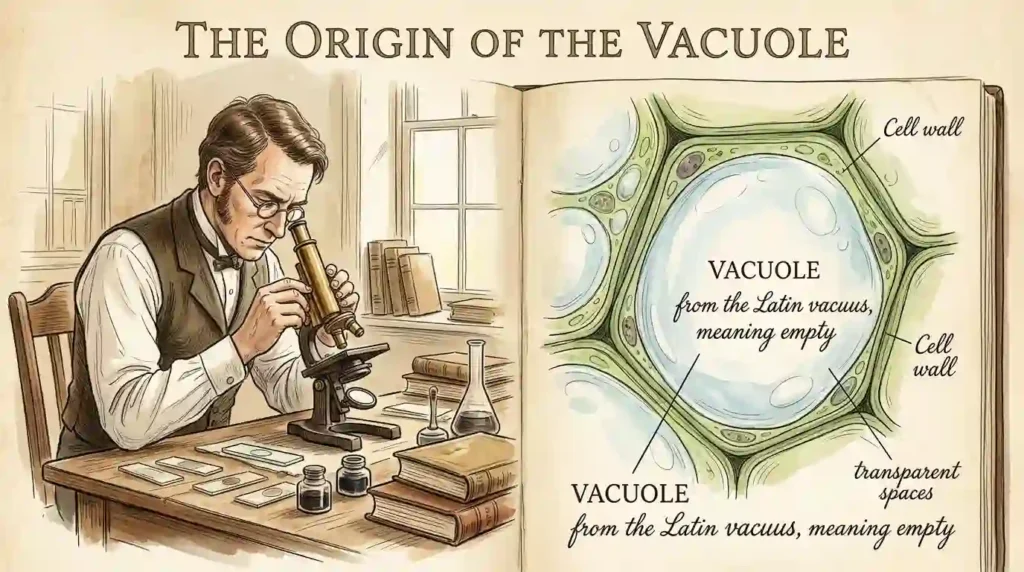
The word comes from the Latin vacuus, which means “empty.” French scientists made it into vacuole, meaning “little empty space.”
In the 1800s, the French biologist Félix Dujardin looked at tiny living things under a microscope. He saw round, clear spaces inside their cells. They looked empty, so the name stuck.
The name is a little unfair. Vacuoles are not empty. They hold water, sugars, salts, pigments, and waste.
Why spelling is not a problem: the word came into English from French and kept its shape. It ends in “-ole,” like “capsule” and “globule.” Nobody spells it another way, so there are no spelling fights.
British English vs American English Spelling
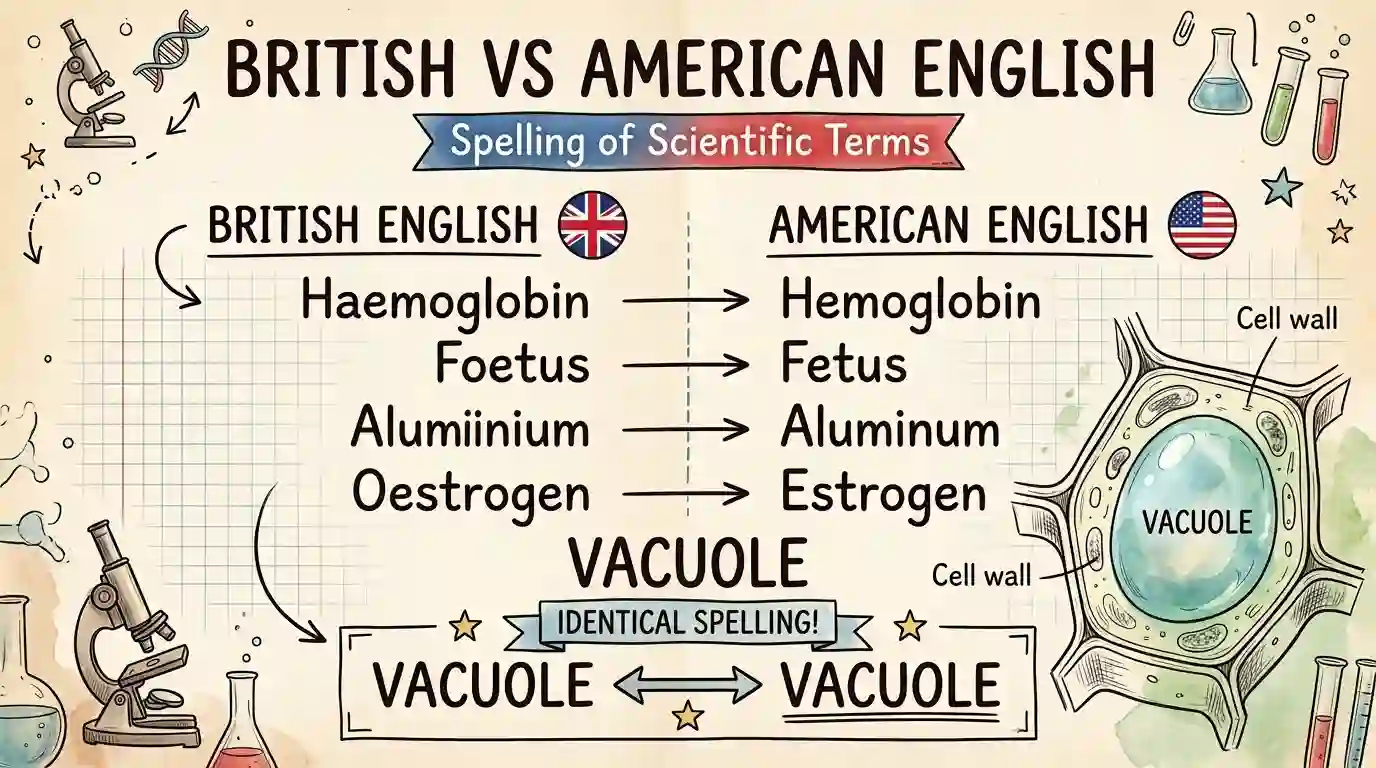
Good news: there is no difference. “Vacuole” is spelled the same in the US, UK, Canada, and Australia.
Many science words do differ between the two. Think of “hemoglobin” and “haemoglobin.” But “vacuole” is not one of them.
| Word | American English | British English | Same or Different? |
| Vacuole | vacuole | vacuole | Same |
| Nucleus | nucleus | nucleus | Same |
| Mitochondria | mitochondria | mitochondria | Same |
| Hemoglobin | hemoglobin | haemoglobin | Different |
| Fetus | fetus | foetus | Different |
| Eukaryotic | eukaryotic | eukaryotic | Same |
One small note: you may see “eucaryotic” and “procaryotic” in older books. Both spellings are correct, but “eukaryotic” and “prokaryotic” are now standard.
Which Spelling Should You Use?
Use vacuole everywhere. Here is the audience advice:
- US readers: vacuole.
- UK and Commonwealth readers: vacuole.
- Global readers: vacuole.
For the related terms, pick one style and stick with it:
- Use eukaryotic and prokaryotic for most writing.
- Use older forms like “eucaryotic” only if you are quoting an old source.
- Keep your other spellings consistent. If you write “haemoglobin,” use British spelling all through your piece.
Common Mistakes with Vacuole Prokaryotic or Eukaryotic
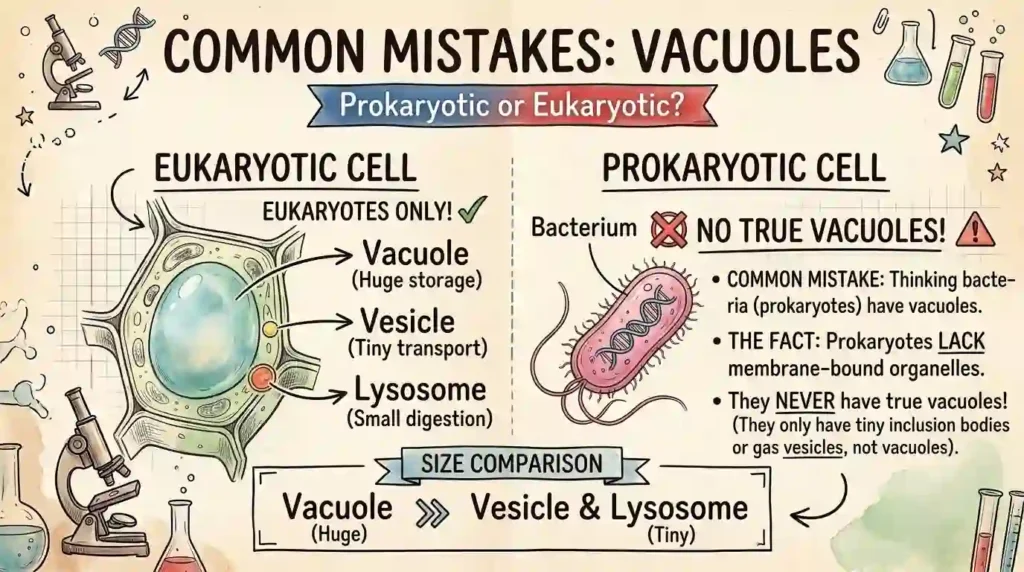
Mistake 1: Saying bacteria have vacuoles.
Fix: Bacteria lack true vacuoles. Say “vacuole-like” if you mean the rare giant-bacteria case.
Mistake 2: Saying only plants have vacuoles.
Fix: Fungi, protists, and animal cells have them too. Plant vacuoles are just the largest.
Mistake 3: Mixing up vacuoles and vesicles.
Fix: Vacuoles are larger and store things for longer. Vesicles are small and move cargo around.
Mistake 4: Mixing up vacuoles and lysosomes.
Fix: Lysosomes break down waste in animal cells. In plants and yeast, the vacuole does much of that job.
Mistake 5: Thinking a vacuole is empty.
Fix: The name means “empty,” but vacuoles are full of fluid and useful material.
Mistake 6: Mixing up the words.
Fix: “Prokaryotic” means no nucleus. “Eukaryotic” means a true nucleus. Vacuoles belong to the second group.
Vacuole Prokaryotic or Eukaryotic in Everyday Examples
In a student email:
“Hi Ms. Lee, I am confused. Is a vacuole prokaryotic or eukaryotic? My notes say eukaryotic, but my friend says bacteria have them.”
In a news story:
“Researchers studied a giant sulfur bacterium. Its large vacuole-like sac stores nitrate, a rare trait for a prokaryote.”
On social media:
“Study tip: vacuoles = eukaryotic cells only. Bacteria don’t have them. Save this for your bio exam! 🧬”
In formal writing:
“Vacuoles are membrane-bound organelles found in eukaryotic cells. Prokaryotic cells lack true vacuoles, although some bacteria contain similar storage compartments.”
Vacuole Prokaryotic or Eukaryotic Google Trends & Usage Data
I can’t pull live Google Trends numbers in this chat, so I won’t invent any. Here is what search patterns for biology terms like this one usually look like:
- Seasonal rises: searches climb during school terms and exam weeks, and dip in summer.
- Student-heavy countries: English-speaking countries with large school populations, such as the US, India, Pakistan, the UK, Canada, and Australia, tend to generate lots of cell biology searches.
- Context: most searchers are students looking for a fast yes-or-no answer. A smaller group is teachers or parents looking for a clear explanation.
- Question format: people often type full questions, like “is a vacuole prokaryotic or eukaryotic.” That is why a quick-answer section near the top works well.
To see real numbers, open Google Trends and compare “vacuole prokaryotic or eukaryotic” with related searches. Filter by country and date range.
Keyword Variations Side by Side
| Search phrase | What it asks | Short answer |
| vacuole prokaryotic or eukaryotic | Which cell type has vacuoles? | Eukaryotic |
| is vacuole prokaryotic | Do bacteria have them? | No (rare vacuole-like exceptions) |
| do prokaryotes have vacuoles | Same question, different wording | No true vacuoles |
| vacuole vs vesicle | What is the difference? | Vacuoles are bigger and store; vesicles are small and transport |
| vacuole vs lysosome | Are they the same? | No, but they do similar jobs |
| plant vs animal vacuole | Which is bigger? | Plant vacuoles are much larger |
FAQs
Is a vacuole prokaryotic or eukaryotic?
It is eukaryotic. True vacuoles are found only in eukaryotic cells.
Do bacteria have vacuoles?
Not true ones. A few giant bacteria have vacuole-like sacs, and some have protein-based gas vesicles.
What does a vacuole do?
It stores water, nutrients, and waste. In plants, it also keeps the cell firm. In some protists, it pumps out extra water.
Do animal cells have vacuoles?
Yes, but they are small. Plant cells have one big central vacuole instead.
What is a vacuole made of?
It has a membrane around it. In plants, this membrane is called the tonoplast. Inside is a watery fluid called cell sap.
What is the difference between a vacuole and a vesicle?
Vacuoles are larger and hold material for longer. Vesicles are small bubbles that carry cargo from one place to another.
Is a vacuole an organelle?
Yes. It is a membrane-bound organelle found in eukaryotic cells.
Conclusion
So, is a vacuole prokaryotic or eukaryotic? The answer is eukaryotic. True vacuoles live in plants, fungi, protists, and animals. Prokaryotes, like bacteria and archaea, do not have them.
There is one small twist. A few giant bacteria have vacuole-like sacs, and some microbes have gas vesicles. These are not true vacuoles, so say “vacuole-like” if you mention them.
Here are the key takeaways:
- Vacuoles are eukaryotic organelles.
- The word comes from the Latin for “empty,” but vacuoles are not empty.
- The spelling is the same in American and British English.
- Do not mix up vacuoles with vesicles or lysosomes.
- Plant cells have the biggest vacuoles.
For exams, write “eukaryotic” and you will be right. For deeper work, add a short note about the rare bacterial exceptions. That shows you understand the topic well. Keep this guide handy when you review cell biology, and you will never freeze on this question again.

I’m Raheela Rani, a professional content writer and author with 3 years of experience in writing, editing, and storytelling. Through VisitLivo.com, I create clear, engaging, and well-crafted content that helps readers learn, connect, and communicate with confidence.