You spot a wild animal at dusk. It trots across the road. It has pointed ears and a bushy tail. Your heart skips. Is it a fox or coyote?
You are not alone. Every day, people type “fox or coyote” into Google. They want a fast answer. Some want to know if their pet is safe. Some caught a strange animal on a trail camera. Others are just curious.
The two animals look alike at a glance. Foxes and coyotes are shy, quick, and dressed in similar shades of tan and red, so it is easy to mix them up. But they are not the same. They differ in size, shape, sound, and habits. They also differ in where they live. In the UK, for example, there are no wild coyotes at all.
This guide clears up the confusion. You will get a quick answer first. Then you will learn where the words come from, where each animal lives, common mistakes, real-life examples, search trends, and answers to common questions. Read on, and you will know what you saw.
Fox or Coyote Quick Answer
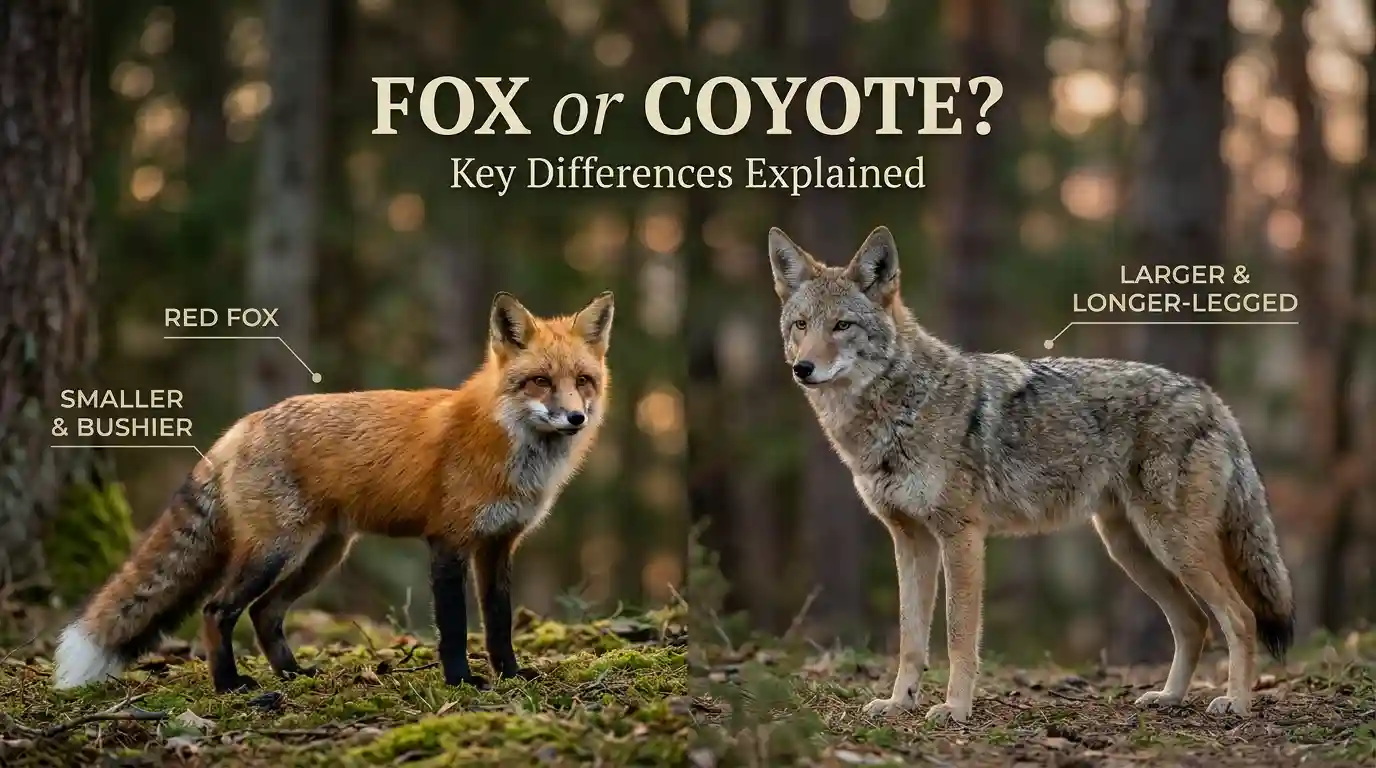
The easiest way to tell them apart is size.
- Fox: small. About the size of a house cat or a small dog. Most weigh 7 to 15 pounds.
- Coyote: bigger. About the size of a medium dog. Most weigh 20 to 50 pounds.
Here are more clues:
- Snout: A fox has a short, narrow, pointed snout. A coyote has a longer snout.
- Legs: A fox has short, thin legs. A coyote has longer legs.
- Tail: A fox has a thick, fluffy tail, often with a white tip. A coyote has a thinner tail with a dark tip. It usually hangs low.
- Eyes: A red fox has slit pupils, like a cat. A coyote has round pupils.
Example: You see a small, red animal with a big fluffy tail and white tail tip. That is a fox. You see a tall, gray-brown animal with long legs and a low tail. That is a coyote.
The Origin of the Words Fox and Coyote
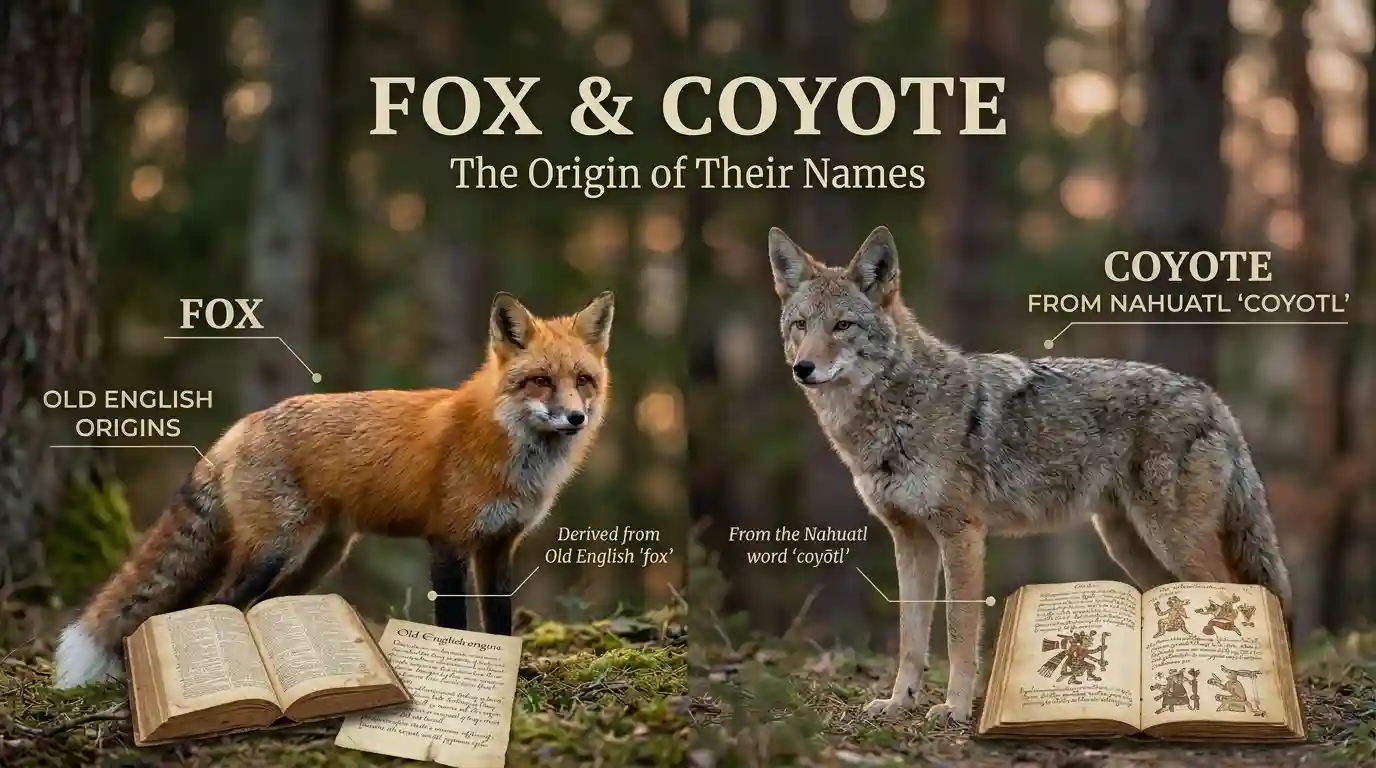
The two words have very different roots.
Fox is an old English word. It goes back more than a thousand years. It is close to the German word Fuchs and the Dutch word vos. The word is short because it is very old. People in Europe have known foxes for a very long time.
Coyote comes from the Aztec language, Nahuatl. The Aztec word was coyotl. Spanish settlers in Mexico heard it and changed it to coyote. English borrowed it later. This is why the word looks Spanish.
Why do people say it in different ways? English speakers say coyote in two common ways:
- KY-oat (two syllables)
- ky-OH-tee (three syllables)
Both are correct. The spelling stays the same. There is no UK or US spelling split for these words. The only change is how people say them.
British English vs American English Words Rang and Wildlife
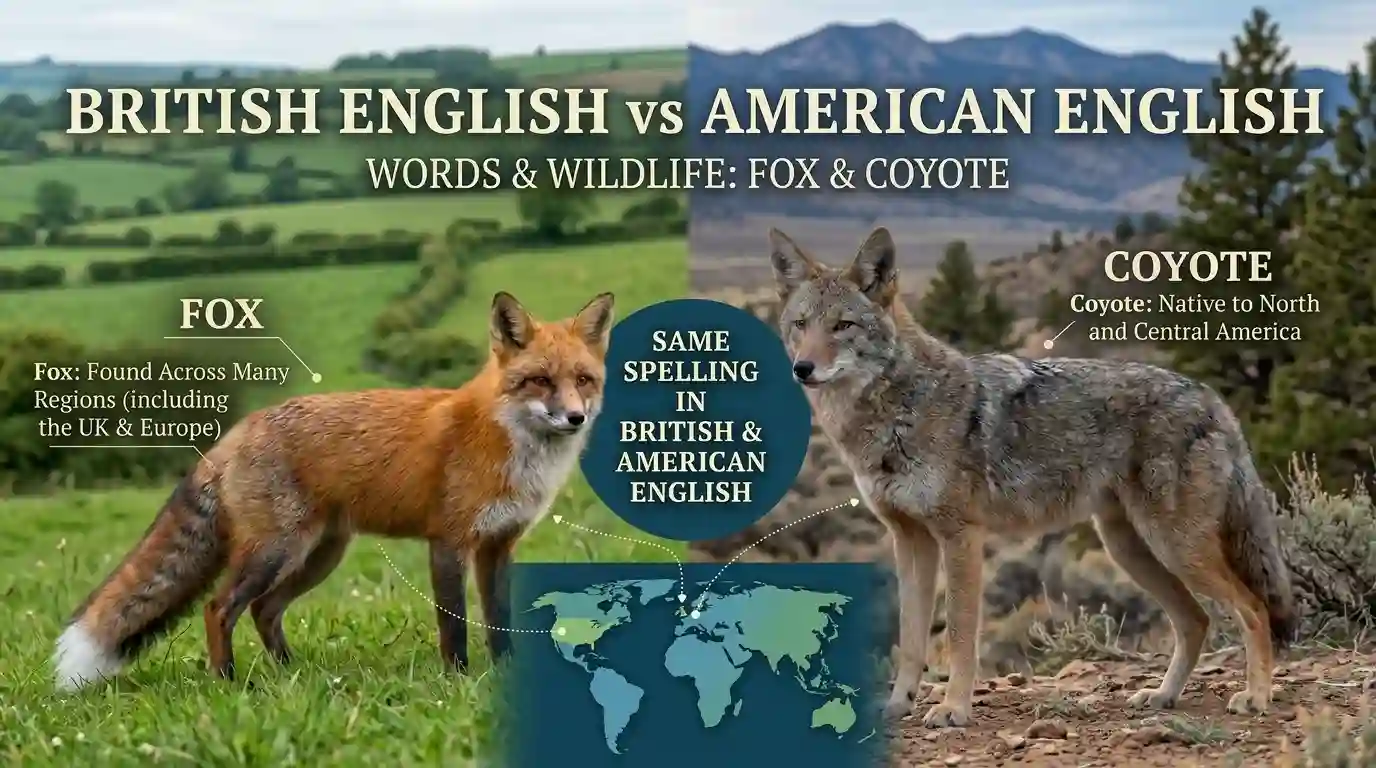
Some keyword pages cover spelling. Here, the spelling is the same everywhere. Fox is fox. Coyote is coyote. What changes is where the animals live, and that changes which word people use.
- Foxes live on almost every continent. The red fox is found in Europe, Asia, North America, and North Africa.
- Coyotes live only in North and Central America. They have no wild population in the UK.
So a person in London will almost always see a fox. A person in Los Angeles may see either one.
| Topic | United States / Canada | UK / Commonwealth |
| Spelling of fox | fox | fox |
| Spelling of coyote | coyote | coyote |
| Wild foxes | Yes (red fox, gray fox, others) | Yes (red fox in the UK) |
| Wild coyotes | Yes, common | No wild coyotes in the UK |
| Common pronunciation of coyote | KY-oat or ky-OH-tee | ky-OH-tee is common |
| City sightings | Both animals | Mostly foxes |
Which Should You Use? Advice by Audience
You do not choose a spelling here. You choose the right animal word for the place.
- US and Canada readers: Be careful. Many sightings could be either animal. Check size, legs, and tail before you decide.
- UK and Europe readers: It is almost certainly a fox. If you see a large wild dog-like animal, it may be a stray dog.
- Australia and New Zealand readers: Foxes are present in Australia. Coyotes are not. Use fox.
- Global or travel writing: Name the place. Say “red fox in Britain” or “coyote in Arizona.” This helps readers and search engines.
Tip: When in doubt, write “fox or coyote” and add the facts you saw. Size, color, and tail shape help experts name it.
Common Mistakes with Fox or Coyote
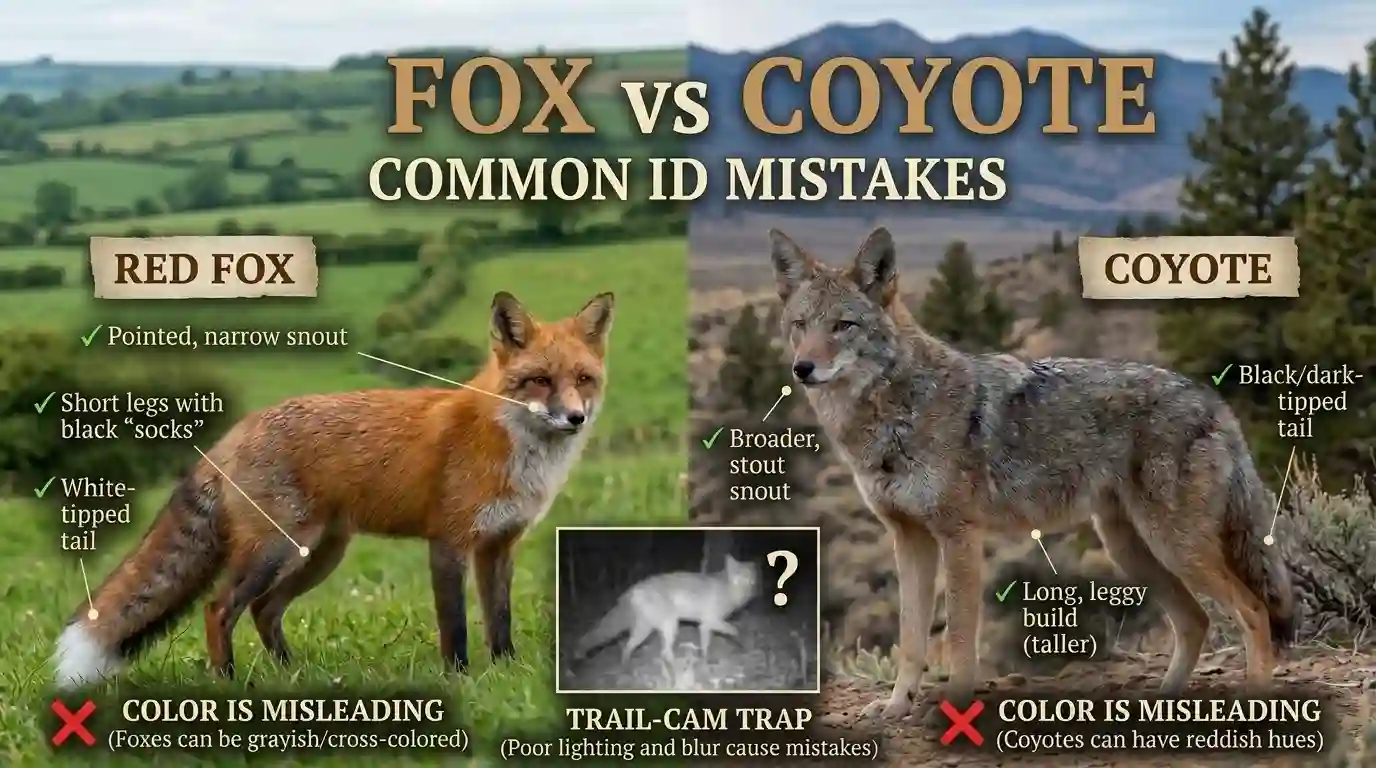
Mistake 1: Judging by color only. Both can be red, tan, or gray. Color is not enough. Check size and shape.
Mistake 2: Thinking a coyote is a baby fox. A coyote is not a young fox. They are two different species. A baby fox is called a kit or pup. A baby coyote is called a pup.
Mistake 3: Mixing up the tail tip. A red fox usually has a white tail tip. A coyote’s tail tip is usually dark.
Mistake 4: Trusting a blurry photo. Night photos make animals look larger or smaller. Look for a size clue, like a fence or a bush.
Mistake 5: Writing the wrong plural. The plural of fox is foxes. The plural of coyote is coyotes. Some hunters write coyote for many animals, but coyotes is the safe choice.
Mistake 6: Calling every wild dog a coyote. In some areas, a wolf, a jackal, or a stray dog is the right answer.
Fox or Coyote in Everyday Examples
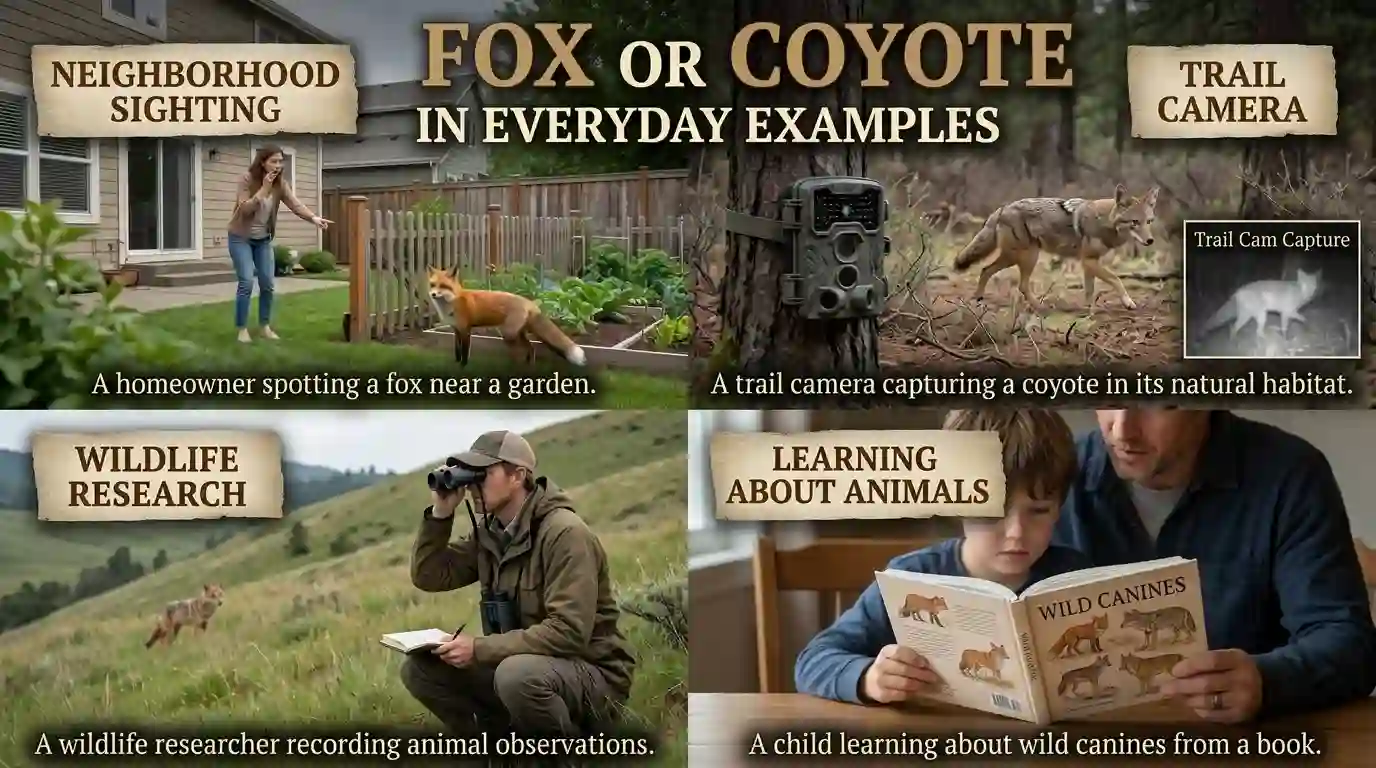
In an email to a neighbor: “Hi all. I saw a small animal with a fluffy tail near the park. I think it was a fox. Please keep small pets inside at night.”
In a news report: “Police said a coyote was seen near the school. Experts say coyotes are shy but may enter towns to find food.”
On social media: “Fox or coyote? Spotted this guy on my trail cam. Long legs, thin tail. I say coyote.”
In formal writing: “The red fox (Vulpes vulpes) is smaller than the coyote (Canis latrans). Both are members of the family Canidae.”
In a kid’s lesson: “A fox is small and has a bushy tail. A coyote is bigger and has long legs.”
Fox or Coyote Search Trends and Usage
People search “fox or coyote” for a few clear reasons.
- Where interest is highest: Search interest is strongest where coyotes and foxes share the same land. This mostly means the US and Canada.
- Why it rises: Interest often goes up after a local news story, a viral video, or a trail camera post.
- Why it changes by season: Spring and early summer bring pups out of dens. Winter is mating season, and animals move more. Both can bring more sightings.
- How people use the phrase: Most searchers want a quick ID. Others want safety advice for pets, kids, and chickens.
- In the UK and Europe: Searches more often say “fox” alone. There is no wild coyote to confuse it with.
Note: For exact numbers by country and date, check Google Trends before you publish.
Fox vs Coyote Side-by-Side Comparison
| Feature | Fox (red fox) | Coyote |
| Weight | 7–15 lb | 20–50 lb |
| Size | Like a small dog or large cat | Like a medium dog |
| Snout | Short, narrow, pointed | Longer, more dog-like |
| Legs | Short, thin | Long |
| Tail | Thick, fluffy, white tip | Thinner, dark tip, hangs low |
| Pupils | Slit, like a cat | Round |
| Ears | Large, pointed, often dark at back | Large, pointed |
| Sound | Bark, scream, “gekker” | Yips, barks, howls |
| Where they live | Many continents | North and Central America only |
| Pack life | Mostly alone or in pairs | Alone, pairs, or small groups |
| Danger to people | Very low | Low, but keep your distance |
FAQs
How can I tell a fox from a coyote at night?
Listen and look. A coyote often howls and yips. A fox barks or screams. In a flashlight beam, a fox’s pupils may look like slits. A coyote’s look round. Size is still your best clue.
Is a coyote bigger than a fox?
Yes. Coyotes are about two to four times heavier than most red foxes. They also have longer legs.
Are foxes and coyotes related?
Yes. Both belong to the dog family, called Canidae. But they are different species and are not close cousins.
Can a fox and a coyote live in the same area?
Yes. They often do. But coyotes sometimes chase foxes away or hunt them. In some areas, foxes stay away from coyote zones.
Which one is more dangerous to pets?
Both can harm small pets, like chickens or small cats. Coyotes are bigger and can harm larger pets. Keep pets close at dusk and night. Do not leave pet food outside.
What do foxes and coyotes eat?
Both eat small animals, insects, fruit, and food scraps. Coyotes also hunt larger prey, like rabbits and sometimes deer fawns.
Are there coyotes in the UK?
No. There are no wild coyotes in the UK. If you see a wild canine there, it is a fox, unless it is a stray dog.
What should I do if I see one?
Stay calm. Keep your distance. Do not feed it. Make noise and wave your arms if it comes close. Call your local wildlife office if it acts strange or seems sick.
Conclusion
So, fox or coyote? Now you can tell.
Start with size. A fox is small and light. A coyote is bigger and taller. Then check the snout, legs, and tail. A fox has a short snout, short legs, and a fluffy tail with a white tip. A coyote has a longer snout, long legs, and a thinner tail that hangs low.
Remember the words too. Fox is an old English word. Coyote comes from the Aztec word coyotl. The spelling is the same in the US, UK, and the rest of the world. Only the pronunciation of coyote changes a little.
Place matters most. In the UK and Europe, you will see a fox. In North America, you could see either one. Always think about where you are.
Finally, stay safe. Both animals are shy. Keep pets close, secure your trash, and never feed wild animals. If you stay calm and keep your distance, you will be fine.
Next time someone asks, “Was that a fox or coyote?” you will know what to say.

“I’m Ibadat Fatima, a professional content writer and author with 3 years of experience in writing, editing, and storytelling. I share my work through visitlivo.com, where I help readers connect with clear, engaging, and well-crafted content.”