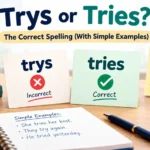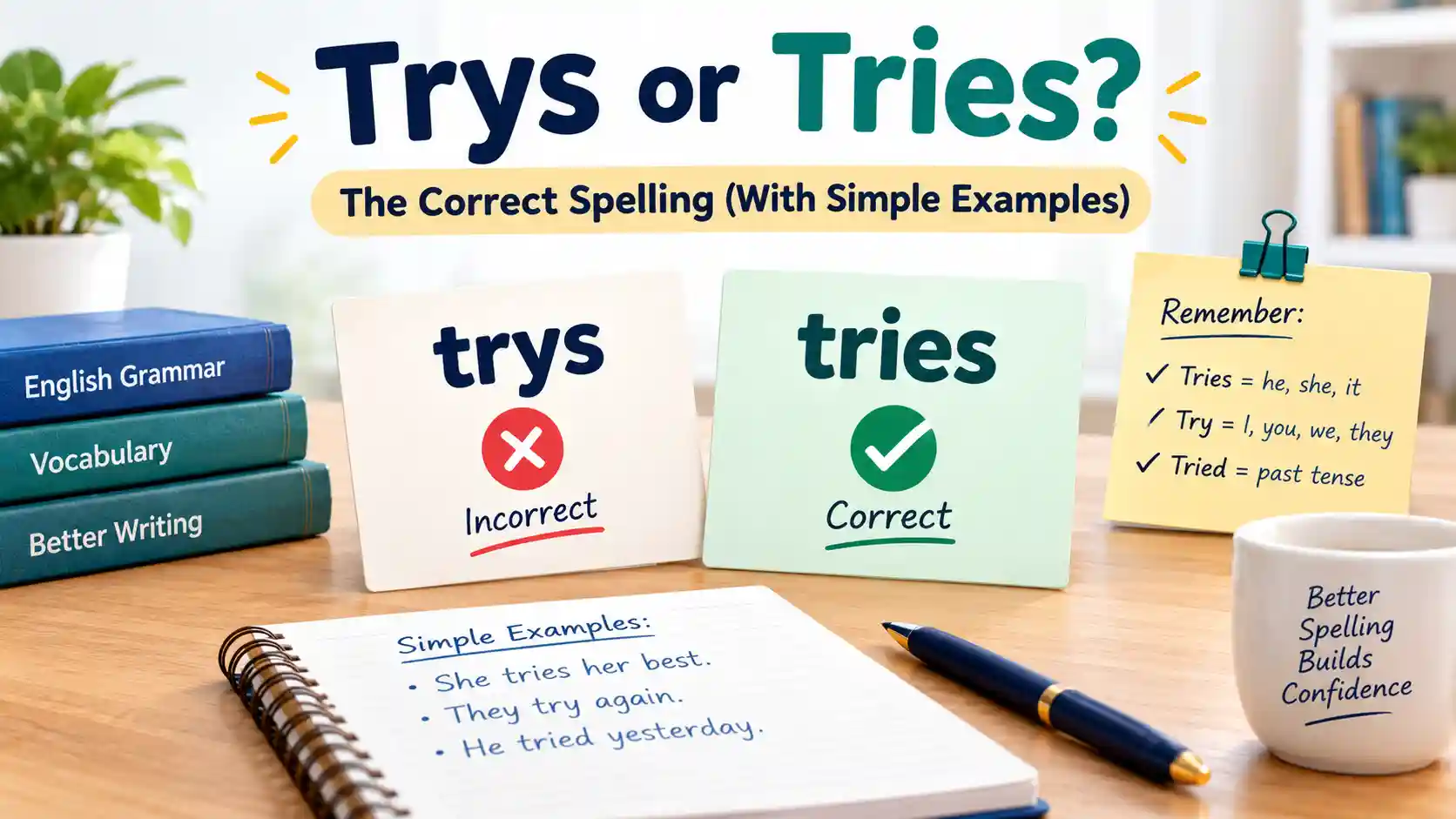
You are typing a message. You want to say that someone makes an effort. Your fingers stop. Is it “trys” or “tries”?
You are not alone. Many people stop and ask this same question.
The confusion is easy to understand. Most English verbs just add an “s.” Play becomes plays. Say becomes says. So it feels natural to write try as “trys.” But English has a special rule for words that end in “y,” and that rule changes the answer.
People search for “trys or tries” because they want a fast, clear answer. They also want to know if the spelling changes between American and British English. And they want to be sure they will not look careless in an email, a report, or a post.
This guide gives you all of that. You get the quick answer first. Then you will see why the rule exists, how to use it, and which mistakes to avoid. By the end, you will never second-guess this word again.
Trys or Tries Quick Answer
“Tries” is correct. “Trys” is wrong.
Use “tries” when one person or thing does the action in the present tense.
- She tries her best every day.
- He tries a new recipe each week.
- The team tries again after every loss.
Also use “tries” as a plural noun. A “try” is an attempt, so more than one is “tries.”
- It took three tries to open the door.
- The rugby player scored two tries.
Never write “trys” in standard English.
The Origin of Tries
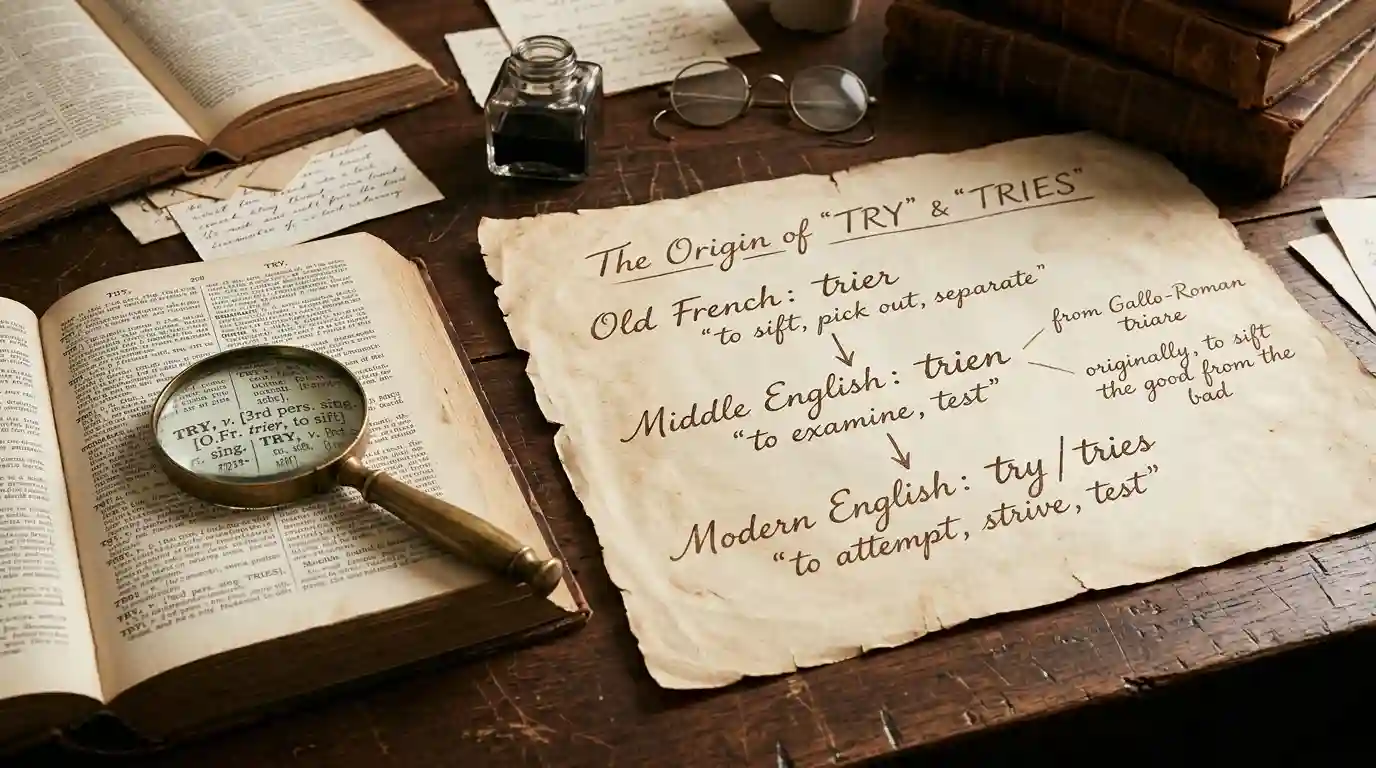
The word “try” came into English from Old French. The French word was trier, which meant to sort out or pick out. Over time, the meaning shifted to “test” and then to “attempt.”
So where does “tries” come from? It comes from a spelling rule, not from the word’s history.
In Old and Middle English, spelling was not fixed. People wrote words in many ways. As printing spread, spelling slowly became standard. A pattern formed for words that end in a consonant plus “y.” The “y” turns into “i,” and then “es” is added.
That is why we have:
- try → tries
- carry → carries
- study → studies
- worry → worries
“Trys” looks right to many people because it follows the common “add s” pattern. But it breaks the “y to ies” rule. Spelling differences like this one exist because English borrowed words from many languages and set its rules slowly. Not every rule feels logical, but this one is steady and easy to learn.
British English vs American English Spelling
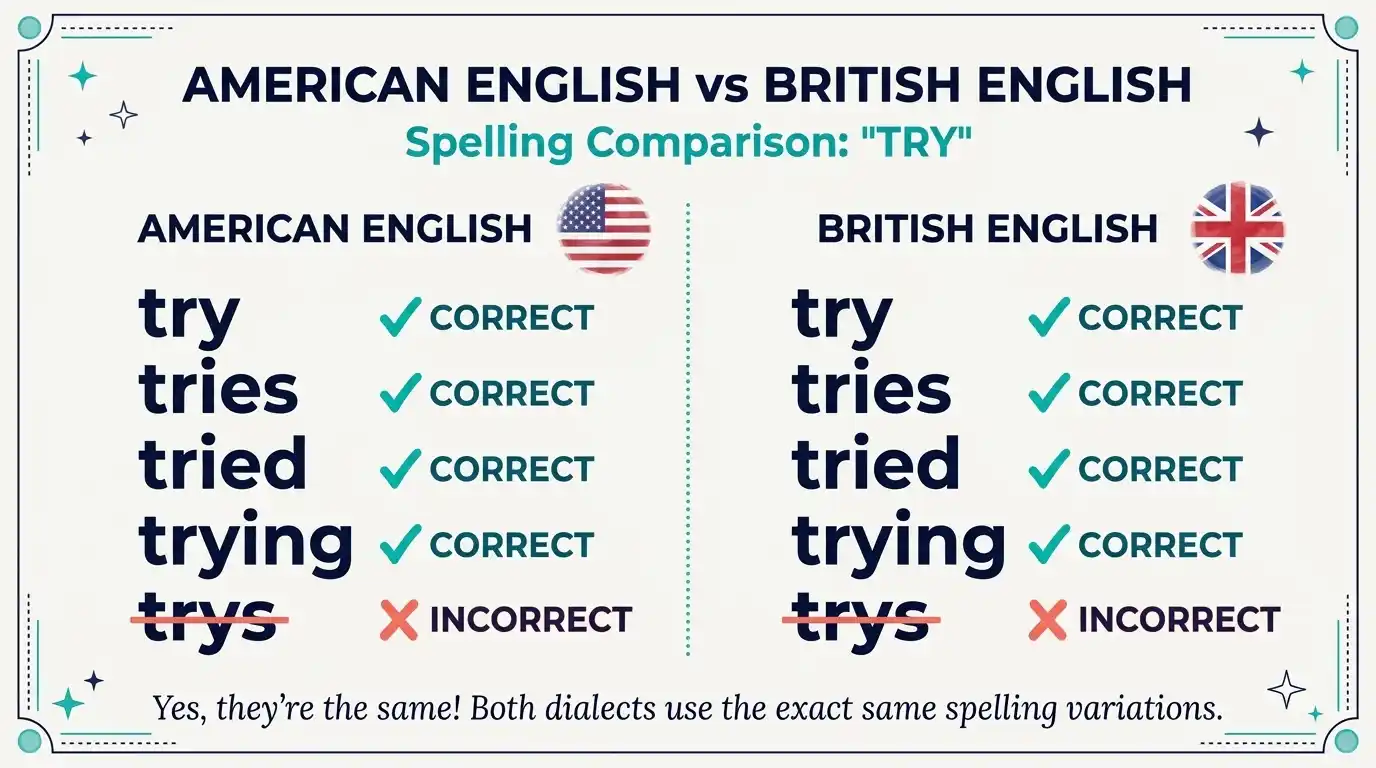
Here is the good news. There is no difference. Both American and British English use “tries.” Both treat “trys” as an error.
Many spelling debates are about UK and US forms, such as color and colour. This is not one of them.
| Word Form | American English | British English | Correct? |
| He/she/it (present) | tries | tries | Yes |
| Plural noun (attempts) | tries | tries | Yes |
| Past tense | tried | tried | Yes |
| Ongoing action | trying | trying | Yes |
| “Trys” | trys | trys | No, in both |
The rule behind it:
- If a word ends in a consonant + y, change the y to i and add “es.” (try → tries)
- If a word ends in a vowel + y, just add “s.” (play → plays, enjoy → enjoys)
The letter before the “y” in “try” is “r.” That is a consonant. So the rule says “tries.”
Which Spelling Should You Use?
Use “tries” every time. Here is how that works for each audience.
US readers: “Tries” is correct. No other choice exists.
UK and Commonwealth readers: “Tries” is also correct. This includes Australia, Canada, India, and South Africa.
Global or mixed audiences: Use “tries.” It is safe everywhere.
A note for rugby fans: In rugby, a “try” is a scoring play, and the plural is “tries.” This is common in UK, Irish, Australian, and New Zealand writing. It still follows the same spelling rule.
Professional advice: In business writing, spelling errors can hurt trust. A reader may doubt your care or skill. Take two seconds to check this word. It is worth it.
Common Mistakes with Tries
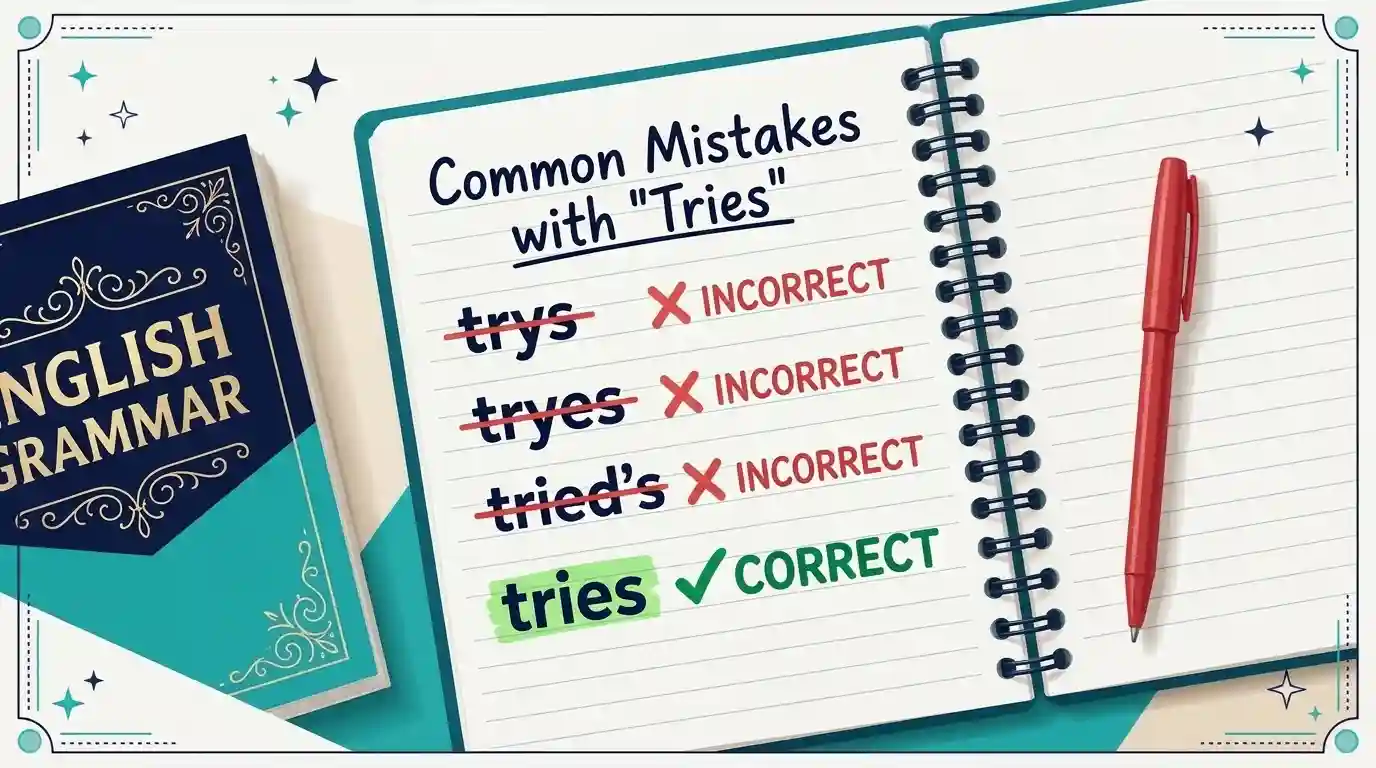
Here are the errors people make most often.
| Mistake | Why It Happens | Correct Form |
| She trys hard. | Adding “s” to “try” | She tries hard. |
| Three trys later, it worked. | Same pattern for plural | Three tries later, it worked. |
| He tryes again. | Adding “es” without changing “y” | He tries again. |
| She tried’s it. | Mixing endings | She tried it. |
| They tries often. | Wrong subject match | They try often. |
The last mistake is different. The spelling is right, but the grammar is wrong. Use “tries” with he, she, it, or a single name. Use “try” with I, you, we, they.
Easy memory trick: If a word ends in a consonant and “y,” swap the “y” for “ies.” Say it out loud: try, tries; cry, cries; fly, flies.
Tries in Everyday Examples
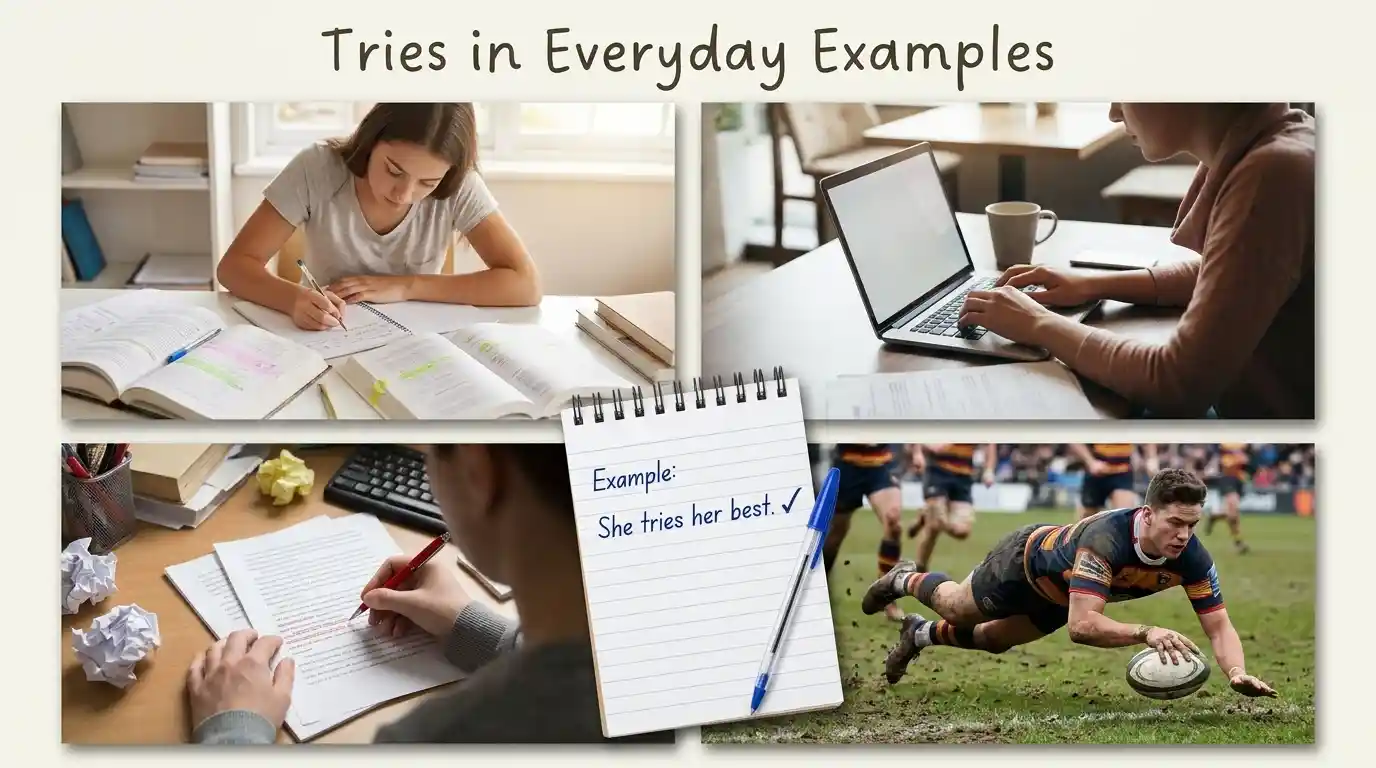
In an email:
- “She always tries to reply within a day.”
- “Please let me know if the link tries to load slowly.”
In the news:
- “The company tries to cut costs as sales fall.”
- “After two failed tries, the rocket launched on the third.”
On social media:
- “Me every Monday: tries to wake up early. Fails.”
- “Day 3 of my new diet. Still tries to say no to cake.”
In formal writing:
- “The committee tries each case on its own facts.”
- “The study shows the patient made several tries before success.”
In sports:
- “The winger scored two tries in the second half.”
Trys or Tries Google Trends & Usage Data
Search tools show that people often look up spelling questions like this one. A search for “trys or tries” usually comes from someone who is unsure and wants a fast fix.
Here is how usage tends to look:
- Correct form: “Tries” appears far more often in books, news, and websites than “trys.”
- Misspelling: “Trys” shows up most in fast typing, texts, and social posts.
- By country: The misspelling can appear in any English-speaking country. It is also common among people who are learning English, since the “add s” rule is taught first.
- By context: Students, writers, and office workers are the most likely to search for it.
How to check live data: Go to Google Trends. Type “trys” and “tries” side by side. Pick your country and date range. The “Interest by region” map will show where each form is searched most.
| Variation | Status | Where It Appears |
| tries | Correct | All formal and informal writing |
| trys | Incorrect | Quick texts, typos, social posts |
| tried | Correct (past tense) | All writing |
| trying | Correct (ongoing) | All writing |
| tryes | Incorrect | Rare typo |
Frequently Asked Questions
Is it “trys” or “tries”?
It is “tries.” “Trys” is a spelling mistake.
Is “trys” ever correct?
Not in standard English. It may appear as a name or brand, but it is not a regular English word.
Why is “tries” spelled with “ies”?
When a word ends in a consonant + “y,” the “y” changes to “i” and “es” is added. That is why we write tries, not trys.
Is “tries” British or American?
Both. The spelling is the same in the US, UK, Canada, and Australia.
What is the past tense of “try”?
It is “tried.” Example: She tried the soup yesterday.
Is “tries” a verb or a noun?
Both. As a verb: He tries hard. As a noun: It took three tries.
Why is “plays” spelled with just “s” but “tries” is not?
In “play,” a vowel comes before the “y.” In “try,” a consonant comes before it. The rule only changes the “y” after a consonant.
Conclusion
“Tries” is the right spelling. “Trys” is always wrong in standard English, and there is no American or British split to worry about.
The rule is simple. When a word ends in a consonant plus “y,” change the “y” to “i” and add “es.” That gives you try → tries, carry → carries, and study → studies. When a vowel comes before the “y,” just add “s,” as in play → plays.
Also check your grammar.Use “tries” with he, she, or it. Use “try” with I, you, we, or they. Use “tried” when talking about the past.
Do not rely on autocorrect alone. Clean spelling shows care, and care builds trust. Next time you feel stuck, say it out loud: try, tries.

“I’m Ibadat Fatima, a professional content writer and author with 3 years of experience in writing, editing, and storytelling. I share my work through visitlivo.com, where I help readers connect with clear, engaging, and well-crafted content.”