You are typing a word. Your fingers stop. Is it “pannel” or “panel“? You are not alone. Many people pause at this word because both spellings look right.
People search “pannel or panel” for a simple reason: they want a fast, clear answer. They may be writing an email, a school paper, or a work report. A wrong spelling can make good writing look careless.
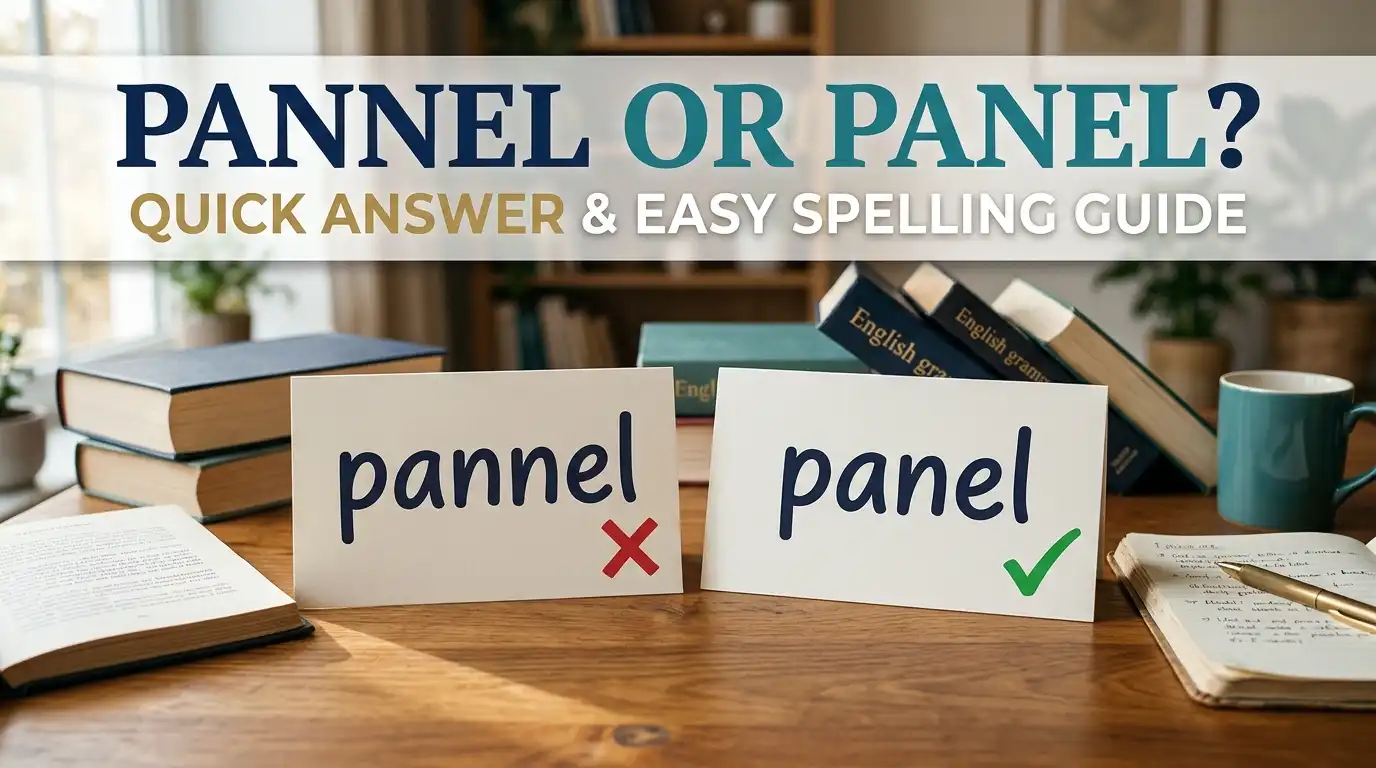
Here is the short answer: “panel” is correct. “Pannel” is a spelling mistake. This is true in American English and in British English.
So why the mix-up? Many English words have a double “n,” like “tunnel,” “funnel,” and “flannel.” Our brains guess a double letter. British and American writers also spell some forms of “panel” differently, such as “paneling” and “panelling.” That adds to the confusion.
This guide clears it all up. You will learn the origin, the spelling rules, and the common errors. You will see real examples and get simple advice. Let’s begin.
Pannel or Panel Quick Answer
Use “panel.” One “n.” Always.
“Pannel” is not a standard word in modern English. Spell checkers will flag it.
Examples:
- The solar panel sits on the roof. ✅
- The solar pannel sits on the roof. ❌
- She spoke on a panel at the event. ✅
- Press the button on the control panel. ✅
A panel can be a flat piece of wood, glass, or metal. It can be a group of people who judge or discuss. It can also be the control board on a machine. The spelling stays the same for all of them.
The Origin of Panel

The word “panel” came into English from Old French. French got it from a Latin word, pannus, which means “piece of cloth.” Long ago, a “panel” was a small piece of cloth or a sheet of parchment.
Later, the meaning grew. It came to mean a flat piece of wood in a door or wall. Then it meant a list of people called to serve on a jury. That is how we got “panel” as a group of people.
Why do spelling differences exist? English spelling was not fixed for a long time. Writers spelled words as they heard them. In older texts, you may see forms like “pannel.” Over time, printers and dictionaries settled on one form: panel. Today, “pannel” is seen as an old or wrong spelling.
British English vs American English Spelling
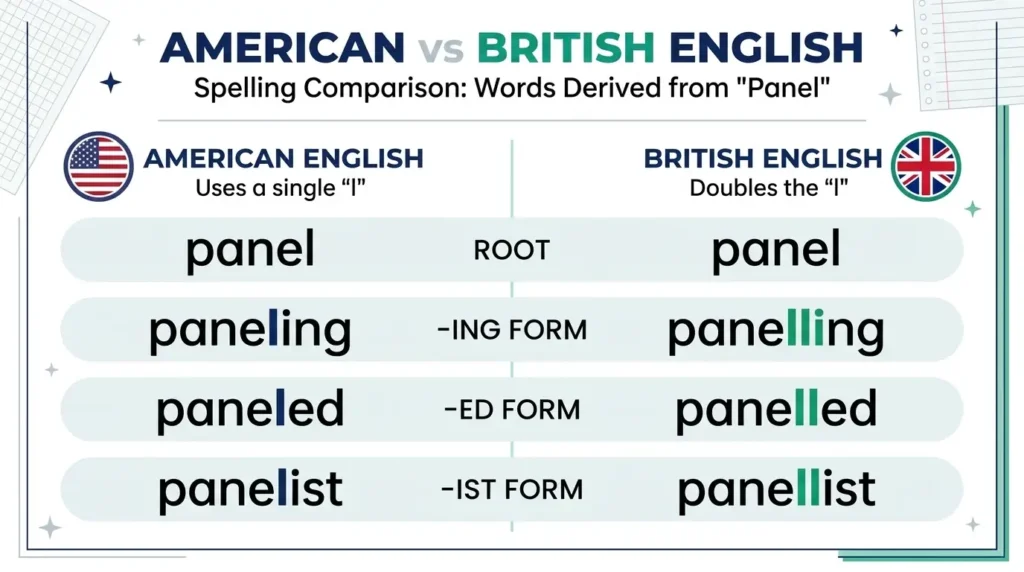
Here is the good news. “Panel” is spelled the same in both. The real difference shows up when you add endings like -ing, -ed, or -ist.
The British rule: when a word ends in a single “l,” double it before an ending. The American rule: usually do not double it when the stress is not on the last part.
| Word Form | American English | British English |
| Base word | panel | panel |
| Wall covering | paneling | panelling |
| Past tense | paneled | panelled |
| A person on a panel | panelist | panellist |
| Plural | panels | panels |
Notice that “pannel” is not in the table. It is wrong in both.
Which Spelling Should You Use?
Keep it simple. Pick the form that fits your reader.
- United States and Canada (most cases): panel, paneling, paneled, panelist
- United Kingdom, Australia, India, South Africa, and most Commonwealth countries: panel, panelling, panelled, panellist
- Global audience: Use “panel.” It is the same everywhere. For the longer forms, choose one style and stay with it.
Pro tip: Match the rest of your text. If you write “colour” and “organise,” use “panelling.” If you write “color” and “organize,” use “paneling.” Never use “pannel.”
Common Mistakes with Panel
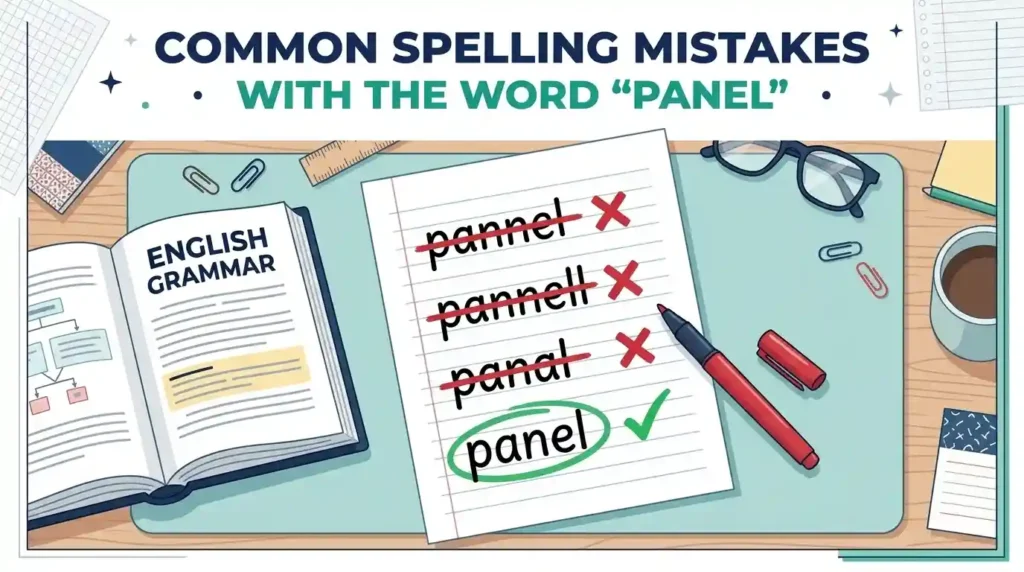
| Mistake | Correction | Why |
| pannel | panel | Only one “n.” |
| pannell | panel | Only one “n” and one “l.” |
| panal | panel | The ending is “-el,” not “-al.” |
| panelling (in a US document) | paneling | Match your audience. |
| paneling and panelling in one text | Pick one | Stay consistent. |
| pannelist | panelist / panellist | One “n” here too. |
A memory trick: Think of “pan” plus “el.” Short and clean. Just like the word “panel” itself.
Panel in Everyday Examples
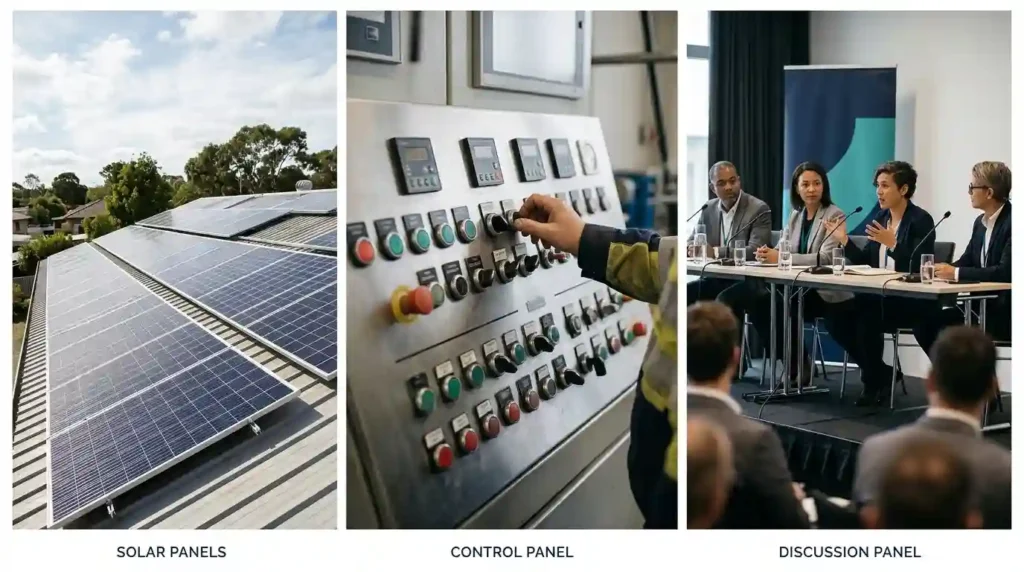
Emails:
“Please join our expert panel on Friday at 3 p.m.”
News:
“A panel of doctors reviewed the new study.”
Social media:
“Just installed new solar panels! Feeling good. ☀️”
Formal writing:
“The review panel will submit its report within thirty days.”
Home projects:
“We added wood paneling to the living room.” (US)
“We added wood panelling to the living room.” (UK)
In every example, the base word is “panel.” You will never need “pannel.”
Pannel or Panel Google Trends & Usage Data
I can’t pull live search numbers here, so I won’t invent any. You can check them for free at trends.google.com. Search “panel” and “pannel” side by side. Here is the general pattern to expect:
- “Panel” is used far more than “pannel.” It is a common word in daily life, news, and business.
- “Pannel” appears mostly as a typo or as a spelling question. People type it, then search to check.
- By country: “Panel” shows strong use in the US, UK, India, Canada, and Australia. Searches for “paneling” are more common in the US. Searches for “panelling” are more common in the UK and Commonwealth countries.
- By context: People search “panel” for solar panels, control panels, panel discussions, and wall panels. Searches for the “pannel” spelling come mostly from people unsure how to write it.
Tip: When you check Trends, pick a country and a date range. The gap between the two spellings will be clear.
Spelling Variations Side by Side
| Variation | Correct? | Region | Notes |
| panel | ✅ Yes | US, UK, worldwide | Standard spelling |
| pannel | ❌ No | None | Common typo; old form in old texts |
| paneling | ✅ Yes | US | Wall or surface covering |
| panelling | ✅ Yes | UK, Commonwealth | Same meaning as “paneling” |
| paneled | ✅ Yes | US | Past tense |
| panelled | ✅ Yes | UK, Commonwealth | Past tense |
| panelist | ✅ Yes | US | Person on a panel |
| panellist | ✅ Yes | UK, Commonwealth | Person on a panel |
| panal | ❌ No | None | Wrong ending |
Frequently Asked Questions
Is it “pannel” or “panel”?
It is “panel.” “Pannel” is a spelling mistake in modern English.
Is “pannel” a British spelling?
No. British English also uses “panel.” The British difference is only in forms like “panelling” and “panellist.”
Did “pannel” ever exist?
You may find it in very old books, since spelling was not fixed back then. Today, no dictionary treats it as the correct form.
Is it “paneling” or “panelling”?
“Paneling” is American. “Panelling” is British and Commonwealth. Both are right in their regions.
How do I spell the person on a discussion panel?
“Panelist” in the US. “Panellist” in the UK and Commonwealth.
Why do I keep typing two n’s?
Words like “tunnel,” “channel,” and “funnel” have double letters. Your brain copies the pattern. Slow down and remember: “pan” plus “el.”
Will a spell checker catch “pannel”?
Yes, most will. Still, check your work. Auto-correct can miss words in names or brand labels.
Does the meaning change with the spelling?
No. A solar panel, a control panel, and a panel of judges all use the same spelling.
Conclusion
The correct spelling is “panel.” It has one “n.” It is right in American English, British English, and everywhere else. “Pannel” is a spelling mistake, so you can drop it from your writing.
The only real differences show up in longer forms. Americans write “paneling,” “paneled,” and “panelist.” The British and Commonwealth writers use “panelling,” “panelled,” and “panellist.” Choose the style that fits your reader, and use it all the way through your text.
Why do people mix this up? Many English words have double letters, like “tunnel” and “funnel.” The brain adds an extra “n” without thinking. Here is a simple trick to fix it: “pan” plus “el.” That’s all.
Quick checklist:
- Use “panel” for the base word.
- Match your regional style for -ing, -ed, and -ist forms.
- Stay consistent in one document.
Now you can write “panel” with full confidence.

I’m Raheela Rani, a professional content writer and author with 3 years of experience in writing, editing, and storytelling. Through VisitLivo.com, I create clear, engaging, and well-crafted content that helps readers learn, connect, and communicate with confidence.