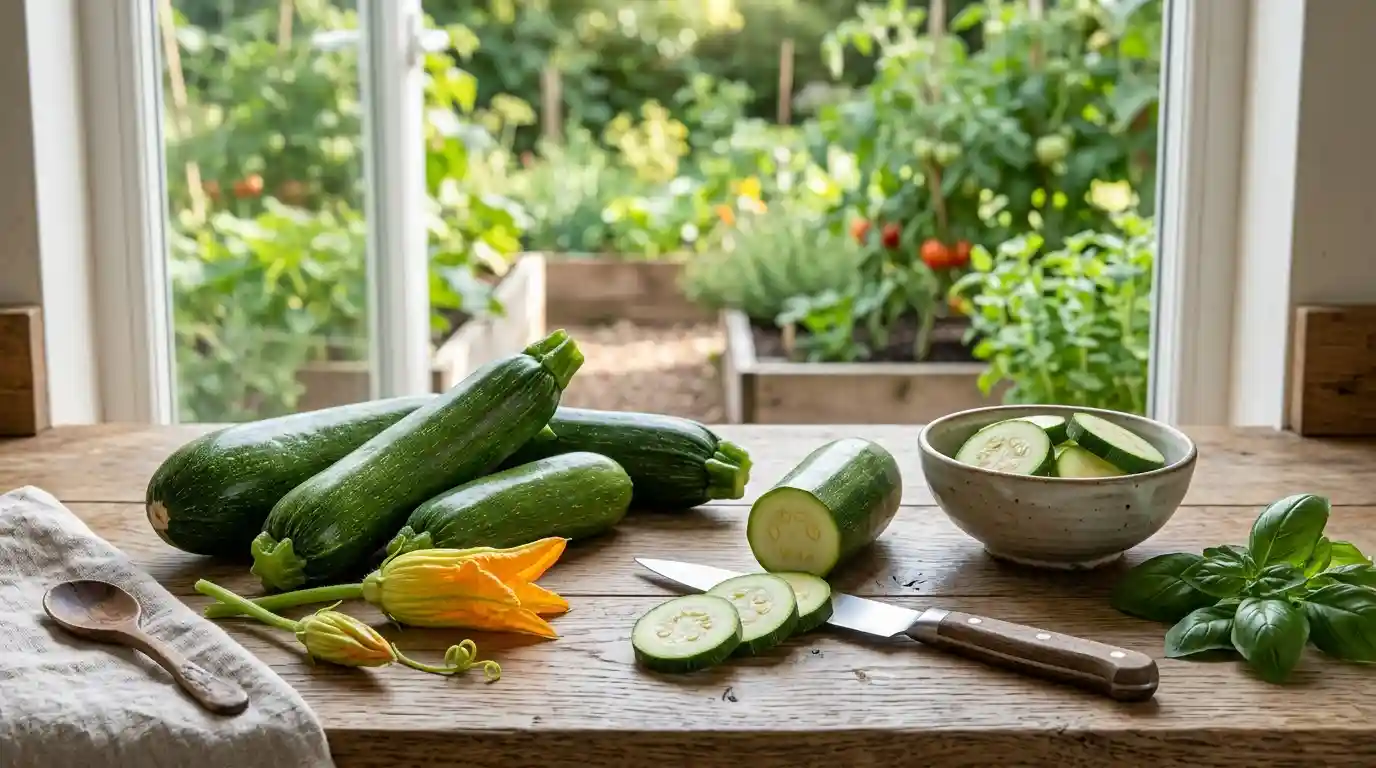
Zucchini sits in almost every summer garden and every grocery store bin. But ask a botanist and a chef the same question “is zucchini a fruit or a vegetable?” and you’ll get two different answers. That mismatch is exactly why so many people search for this term. They chop it into a stir-fry, call it a vegetable, then read somewhere that it’s technically a fruit. It feels like a trick question.
The confusion isn’t your fault. Science and the kitchen use different rulebooks. Botany looks at how a plant grows. Cooking looks at how food tastes and how it’s used on a plate. Zucchini gets caught in the middle.
This article gives you the quick answer first, then walks through the science, the language differences around the world, and the common mistakes people make. By the end, you’ll know exactly what to say and why both answers can be right.
Zucchini Fruit or Vegetable Quick Answer
Here’s the short version: botanically, zucchini is a fruit. Culinarily, it’s treated as a vegetable.
- Botanical fruit: Zucchini grows from the flower of the plant and contains seeds. By that definition, so do tomatoes, cucumbers, peppers, and pumpkins.
- Culinary vegetable: Zucchini is savory, not sweet. It’s cooked and served like other vegetables grilled, roasted, or added to soups.
So when someone asks “is zucchini a fruit or vegetable,” the honest answer is: both, depending on who’s asking.
The Origin of the Question

The mix-up starts with how the word “vegetable” works. In science, there’s no such thing as a vegetable. Botanists classify plant parts as roots, stems, leaves, flowers, seeds, or fruits. A fruit is simply the part of a plant that develops from a fertilized flower and holds the seeds.
“Vegetable” is a kitchen word, not a scientific one. It groups together any plant part people eat in savory dishes roots like carrots, stems like celery, leaves like spinach, and yes, some fruits like zucchini, tomatoes, and cucumbers.
This gap between science and cooking isn’t new. It even reached a U.S. Supreme Court case in 1893 (Nix v. Hedden), where judges ruled that tomatoes count as vegetables for trade law, even though botanists call them fruits. Zucchini falls into the same category.
Zucchini vs Courgett Naming Differences Around the World

While the fruit-or-vegetable question is about science, there’s a separate naming difference worth knowing. The word you use for this plant often depends on where you live.
| Region | Common Term | Origin of the Word |
| United States, Canada, Australia | Zucchini | Italian, meaning “little squash” |
| United Kingdom, Ireland, South Africa | Courgette | French, borrowed from “courge” (squash) |
| Italy | Zucchina (singular) / Zucchine (plural) | Native Italian term |
Both words describe the exact same plant. The difference is regional vocabulary, not a difference in the vegetable itself.
Which Term Should You Use?
- Writing for a US audience: Use “zucchini.” It’s the standard term in American recipes, grocery stores, and menus.
- Writing for a UK or Commonwealth audience: Use “courgette.” It’s what readers expect and search for.
- Writing for a global or mixed audience: Mention both terms once, so readers from either region recognize what you mean. Example: “zucchini (also called courgette in the UK).”
For SEO purposes, if your audience is international, including both terms naturally in your content can help you rank for searches from different countries.
Common Mistakes with Zucchini

- Calling it “just a vegetable” with no explanation. This isn’t wrong in cooking, but it skips the interesting botanical fact people are searching for.
- Saying it’s “not a fruit at all.” This is incorrect. It grows from a flower and holds seeds, which meets the scientific definition of a fruit.
- Confusing zucchini with cucumber. They look similar but belong to different plants within the same family.
- Assuming “courgette” and “zucchini” are different vegetables. They’re the same plant, just named differently by region.
- Mixing up baby zucchini with cucumbers in recipes. This leads to texture and cooking-time errors.
Zucchini in Everyday Examples
- In an email to a supplier: “Please confirm this week’s zucchini delivery includes both large and baby sizes.”
- In a news article: “Scientists confirm zucchini is technically a fruit, despite being sold as a vegetable.”
- In a social media caption: “Fun fact: zucchini is a fruit! 🍽️ Who knew?”
- In formal writing (a nutrition report): “Zucchini, though botanically classified as a fruit, is nutritionally and culinarily grouped with vegetables due to its low sugar content and savory culinary applications.”
Each context uses the same word but adjusts tone and detail level.
Zucchini Search Trends & Usage Data
Search interest in “is zucchini a fruit or vegetable” spikes every summer, when zucchini is in season across the Northern Hemisphere (June through August). The question also trends around back-to-school nutrition content and food trivia posts.
Regionally:
- The United States drives the highest search volume for “zucchini.”
- The United Kingdom and Ireland show far more searches for “courgette.”
- Australia and Canada favor “zucchini,” matching American usage.
This pattern matters for SEO: targeting the right term for the right region increases the chance of ranking in local search results.
Keyword Variation Comparison
| Term | Region | Search Volume Trend | Best Use Case |
| Zucchini | US, Canada, Australia | High | Recipes, gardening, nutrition content for North American/Australian readers |
| Courgette | UK, Ireland | High (regionally) | Content aimed at British or Irish readers |
| Zucchini fruit or vegetable | Global | Seasonal spikes (summer) | Educational and trivia content |
| Is zucchini a fruit | Global | Steady, year-round | FAQ and quick-answer content |
FAQs
Is zucchini a fruit or a vegetable?
Botanically, it’s a fruit because it grows from a flower and contains seeds. In cooking, it’s treated as a vegetable because of its savory taste.
Why is zucchini called a fruit if it’s not sweet?
Sweetness isn’t part of the botanical definition. A fruit is defined by how it grows, not how it tastes.
Is courgette the same as zucchini?
Yes. Courgette is the British English term. Zucchini is the American English term. Both refer to the same plant.
What other vegetables are actually fruits?
Tomatoes, cucumbers, peppers, eggplants, and pumpkins are all botanical fruits commonly called vegetables.
Does it matter which term I use in a recipe?
For clarity, match the term to your audience. Use “zucchini” for American readers and “courgette” for British readers.
Is zucchini healthy?
Yes. It’s low in calories, high in water content, and provides fiber, vitamin C, and potassium.
Why do people get confused about zucchini’s classification?
Because science and cooking use different systems. Science looks at plant biology. Cooking looks at taste and use in meals.
Conclusion
So, is zucchini a fruit or a vegetable? Both answers are correct it just depends on who’s asking. A botanist will tell you it’s a fruit, since it grows from a flower and holds seeds inside, just like tomatoes and cucumbers. A cook will call it a vegetable, since it’s savory rather than sweet, and it’s prepared the same way as other vegetables.
The naming gets more confusing once you add geography. Depending on where you live, this plant goes by “zucchini” or “courgette.” Neither word is incorrect they’re simply regional terms for the exact same food, much like “fries” and “chips.”
So which should you use? Match your words to your reader. Say “zucchini” for American audiences, “courgette” for British and Irish ones, and briefly explain both if you’re writing for a global audience.
At the end of the day, zucchini’s dual identity isn’t a contradiction it’s just two different systems (science and cooking) answering two different questions. Once you know that, the confusion disappears for good.

“I’m Ibadat Fatima, a professional content writer and author with 3 years of experience in writing, editing, and storytelling. I share my work through visitlivo.com, where I help readers connect with clear, engaging, and well-crafted content.”