You want to write about rings, necklaces, or bracelets. Then you stop. Is it jewelry or jewellery? Both look right. Both look wrong, too.
Millions of people search “jewelry or jewellery” every year. They are not lost. They just want a fast, clear answer before they publish a product page, send an email, or turn in a school paper.
Here is the good news. Both spellings are correct. They are not two different words. They are one word with two spellings. One is used mostly in the United States. The other is used in the United Kingdom and many other countries.
The trouble starts when you pick the wrong one for your readers. It can look careless. It can even hurt your search ranking.
In this guide, you will get a quick answer first. Then you will learn where the word came from, how the spellings differ, and which one to use. You will also see common mistakes, real examples, and answers to top questions. Let’s clear it up for good.
Jewelry or Jewellery Quick Answer
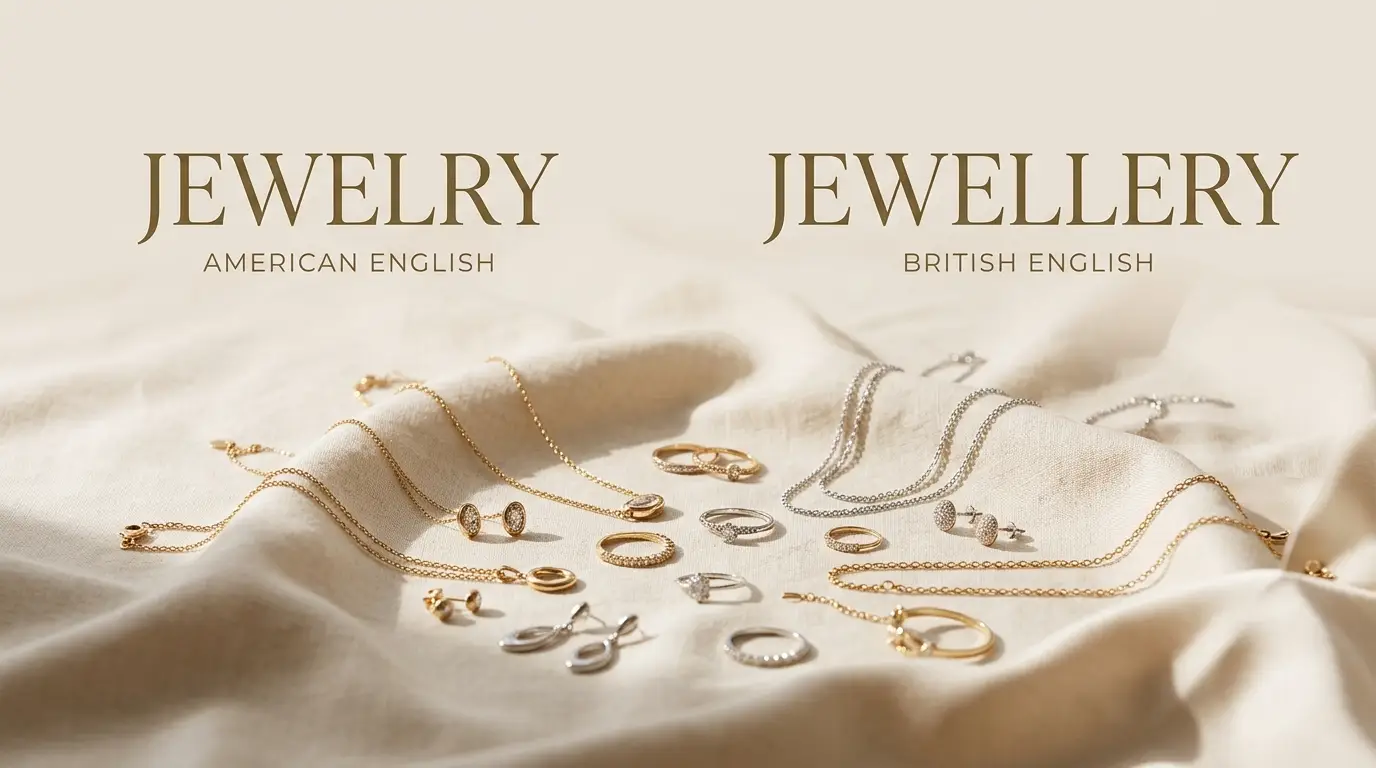
Jewelry is the American spelling. Jewellery is the British spelling. Both mean the same thing: decorative items you wear, like rings, necklaces, earrings, and bracelets.
- US: “She bought new jewelry for the party.”
- UK: “She bought new jewellery for the party.”
Writing for Americans? Use jewelry. Writing for the UK, India, Australia, Pakistan, or South Africa? Use jewellery. Pick one and stay with it.
The Origin of Jewelry and Jewellery
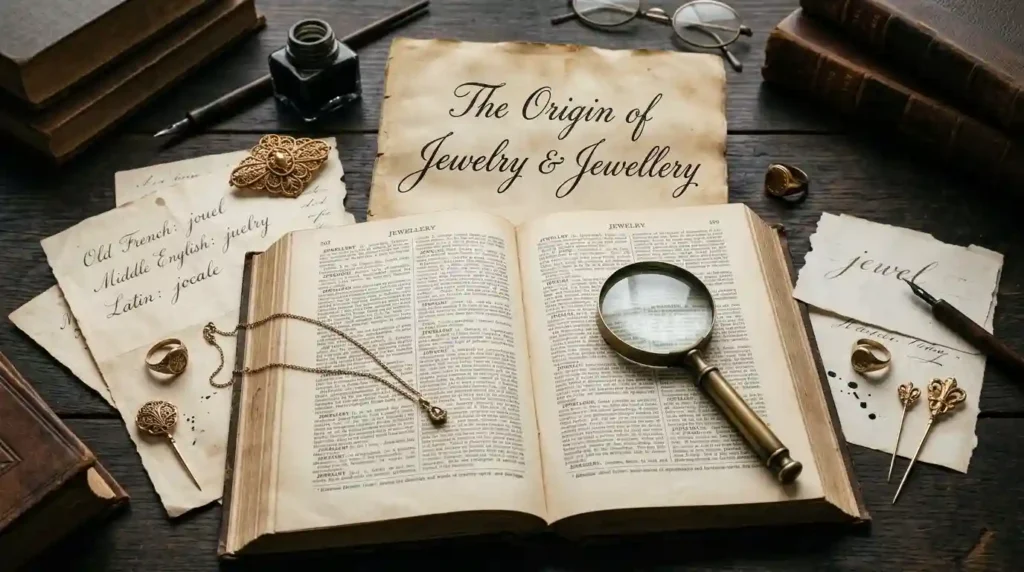
The word is old. It began with the Latin word jocale, which meant “plaything.” That came from jocus, which means “joke” or “play.” Think of the word jocular.
From Latin, the word moved into Old French as jouel or joyel. It meant a small, pretty object. English borrowed it around the 1300s as jewel. Later, people added an ending to name the whole group of jewels. The old spelling was jewelrie.
So why two spellings today? Because English spelling was not fixed for a long time. British writers kept the longer, French-style form with a double “l” and “-ery.” In the early 1800s, Noah Webster set out to make American spelling simpler. His dictionary dropped extra letters in many words. Jewelry came out shorter and closer to the word jewel.
That is the whole story. Same word. Two paths.
British English vs American English Spelling
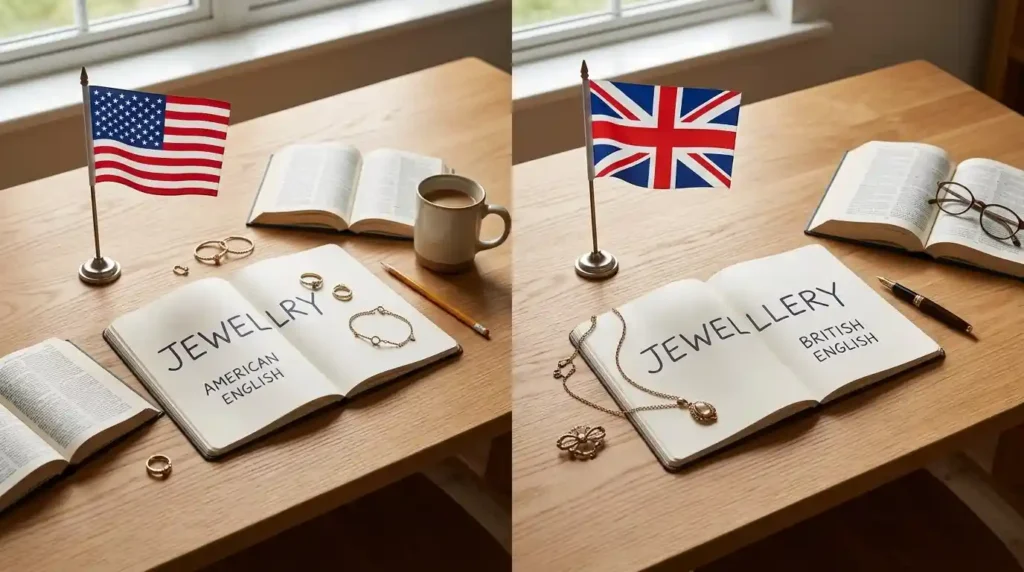
American and British English often differ in small ways. The word jewelry follows a pattern you already know.
| Feature | American English | British English |
| Jewelry/jewellery | jewelry | jewellery |
| Double “l” | Often single (traveling) | Often double (travelling) |
| -or / -our | color | colour |
| -ize / -ise | organize | organise (or organize) |
| -er / -re | center | centre |
| Pronunciation of the word | JOO-ul-ree | JOO-ul-uh-ree |
The big idea: Americans cut letters. The British keep them. Jewelry is shorter. Jewellery is longer. That is the only real difference.
Which Spelling Should You Use?
Think about your reader first.
Your audience is in the US. Use jewelry. Americans will see jewellery as a typo.
Your audience is in the UK, Ireland, Australia, New Zealand, India, Pakistan, or South Africa. Use jewellery. This is the standard in these places.
Your audience is in Canada. Canadians often use jewellery. But jewelry is common too. Check what your local brands use.
Your audience is global. Pick the spelling of your biggest market. If you run a shop, you can build pages for both. Use the right spelling for each region, and use hreflang tags so Google shows the right page to the right person.
Not sure? Look at your own customers. Use the spelling they type into search.
Common Mistakes with Jewelry and Jewellery
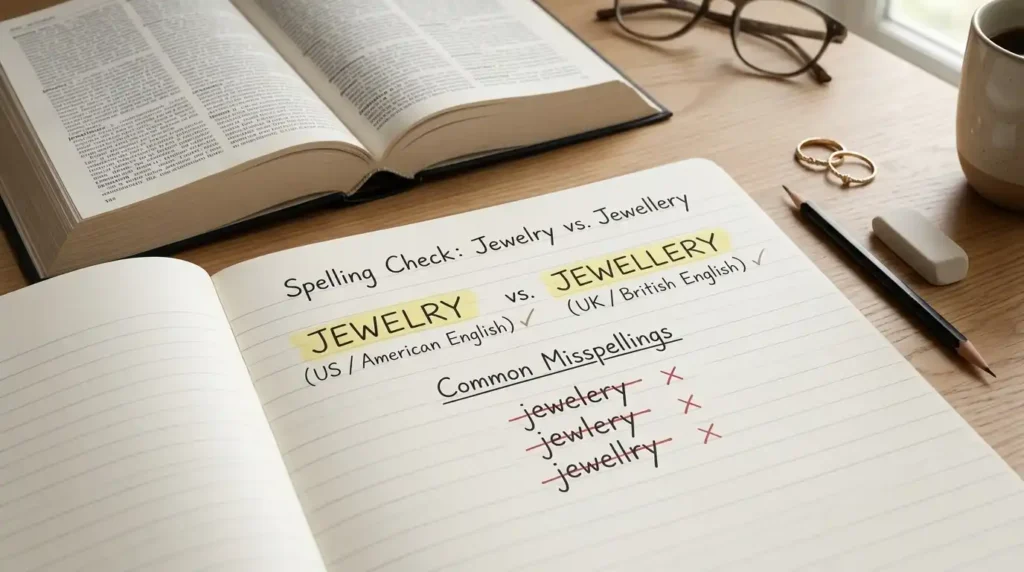
Here are mistakes people make most often.
- Mixing both spellings on one page. Wrong: “Our jewelry range is the best jewellery in town.” Right: pick one.
- Writing “jewellry” or “jewelery.” Both are wrong. Jewelry has no extra “e” before the “r.” Jewellery has two “l” letters and “-ery.”
- Writing “jewlery.” This one drops the “e” after “w.” Add it back: jewelry.
- Using the wrong spelling for your market. A UK shop that writes jewelry can look foreign to local buyers.
- Thinking one spelling is “wrong.” Neither is. They are both correct in the right place.
- Forgetting the plural. Jewelry is usually a mass noun. Say “some jewelry,” not “a jewelry.” For one item, say “a piece of jewelry.”
Jewelry and Jewellery in Everyday Examples
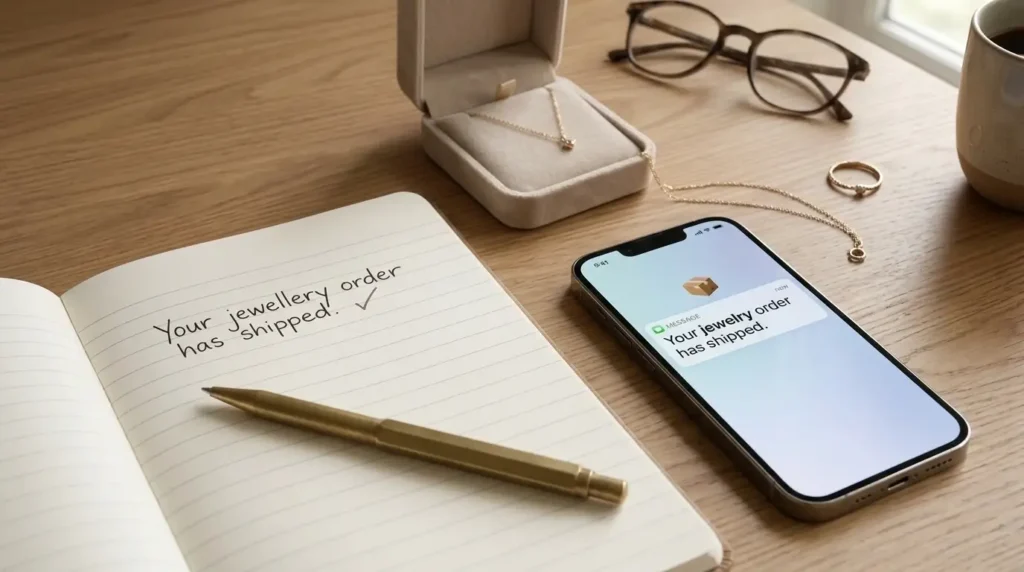
Email (US): “Hi Sam, your jewelry order has shipped. It should arrive Friday.”
Email (UK): “Hi Sam, your jewellery order has been dispatched. It should arrive on Friday.”
News headline (US): “Jewelry sales jump during the holiday season.”
News headline (UK): “Jewellery sales jump over the festive period.”
Social media (US): “New gold jewelry just dropped! Shop now. #jewelry”
Social media (UK/India): “New gold jewellery just in! Shop now. #jewellery”
Formal writing: “The museum holds ancient jewellery from the Roman period.” (UK style) or “The museum holds ancient jewelry from the Roman period.” (US style)
Notice that only the spelling changes. The meaning stays the same.
Jewelry or Jewellery Google Trends and Usage Data
Google Trends shows how often people search a term. It does not show exact search counts, only relative interest. Check it yourself for fresh numbers, because they change over time.
Here is the usual pattern:
- Jewelry gets more searches worldwide. The United States is a very big market, so it pulls the total up.
- Jewellery is strong in the UK, Ireland, India, Australia, New Zealand, Pakistan, and South Africa.
- Canada shows a mix of both.
- Context matters. Online shoppers often use the local spelling. Writers and students often search “jewelry or jewellery” to check which one to use.
Tip: when you search Google Trends, compare both words side by side and filter by country. Then match your spelling to your top market.
Keyword Variations Side by Side
| Variation | Correct? | Where it is used |
| jewelry | Yes | US, and often global brands |
| jewellery | Yes | UK, Commonwealth, India, Pakistan |
| jewelery | No | Common typo |
| jewlery | No | Common typo |
| jewellry | No | Common typo |
| jewelrey | No | Common typo |
Frequently Asked Questions
Is it jewelry or jewellery?
Both are correct. Jewelry is American. Jewellery is British.
Which spelling is more common?
Jewelry is more common worldwide because of the large US market. But jewellery is the standard in many countries.
Is “jewelery” a real word?
No. It is a common typo. Use jewelry or jewellery.
Does Canada use jewelry or jewellery?
Both appear in Canada. Jewellery is very common, but many Canadians also write jewelry. Follow your local audience.
Does the spelling change the meaning?
No. The meaning is exactly the same.
Which spelling is better for SEO?
The one your audience searches. Use jewelry for US readers and jewellery for UK and Commonwealth readers.
Can I use both spellings on my website?
Yes, but not on the same page. Make separate regional pages and use hreflang tags.
Is “jewelry” singular or plural?
It is a mass noun, so it is treated as singular. Say “This jewelry is beautiful,” not “These jewelries.”
Conclusion
So, jewelry or jewellery? Now you know. Both are correct. They are two spellings of the same word. Jewelry is American. Jewellery is British and used in many other countries.
The word began as the Latin jocale, then moved through French into English. The two spellings grew apart when American writers chose shorter forms and British writers kept the longer, older style.
Here are the key points to remember:
- Use jewelry for US readers.
- Use jewellery for UK, Ireland, India, Pakistan, Australia, New Zealand, and South Africa.
- Canada is mixed, so check your own audience.
- Never mix both spellings in one text.
- Avoid typos like jewelery and jewlery.
When in doubt, think about who will read your words. Then choose the spelling they know. Check Google Trends if you want proof. A small choice like this makes your writing look careful and professional. Your readers will notice, even if they never say so.

I’m Raheela Rani, a professional content writer and author with 3 years of experience in writing, editing, and storytelling. Through VisitLivo.com, I create clear, engaging, and well-crafted content that helps readers learn, connect, and communicate with confidence.