You typed “unkempt or unkept” into Google. You are not alone. Thousands of people search this every month. Some saw “unkempt” and thought it looked wrong. Some heard “unkept” in a sentence and wondered if it was a typo. Both words are real. But here is the twist: they are not two spellings of the same word. They are two different words with two different jobs.
This mix-up trips up native speakers and learners alike. Spell-check often makes it worse, since both words pass the check. The confusion feels like a British-vs-American spelling issue, similar to “colour” and “color.” It is not. This is a word-choice problem, not a regional-spelling problem.
In this guide, you get a fast answer first. Then you get the full story: where each word comes from, how to use them correctly, common mistakes, and real examples from emails, news, and social media. By the end, you will never mix them up again.
Unkempt or Unkept Quick Answer
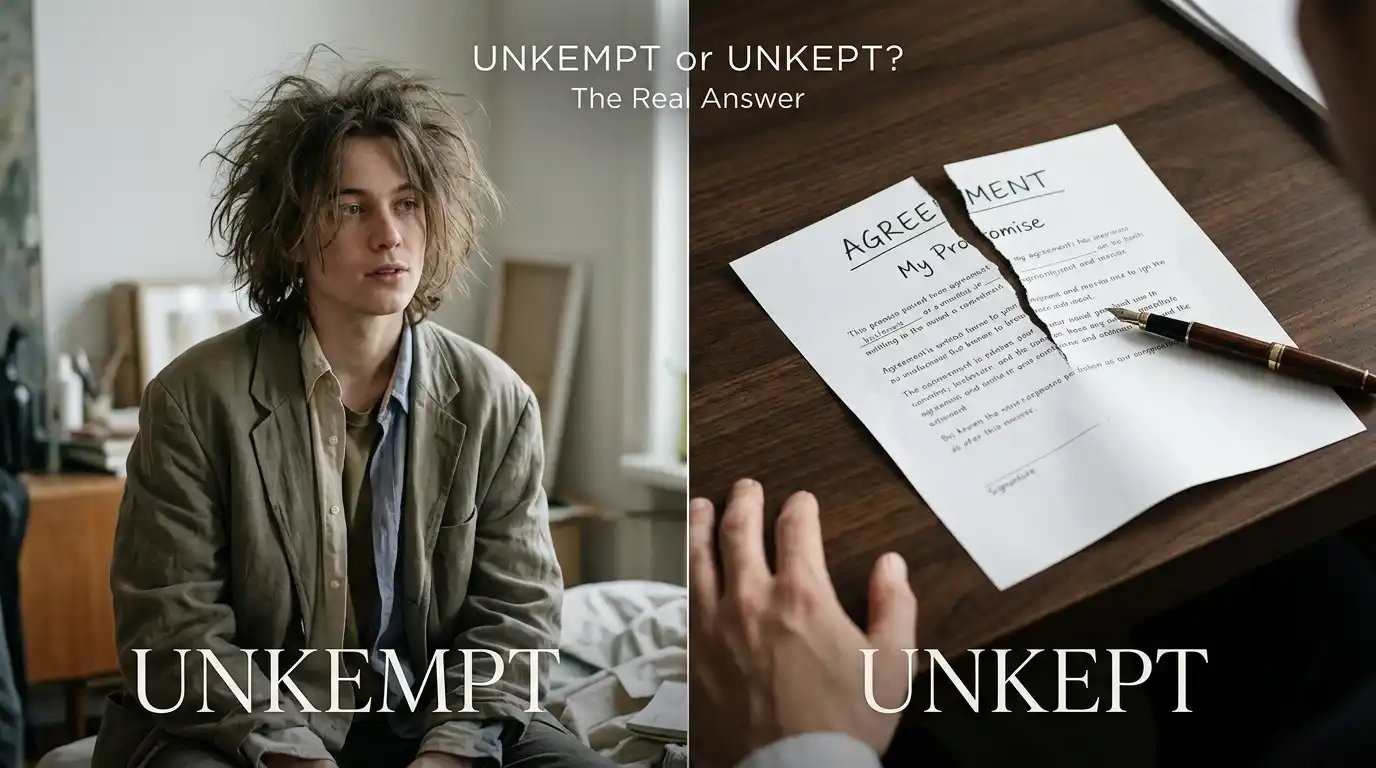
Use unkempt to describe hair, appearance, or a place that looks messy, uncombed, or neglected.
- “His unkempt hair stuck out in every direction.”
- “The unkempt yard had weeds up to the fence.”
Use unkept to describe a promise, agreement, or plan that was not honored or maintained.
- “She apologized for the unkept promise.”
- “The unkept deadline cost the team a client.”
Simple rule: Unkempt = messy look. Unkept = broken promise or unmet standard.
The Origin of Unkempt and Unkept
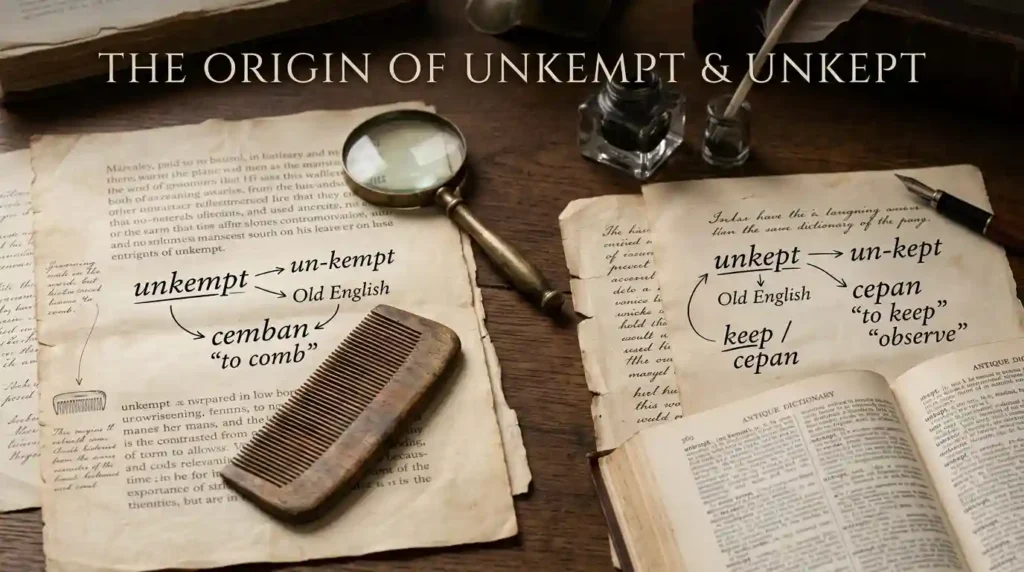
Both words trace back to the Old English verb “kempen,” meaning “to comb.” The prefix “un-” means “not.”
Unkempt comes from “kempt,” an old past-tense form of “to comb.” So “unkempt” literally meant “not combed.” Over time, its meaning grew to cover any messy or disheveled look, not just hair.
Unkept comes from the more common verb “to keep.” So “unkept” means “not kept.” This fits with promises, records, appointments, and property that someone failed to maintain.
Here is why the confusion exists: “kempt” almost disappeared from everyday English. Almost no one says “his hair is kempt” today. But “unkempt” survived as a standalone word. Meanwhile, “kept” stayed common, so “unkept” still feels like a normal negative form. The two words look like siblings, but they grew from different family trees.
Is There a British vs American Spelling Difference?
No. This is the biggest myth around this keyword. Unlike “colour/color” or “organise/organize,” unkempt and unkept are not regional spelling variants. Both words are used, and spelled the same way, in the US, UK, Canada, Australia, and everywhere else English is spoken.
The real difference is meaning, not geography. Still, people expect a table like this, so here is a clear comparison of how each word is actually used across English-speaking regions.
| Feature | Unkempt | Unkept |
| Meaning | Messy, uncombed, disheveled | Not honored, not maintained |
| Used for | Hair, clothes, yards, rooms | Promises, deadlines, records, agreements |
| US usage | Common | Common |
| UK usage | Common | Common |
| Regional spelling variant? | No | No |
| Word origin | “Kempt” (combed) | “Kept” (keep) |
| Example | “unkempt beard” | “unkept promise” |
Which Word Should You Use
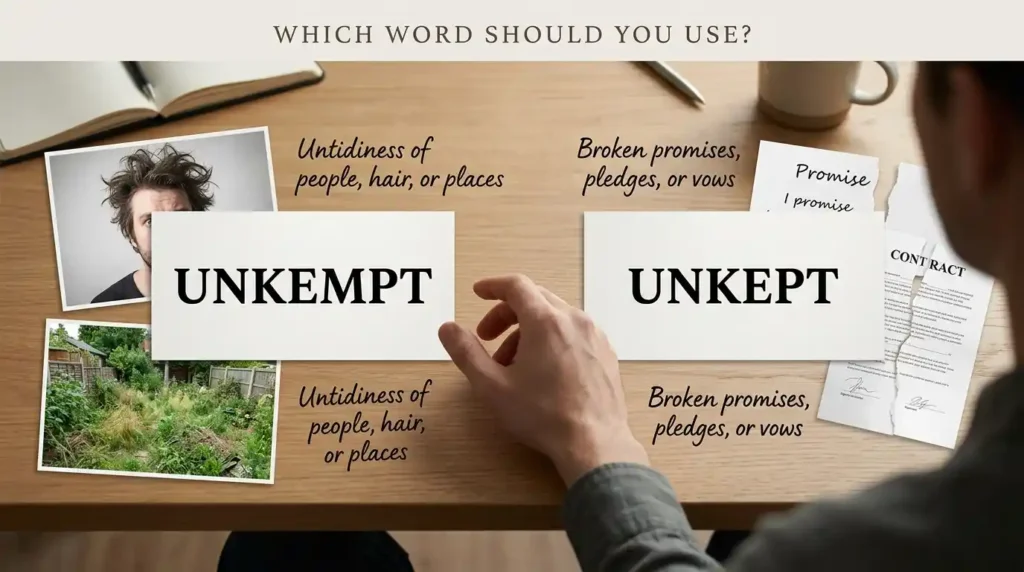
Since this is not a regional choice, pick the word based on what you are describing, not where your reader lives.
- Describing looks or a physical space? Use unkempt. Example: “The garden looked unkempt after months of rain.”
- Describing a promise, rule, or agreement that failed? Use unkept. Example: “The unkept contract terms led to a lawsuit.”
- Writing for a global audience? Both words are safe everywhere. Just match the word to the meaning.
- Unsure which fits? Ask yourself: “Am I talking about appearance, or about a broken commitment?” That answer picks your word.
Common Mistakes with Unkempt and Unkept
Mistake 1: Using “unkept” to describe messy hair. Wrong: “His unkept hair looked wild.” Right: “His unkempt hair looked wild.”
Mistake 2: Using “unkempt” for a broken promise. Wrong: “The unkempt promise upset the customer.” Right: “The unkept promise upset the customer.”
Mistake 3: Treating them as interchangeable spellings. They are not spelling variants. Swapping them changes the meaning of the sentence, not just the style.
Mistake 4: Overcorrecting to “unkept” because “unkempt” looks unusual. “Unkempt” is the correct and common word for messy appearance, even though it looks odd next to “kept” and “keep.”
Mistake 5: Using “kept” as the opposite of “unkempt.” The true opposite of “unkempt” is “kempt” (rare) or, more naturally, “neat” or “tidy.”
Unkempt and Unkept in Everyday Examples
In emails: “Apologies for the unkept commitment on last week’s deliverables. We are correcting the process now.”
In news writing: “Neighbors complained about the unkempt property, citing overgrown grass and broken fencing.”
On social media: “Woke up, threw on a hat because my hair is fully unkempt today 😅”
In formal writing or reports: “The audit revealed several unkept obligations in the vendor agreement, alongside an unkempt filing system that delayed the review.”
Notice how the same paragraph can use both words correctly, since they describe two different problems.
Unkempt or Unkept Google Trends & Usage Data
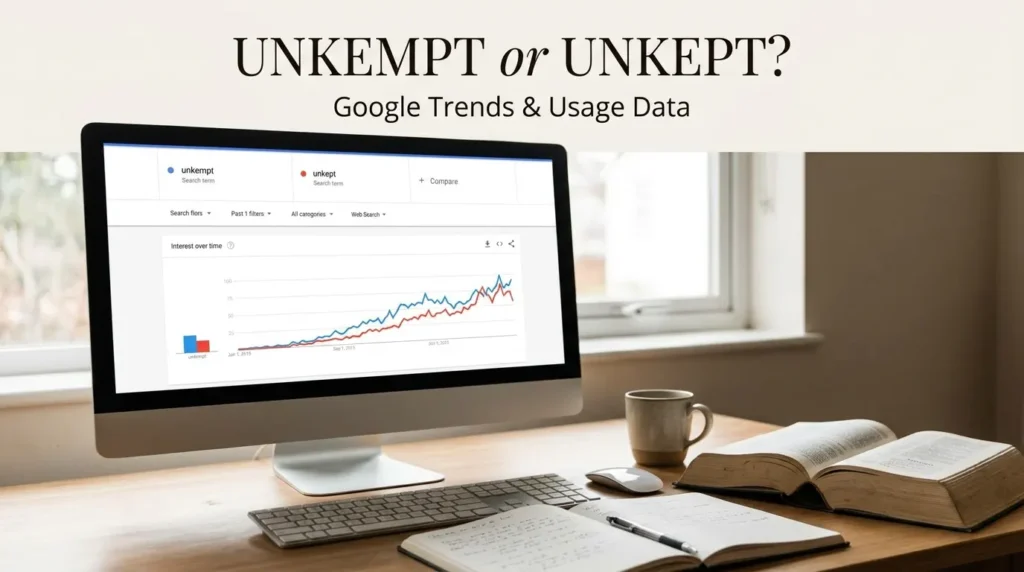
Search interest for “unkempt” is far higher than for “unkept” across nearly every English-speaking country, including the US, UK, Canada, Australia, and India. “Unkempt” also appears more often in published books, news articles, and style guides, since it describes a common visual idea: messy appearance.
“Unkept” shows up less often, mostly in business, legal, and news writing about broken promises, missed deadlines, or unmaintained agreements. It rarely appears in casual conversation.
Searches for “unkempt or unkept” spike when people read the word “unkempt” for the first time and assume it is a typo of “unkept,” since “kept” is the more familiar word. This pattern holds steady across regions, confirming that the confusion is about word recognition, not local dialect.
Keyword Variations Comparison Table
| Term | Correct? | Meaning | Example Use |
| Unkempt | Yes | Messy, uncombed, disheveled | “Unkempt hair” |
| Unkept | Yes | Not honored or maintained | “Unkept promise” |
| Unkempt or unkept | Search phrase | People comparing the two words | Search query |
| Umkempt | No (typo) | Misspelling of unkempt | N/A |
| Unkeempt | No (typo) | Misspelling of unkempt | N/A |
| Uncept | No (typo) | Misspelling of either word | N/A |
FAQs
Is “unkempt” a real word?
Yes. It means messy, uncombed, or disheveled, and it is standard in both American and British English.
Is “unkept” a real word too?
Yes. It means not kept, honored, or maintained, as in “an unkept promise.”
Can I use “unkempt” and “unkept” interchangeably?
No. They mean different things. Swapping them can confuse your reader or change your meaning.
Is this a British English vs American English spelling issue?
No. Both words are spelled the same and used the same way in US, UK, and other English-speaking countries. This is a word-meaning difference, not a spelling difference.
Which word describes messy hair?
“Unkempt.” Example: “His unkempt hair needed a haircut.”
Which word describes a broken promise?
“Unkept.” Example: “The unkept promise damaged their trust.”
Why does “unkempt” look strange if “kept” is the normal past tense of “keep”?
Because “unkempt” comes from a different, older word: “kempt,” meaning combed. It is not related to “keep” at all, even though the words look similar.
What is the opposite of “unkempt”?
“Neat,” “tidy,” or “well-groomed” work best. “Kempt” exists but is rarely used today.
Conclusion
“Unkempt or unkept” is one of the most searched word-confusion questions in English, but the fix is simple once you know the trick. These are not two spellings of one word. They are two separate words with two separate meanings. Unkempt describes messy hair, clothes, or spaces. Unkept describes a promise, deadline, or agreement that was not honored.
There is no British vs American spelling divide here, so you can use either word confidently no matter where your reader lives. Just match the word to the idea: looks versus commitments. Once you remember that “unkempt” comes from “combed” and “unkept” comes from “keep,” the difference becomes easy to recall.
Use this guide as a quick reference whenever you write emails, reports, or social posts. Getting this small detail right makes your writing clearer and more professional, and it shows readers you know the difference between how something looks and if someone followed through.

I’m Raheela Rani, a professional content writer and author with 3 years of experience in writing, editing, and storytelling. Through VisitLivo.com, I create clear, engaging, and well-crafted content that helps readers learn, connect, and communicate with confidence.