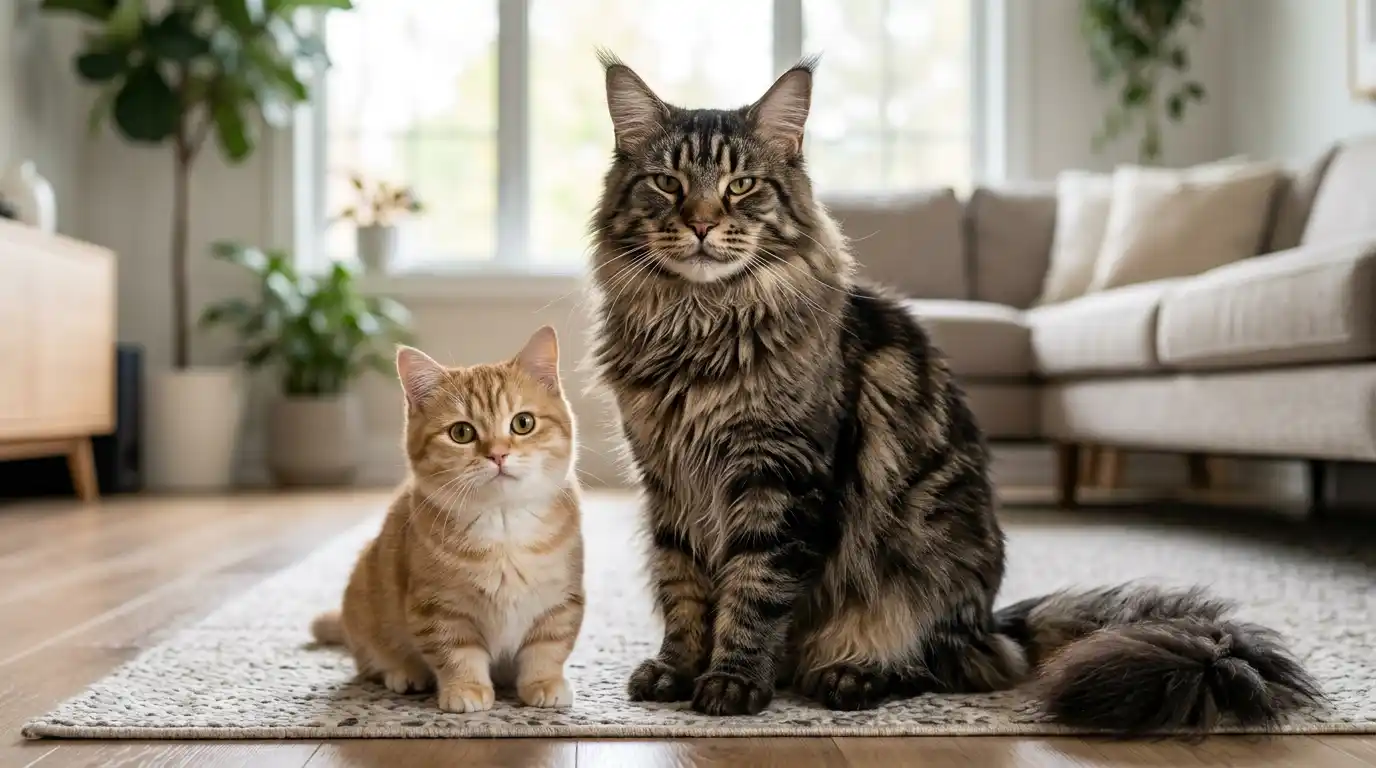
You typed “munchkin or maine coon” because you’re picking a cat, and these two names keep popping up. They could not be more different. One is small with short legs. The other is one of the biggest house cats in the world. People search this phrase to solve a simple problem: they don’t know which breed fits their home, their budget, or their lifestyle.
The confusion often comes from cat forums and pet sites that mention both breeds in “best family cats” lists, without explaining the size gap. A Munchkin can weigh 6 pounds. A Maine Coon can weigh 20. That’s not a small detail it changes everything, from furniture to food costs to vet bills.
This guide gives you a clear, no-fluff answer. You’ll get a quick summary first, then the full story: where each breed came from, how they compare side by side, common myths people believe, and real examples of how each name shows up in daily life. By the end, you’ll know exactly which cat matches you.
Munchkin or Maine Coon Quick Answer
If you want a short answer: choose based on size and energy, not looks alone.
- Munchkin: Small, short-legged, playful, good for apartments.
- Maine Coon: Large, fluffy, calm, needs more space.
Example: A Munchkin fits easily in a studio apartment and loves chasing toys on the floor, since it can’t jump as high as other cats. A Maine Coon does better in a house with room to stretch, since it’s often called a “gentle giant” that likes to roam.
If you live small and want a lap cat, pick a Munchkin. If you want a big, dog-like companion and have space, pick a Maine Coon.
The Origin of Munchkin and Maine Coon
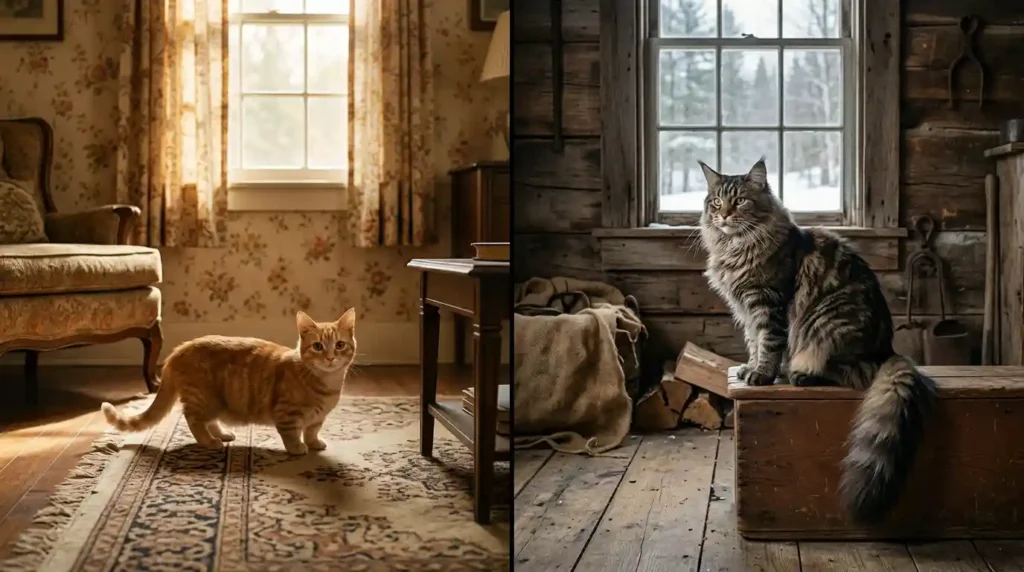
Both breeds have very different histories, and knowing them clears up a lot of confusion.
The Maine Coon is one of the oldest natural cat breeds in North America. It comes from the state of Maine, and its name likely refers to its raccoon-like tail. Sailors and farmers in New England kept these cats for barn work, since they were skilled hunters and could handle cold winters. Their thick fur and large paws developed naturally to survive snow.
The Munchkin is much newer. It was first documented in the United States in the 1990s, after a short-legged cat named Blackberry was found in Louisiana. The short legs come from a natural genetic mutation, similar to what causes short legs in Dachshund dogs. The breed was officially recognized by The International Cat Association (TICA) in 1995, though some cat groups still don’t recognize it due to health debates.
So the “confusion” isn’t about spelling it’s about assuming two popular cat names must be similar. They aren’t. One evolved on farms over centuries. The other exists because of one genetic trait discovered decades ago.
Munchkin vs Maine Coon Full Comparison
Here’s a side-by-side look at how these breeds actually differ.
| Feature | Munchkin | Maine Coon |
| Average weight | 5–9 lbs | 10–20 lbs |
| Leg length | Short | Normal |
| Coat | Short or long | Long, shaggy |
| Lifespan | 12–15 years | 12–15 years |
| Energy level | High, playful | Moderate, easygoing |
| Space needed | Small apartments okay | Needs more room |
| Grooming | Low to moderate | High (weekly brushing) |
| Good with kids | Yes | Yes |
| Vocal | Moderate | Chirpy, soft-spoken |
| Origin | United States, 1990s | United States, 1800s |
Which Cat Should You Choose
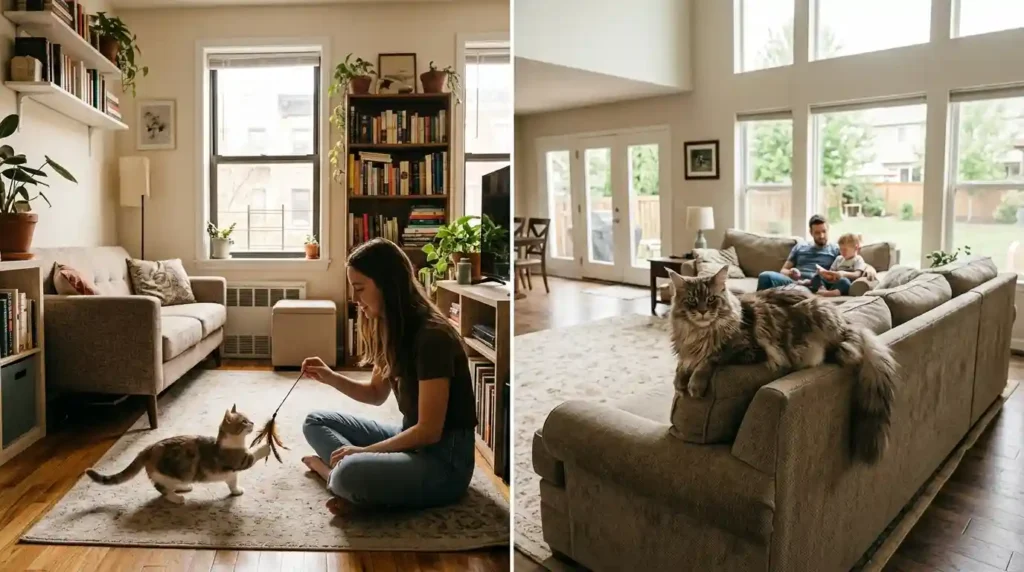
The right choice comes down to your space, your time, and the kind of companion you’re looking for.
Small apartment? Go with a Munchkin. It stays small for life and doesn’t need much room to roam.
House with space, kids, or other pets? A Maine Coon is calm, friendly, and usually gets along well with dogs.
Short on grooming time? A short-haired Munchkin needs far less brushing than a Maine Coon, whose thick coat mats quickly without weekly care.
Want a cat that acts like a dog? Maine Coons are known for following you from room to room, fetching toys, and greeting you at the door.
Watching your budget? Munchkins tend to cost less to adopt, though Maine Coons often cost more to feed simply because they’re bigger.
Common Mistakes People Make
Mistake 1: Thinking Munchkins can’t jump at all. Correction: They can jump, just not as high as cats with longer legs. They still climb and play normally.
Mistake 2: Believing Maine Coons are always giant from birth. Correction: Maine Coons grow slowly and don’t reach full size until 3- 5 years old. Kittens look like any other cat.
Mistake 3: Assuming Munchkins have serious health problems like Dachshunds. Correction: Some vets raise concerns about spine issues, but many Munchkins live full, healthy lives. Reputable breeders screen for problems.
Mistake 4: Confusing “Maine Coon mix” with purebred. Correction: Many cats labeled “Maine Coon” are actually mixed breeds with similar looks. A DNA test or breeder papers confirm a purebred.
Mistake 5: Picking a breed based on looks in photos alone. Correction: Photos don’t show temperament, shedding, or size in person. Always research care needs first.
Munchkin and Maine Coon in Everyday Life
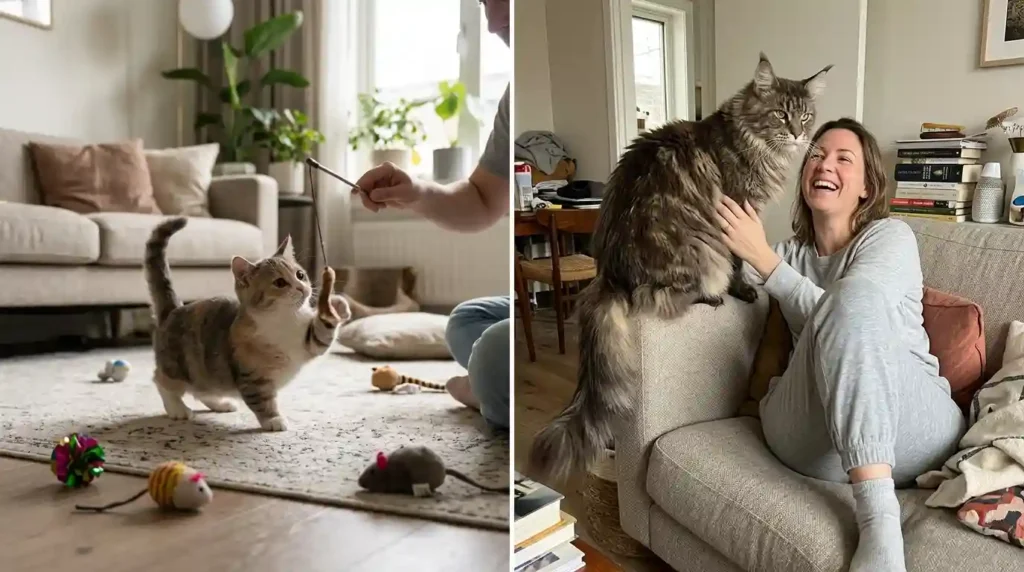
Social media caption:
“My Munchkin just tried to jump on the couch and missed. 😂 #shortlegsdontcare”
Classified ad:
“Maine Coon kittens for sale TICA registered, parents on site, ready in 8 weeks.”
Vet office conversation:
“She’s part Munchkin, so we keep an eye on her back and joints at every checkup.”
Pet adoption article:
“Maine Coons are often called the ‘gentle giants’ of the cat world, prized for their friendly nature and impressive size.”
Text message between friends:
“Trying to decide between a Munchkin or a Maine Coon which one sheds less?”
Search Trends and Popularity
Interest in both breeds has grown steadily over the past decade, driven largely by social media. Munchkin cats often go viral for their unusual short-legged walk, which drives spikes in search interest after popular video posts. Maine Coons see steady, consistent search demand year-round, tied to their reputation as one of the most popular pedigree breeds in the US and parts of Europe.
Searches comparing the two breeds directly, like “munchkin or maine coon,” usually come from first-time cat owners comparing personality and size before adopting, rather than from people confused about the words themselves. Interest tends to be highest in the United States, United Kingdom, and Canada, where both breeds are commonly available through breeders and shelters.
Keyword Variation Comparison Table
| Search Phrase | Likely Intent |
| munchkin or maine coon | Comparing breeds before adopting |
| munchkin vs maine coon | Direct comparison |
| maine coon munchkin mix | Looking for a hybrid cat |
| munchkin cat price | Cost research |
| maine coon cat price | Cost research |
| are munchkin cats healthy | Health concerns |
| how big do maine coons get | Size expectations |
Frequently Asked Questions
Can you mix a Munchkin and a Maine Coon?
Yes, breeders have created a “Minskin” or mixed short-legged Maine Coon-style cats, though this isn’t an officially recognized breed by most major cat associations.
Which is more expensive, a Munchkin or a Maine Coon?
Prices vary, but Maine Coons often cost more due to their size, popularity, and longer breeding process. Munchkins can range widely based on coat length and lineage.
Do Munchkins have health problems because of their short legs?
Some vets note potential spine strain, similar to short-legged dog breeds. Most Munchkins live normal, active lives with proper care.
Are Maine Coons good with children and other pets?
Yes, Maine Coons are known for a patient, social temperament, making them a popular choice for families with kids and other animals.
How long do Munchkin and Maine Coon cats live?
Both breeds typically live 12 to 15 years with proper diet, exercise, and veterinary care.
Which breed sheds more?
Maine Coons shed more due to their long, thick coats and need weekly brushing. Munchkins with short coats shed less and require less grooming.
Is a Munchkin considered a “real” cat breed?
Yes, TICA officially recognizes the Munchkin, though some cat organizations, like the CFA, have chosen not to due to genetic health debates.
Conclusion
Choosing between a Munchkin and a Maine Coon comes down to space, time, and lifestyle, not just looks. Munchkins are small, playful, and easy to manage in tight living spaces, while Maine Coons are large, calm, and better suited for homes with more room to roam. Both breeds are affectionate and family-friendly, but their care needs are very different, especially around grooming and size.
Before deciding, think about how much space you have, how often you can brush a long coat, and if you want a lap-sized companion or a “gentle giant” that follows you around the house. Neither breed is objectively better the right choice depends entirely on your home and habits.
Whichever you pick, both Munchkins and Maine Coons are known for loyal, loving personalities that make them popular choices for cat owners across the world.

“I’m Ibadat Fatima, a professional content writer and author with 3 years of experience in writing, editing, and storytelling. I share my work through visitlivo.com, where I help readers connect with clear, engaging, and well-crafted content.”