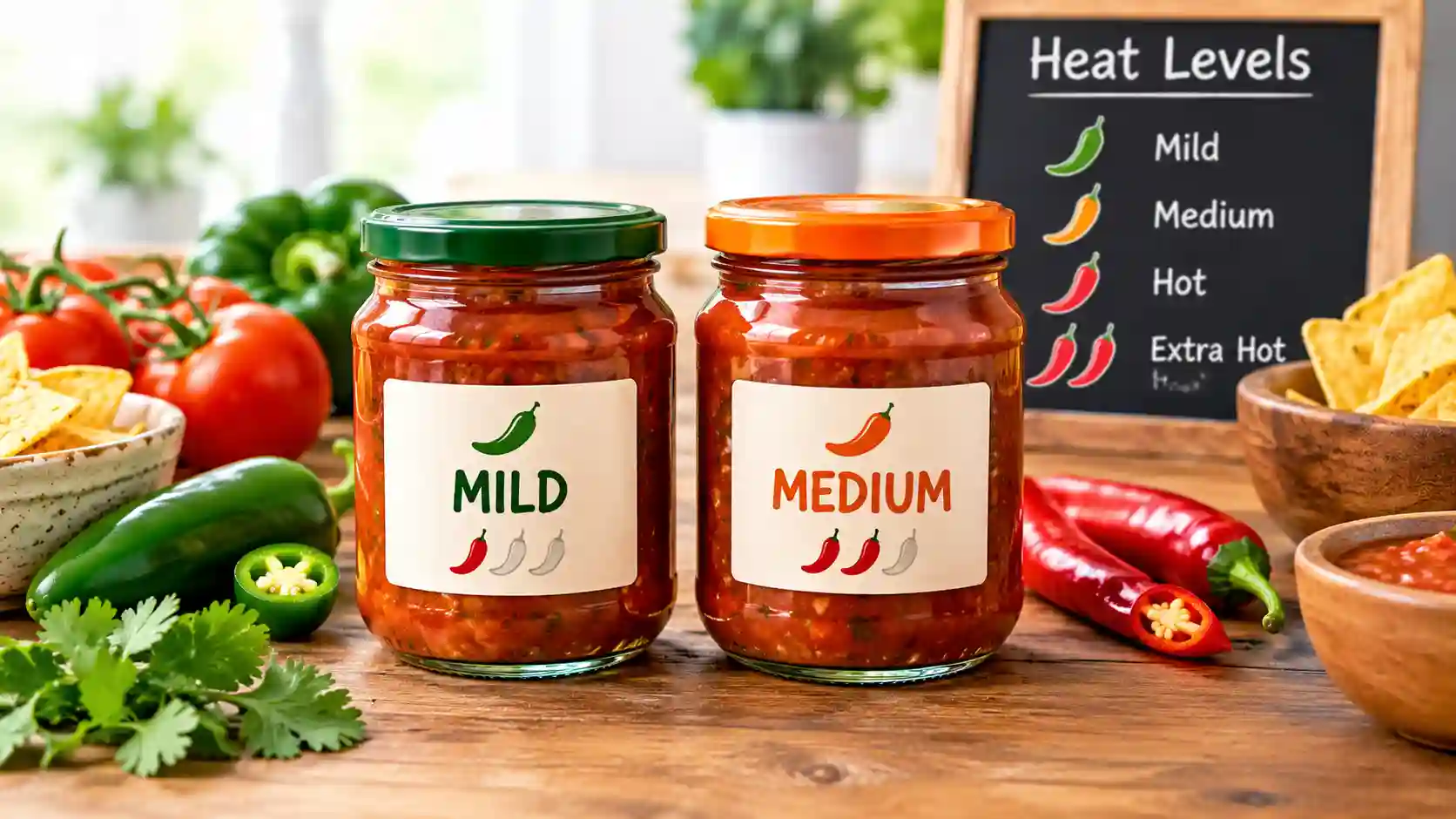
You stand at the store shelf. Two jars of salsa sit in front of you. One says mild. One says medium. You want a little kick, but you do not want to cry at dinner. So you ask: mild or medium hotter?
Millions of people type this question into Google. Chip bags, hot sauce, wings, curry, and taco kits all use these labels. But no law sets one rule for them. Each brand picks its own meaning. That is where the confusion starts.
The good news is that the basic order is simple. Mild is the low end. Medium sits in the middle. Hot sits above. So medium is hotter than mild.
In this guide, you get the quick answer first. Then you learn where the words come from, how brands use them, common mistakes, real examples, and clear answers to common questions. By the end, you will pick the right heat level every time.
Mild or Medium Hotter Quick Answer
Medium is hotter than mild.
Think of a heat ladder:
- Mild little to no heat
- Medium a noticeable kick
- Hot strong heat
- Extra hot very strong heat
Here are some examples:
- A mild salsa tastes tomato-forward with a tiny tingle.
- A medium salsa makes your mouth warm up after a few bites.
- Mild wings taste tangy or sweet.
- Medium wings make you reach for water.
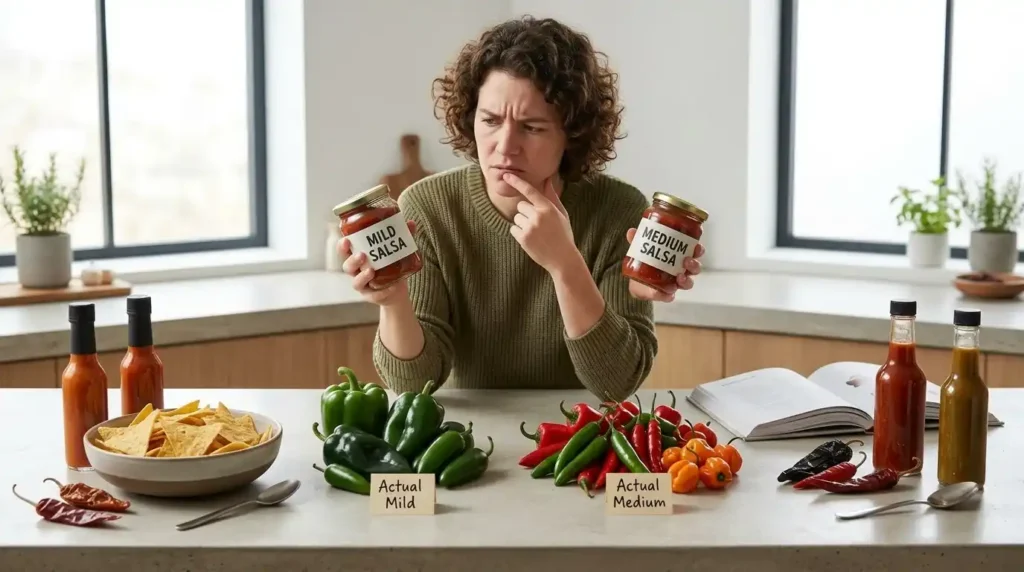
One warning: brands do not share one scale. A “medium” from one company may feel like another company’s “mild.” Always taste a little first.
The Origin of Mild Medium and Hotter
These words are old, and each one has its own story.
Mild comes from the Old English word milde. It meant gentle, kind, or soft. Long ago, people used it for weather, people, and food. Today it also means “low in heat.”
Medium comes from the Latin word medius, meaning “middle.” It came into English in the late 1500s. It always meant something in the center, between two ends.
Hot comes from the Old English word hāt. It first described high temperature. Later, people used it for spicy food, since chili peppers make your mouth feel burning heat.
Hotter is the comparative form of hot. English doubles the last letter before adding -er. That is why it is hotter, not hoter.
Do these words have spelling differences? No. Mild, medium, and hotter are spelled the same everywhere. The spelling fights happen with nearby words, like chili, chilli, and flavor. We cover those next.
British English vs American English Spelling
Good news: “mild,” “medium,” and “hotter” are spelled the same in British and American English. You do not need to switch anything.
The differences show up in words that often appear beside them:
| Word | American English | British English | Notes |
| Mild | mild | mild | Same |
| Medium | medium | medium | Same |
| Hotter | hotter | hotter | Same |
| Flavor | flavor | flavour | US drops the “u” |
| Chili pepper | chili | chilli | UK often uses double “l” |
| Chile | chile | chile | Used in some US regions, especially for peppers |
| Spicy | spicy | spicy | Same |
| Color | color | colour | US drops the “u” |
Simple rule: American English tends to use shorter spellings. British English keeps the extra letters in words like flavour and colour.
Which Spelling Should You Use?
For “mild,” “medium,” and “hotter,” you can relax. One spelling works for all readers. Here is how to handle the related words:
- US audience: Use chili and flavor.
- UK, Australia, and Commonwealth audience: Use chilli and flavour.
- Global audience: Pick one style and stay consistent. Do not mix chili and chilli on the same page.
- Product labels and menus: Match the style of the country where you sell.
Consistency matters more than which style you choose. Readers notice when a page mixes both.
Common Mistakes with Mild or Medium Hotter
| Mistake | Why it is wrong | Fix |
| “Mild is hotter than medium” | The order is reversed | Medium is hotter than mild |
| “Medium hoter” | Missing double “t” | hotter |
| “More hot” | Sounds awkward | hotter |
| “Mid” on menus | Informal and unclear | medium |
| “Mild means no heat at all” | Mild can have a slight kick | Mild means low heat |
| “All mediums are the same” | Brands set their own scales | Taste first or check the label |
| “Medium is twice as hot as mild” | No fixed math applies | Heat is not measured by label |
One more tip: the phrase “mild or medium hotter” is a question shortcut. In a full sentence, write: “Which is hotter, mild or medium?”
Mild or Medium Hotter in Everyday Examples

Email:
“Hi team, for the lunch order, please pick mild or medium. Medium is hotter, so choose mild if you don’t like spice.”
News:
“The restaurant added a new medium sauce. Customers said it was hotter than the mild but not as strong as the hot.”
Social media:
“Ordered medium wings and my mouth is on fire. Next time I’m going mild 😅”
Formal writing (menu or product page):
“Our sauces range from mild to extra hot. Medium is hotter than mild and suits guests who enjoy moderate spice.”
Product label:
“Heat level: Medium. Hotter than our mild recipe.”
Mild or Medium Hotter Google Trends & Usage Data
I can’t pull live Google Trends numbers here, so I won’t make any up. You can check the current data at trends.google.com by searching “mild or medium” or “mild vs medium.”
Here are the general patterns for this type of search:
- Countries: Interest is usually strongest in English-speaking places with big salsa, wing, and curry food cultures, such as the US, Canada, the UK, and Australia.
- Timing: Food-heat questions often rise around game days, holidays, barbecue season, and party planning.
- Context: Most people ask about salsa, hot sauce, wings, taco seasoning, curry, and chili.
- Intent: Searchers want a fast answer. They are often standing in a store or ordering food.
Keyword variations side by side:
| Search phrase | Likely intent | Best answer |
| mild or medium hotter | Quick heat comparison | Medium is hotter |
| mild vs medium | Compare two levels | Medium has more heat |
| is medium hotter than mild | Yes/no answer | Yes |
| mild medium hot order | Learn the full scale | Mild, medium, hot, extra hot |
| medium vs hot salsa | Next step up | Hot is hotter than medium |
| which is spicier mild or medium | Same question, different word | Medium |
FAQs
Is medium hotter than mild?
Yes. Medium always sits above mild on the heat scale.
How much hotter is medium than mild?
There is no fixed amount. Each brand sets its own level. Medium is usually a noticeable step up.
Is mild completely non-spicy?
Not always. Mild often has a very small kick. Some people with low spice tolerance still find it warm.
Is medium hot enough for spicy food lovers?
Often not. People who love spice usually choose hot or extra hot.
Do all brands use the same scale?
No. A medium from one brand can taste milder or hotter than another brand’s medium.
What measures real pepper heat?
The Scoville scale measures the heat of peppers. Food labels like mild and medium do not use it directly.
What should I choose if I’m unsure?
Start with mild. You can always add hot sauce. You cannot remove heat once it’s there.
Is “hotter” spelled differently in the UK?
No. It is spelled hotter in both British and American English.
Conclusion
So, mild or medium hotter? The answer is medium. Mild sits at the bottom of the heat ladder. Medium sits in the middle. Hot and extra hot sit above.
Here are the key points to remember:
- Medium is hotter than mild.
- These words are spelled the same in British and American English.
- Nearby words like chili/chilli and flavor/flavour do change by region.
- Brands set their own heat levels, so one company’s medium may not match another’s.
- The correct spelling is hotter, with two t’s.
For your own writing, keep it simple. Use “mild,” “medium,” and “hot” as clear labels. Pick one spelling style for related words and stick to it.
For your own plate, start low. Try mild first, then move up to medium if you want more kick. Your mouth will tell you when you’ve reached the right level. And when in doubt, keep a glass of milk nearby.

“I’m Ibadat Fatima, a professional content writer and author with 3 years of experience in writing, editing, and storytelling. I share my work through visitlivo.com, where I help readers connect with clear, engaging, and well-crafted content.”