You are about to write a word about car wheels. You stop. Is it tyre or tire? Both look right. Both look wrong. You are not alone. Thousands of people search this question every month.
People search “tyre or tire” for many reasons. Bloggers want the right spelling for their posts. Workers want it for emails. Shop owners need it for product pages. Students need it for essays. They all want the same thing: the right spelling for their reader.
The good news is simple. Both spellings are correct. They mean the same thing. The only difference is where you live and who reads your work.
In this guide, you get a quick answer first. Then you learn where the words came from, how each country uses them, and which one to pick. You also see common mistakes, real examples, and answers to popular questions. By the end, you will never doubt this word again.
Tyre or Tire Quick Answer
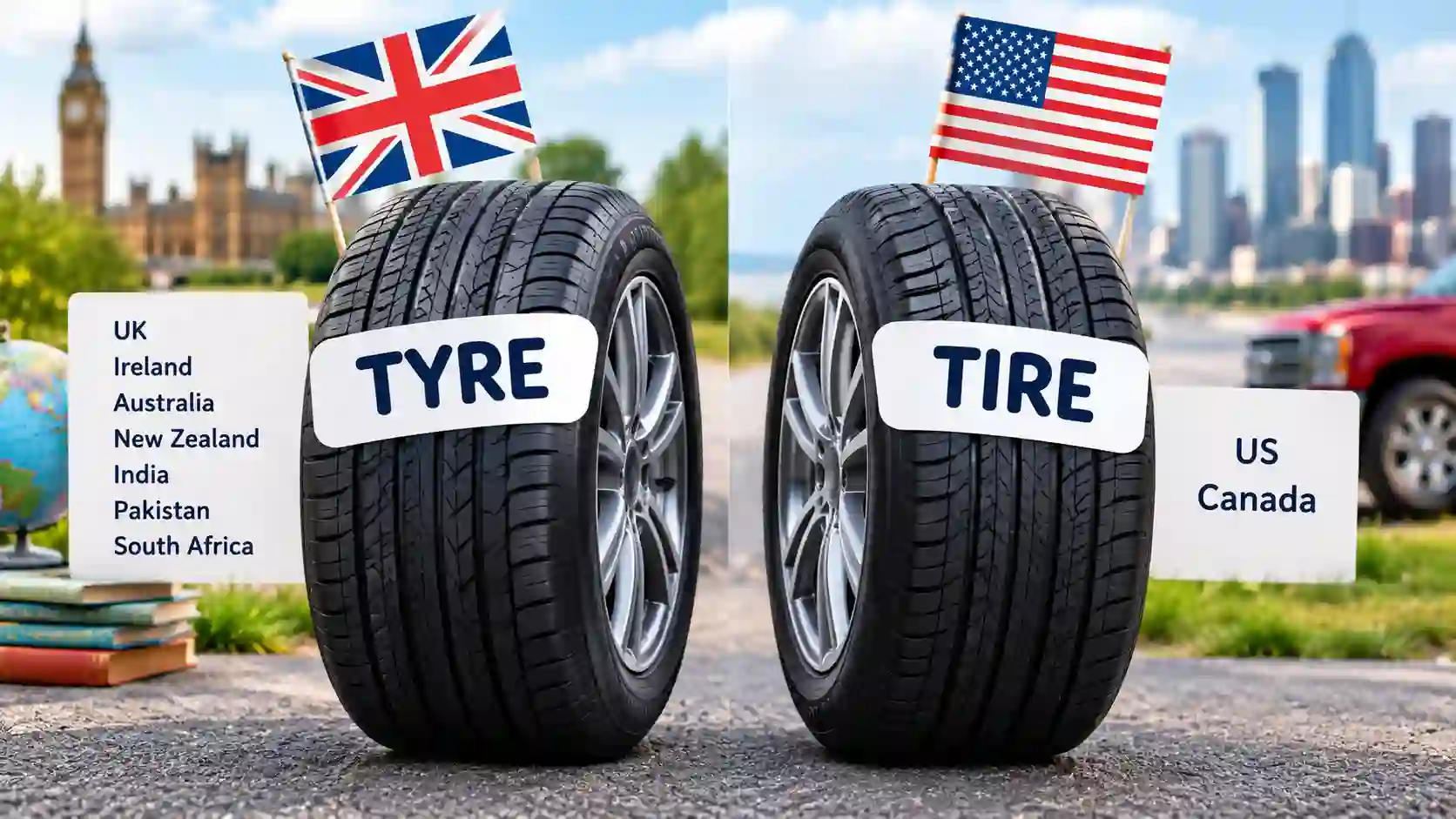
Tyre is the British spelling. Tire is the American spelling. Both mean the rubber ring around a wheel.
- In the US and Canada: “I need a new tire.”
- In the UK, Ireland, Australia, New Zealand, India, Pakistan, and South Africa: “I need a new tyre.”
Pick one spelling and use it every time in the same piece of writing.
The Origin of Tyre or Tire
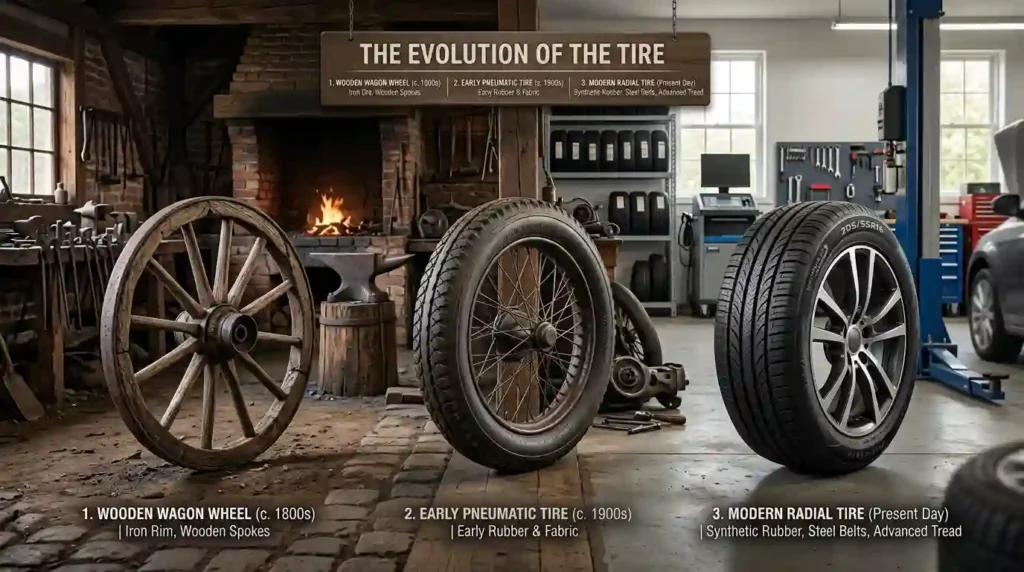
The word is old. Most experts link it to the word attire, which means “to dress.” Long ago, people put an iron band around a wooden wheel. The band “dressed” the wheel. So it was called a tire.
For many years, the British also spelled it tire. Both countries used the same word.
Things changed in the 1800s. Rubber tyres filled with air were invented, and they became popular around 1900. At about that time, British writers began to use tyre for the new invention. The American spelling stayed tire.
Why did the spelling split? English had no strict rules then. Britain and America grew apart in spelling over time. Noah Webster, an American writer, also pushed for simpler spellings. Spelling tire the old way fit that plan.
British English vs American English Spelling
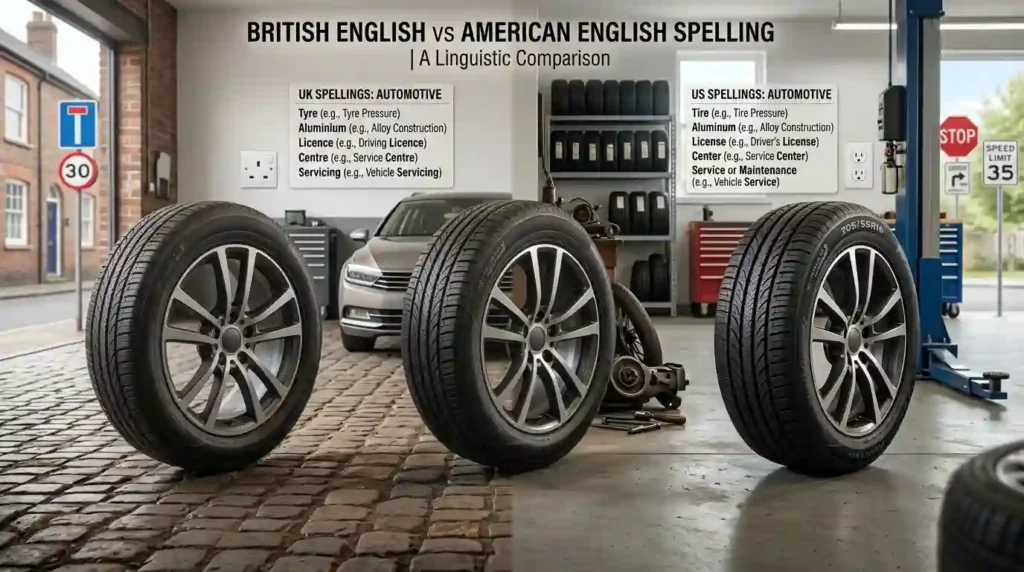
Many words differ between the two versions of English. Most follow a pattern. Tyre is a bit special. It is one of a small group of words where the British kept a “y” for a reason of style, not sound.
| Meaning | British English | American English |
| Rubber wheel cover | tyre | tire |
| Grey colour | grey | gray |
| Favourite thing | favourite | favorite |
| Theatre building | theatre | theater |
| Aluminium metal | aluminium | aluminum |
| Kerb by the road | kerb | curb |
Here is a rule of thumb. If your reader writes “colour” and “centre,” they want tyre. If your reader writes “color” and “center,” they want tire.
Which Spelling Should You Use?
Think about your reader first.
- Readers in the US or Canada: Use tire.
- Readers in the UK, Ireland, Australia, New Zealand, India, Pakistan, or South Africa: Use tyre.
- A global audience: Pick one. Many big websites use tire, because the US is the largest English-speaking market. But if most of your traffic comes from the UK or Commonwealth, use tyre.
- A business with a brand style guide: Follow the guide.
A quick tip for websites: match your spelling to your top country. Also, set your page language (like en-GB or en-US) so search engines understand.
Common Mistakes with Tyre or Tire

Mistake 1: Mixing both spellings.
Wrong: “Check your tyre pressure. A flat tire is dangerous.”
Right: “Check your tire pressure. A flat tire is dangerous.”
Mistake 2: Using “tyre” as a verb.
The verb “to tire” means to get sleepy. It is always spelled tire, even in Britain.
Wrong: “The long drive will tyre me.”
Right: “The long drive will tire me.”
Mistake 3: Thinking one spelling is wrong.
Neither is wrong. They are two correct versions.
Mistake 4: Using a US spelling for a UK client.
This can look careless. Always check who your reader is.
Mistake 5: Confusing “tire” with “tier.”
A tier is a level, like a tier of a cake. It is not a wheel part.
Tyre or Tire in Everyday Examples
Email (UK):
“Hi Sam, the garage called. Your rear tyre needs replacing.”
Email (US):
“Hi Sam, the shop called. Your rear tire needs replacing.”
News headline (UK):
“New tyre law to make roads safer”
News headline (US):
“Tire maker recalls 100,000 units”
Social media (UK):
“Flat tyre on the way to work. Great start to Monday! 😩”
Social media (US):
“Just fixed a flat tire in the rain. Send coffee. ☕”
Formal writing:
“The company will test each tyre for wear and safety.” (UK)
“The company will test each tire for wear and safety.” (US)
Tyre or Tire Google Trends & Usage Data
Google Trends shows how often people search a word. It does not give exact counts, but it shows patterns. Here is what those patterns usually look like:
- United States and Canada: “Tire” is far more common. Few people there search “tyre.”
- UK and Ireland: “Tyre” leads by a wide margin.
- Australia and New Zealand: “Tyre” is the main spelling.
- India, Pakistan, and South Africa: “Tyre” is common, since these places follow British English. You will still see “tire” often because of US websites and brands.
- Worldwide: “Tire” often appears more in total, because of the size of the US market.
People also search related phrases: tyre pressure, tire pressure, tyre shop, tire size, and tire near me. Search words change by season. Winter brings more searches for snow tyres, for example.
Want the latest numbers? Open Google Trends, type both words, and compare them by country and date range. Numbers change over time.
Keyword Variations Side by Side
| Term | Spelling Type | Main Users | Example |
| tyre | British | UK, Ireland, Australia, India, Pakistan | “The tyre is flat.” |
| tire | American | US, Canada | “The tire is flat.” |
| tyres | British plural | UK and Commonwealth | “Four new tyres” |
| tires | American plural | US, Canada | “Four new tires” |
| tyre pressure | British phrase | UK and Commonwealth | “Check tyre pressure.” |
| tire pressure | American phrase | US, Canada | “Check tire pressure.” |
| tire (verb) | Both | Everywhere | “Walking can tire you.” |
FAQs
Is it tyre or tire?
Both are right. Tyre is British. Tire is American.
Which spelling is correct in English?
Both. Neither one is wrong. Choose based on your reader.
Do Canadians say tyre or tire?
Canadians use tire, like Americans.
Do Australians use tyre or tire?
Australians use tyre.
Is “tire” also a verb?
Yes. “To tire” means to become tired. This spelling is the same in the UK and the US.
Why did the British change to “tyre”?
Spelling was not fixed in the past. When air-filled rubber tyres arrived, British writers began using tyre. It stuck.
Should I use tyre or tire on my website?
Use the spelling your main audience uses. Check your traffic by country.
Does the spelling change how Google ranks my page?
Google understands both spellings, but results can differ by country. Matching your reader’s spelling helps you match what they type.
Conclusion
So, tyre or tire? The answer is easy. Both are right. Tyre is the British spelling. Tire is the American spelling. They mean the same thing: the rubber ring on a wheel.
Here are the key points to remember:
- Use tire for readers in the US and Canada.
- Use tyre for readers in the UK, Ireland, Australia, New Zealand, India, Pakistan, and South Africa.
- Use tire for the verb “to get tired,” everywhere.
- Never mix both spellings in one piece of writing.
- Check your audience before you write.
The old word came from attire, meaning to dress a wheel. Over time, Britain and America went different ways. Now we have two spellings for one thing.
When in doubt, think of your reader. Pick the spelling they use. Keep it the same from start to finish. That is all it takes to look clear, careful, and professional.
Next time you type this word, you will know just what to do.

I’m Raheela Rani, a professional content writer and author with 3 years of experience in writing, editing, and storytelling. Through VisitLivo.com, I create clear, engaging, and well-crafted content that helps readers learn, connect, and communicate with confidence.