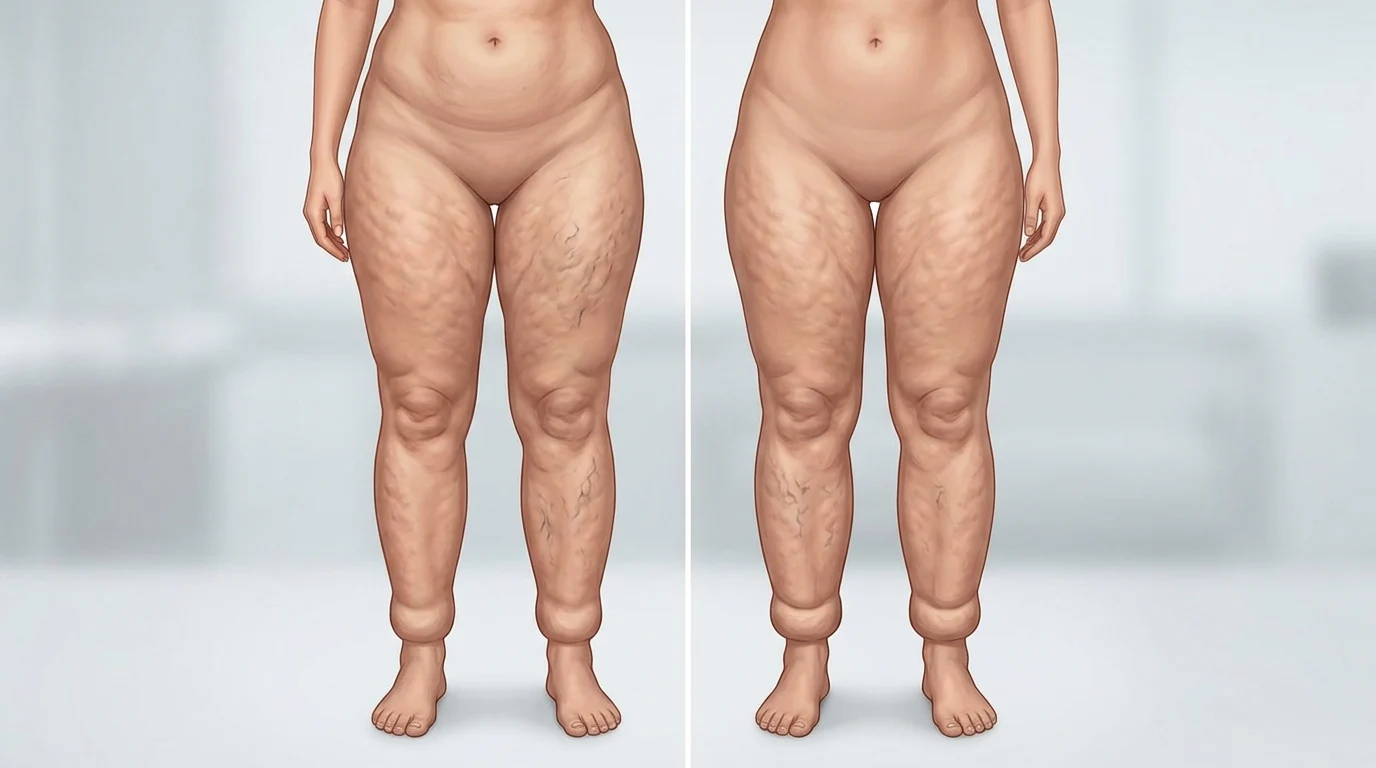
You glance at your legs and notice lumps, dimples, or extra size. A question pops up: is this lipedema or cellulite? If you’ve wondered the same thing, you’re in good company. Thousands of women ask it every month. Many people type “lipedema or cellulite” into Google every day. Here is why. The two can look alike. Both show up on the thighs and hips. Both mostly affect women. But they are not the same thing.
Cellulite is very common and harmless. Lipedema is a long-term medical condition. It can hurt. It can get worse over time.
Many women wait years for the right answer. Some are told it is just weight. Some are told it is just cellulite. Both answers can be wrong.
Then there is the spelling. Is it lipedema or lipoedema? The US and the UK spell it differently. That adds more confusion.
This article clears it all up. You will get a quick answer first. Then you will learn where the words come from, how the spellings differ, and which one to use. You will also see common mistakes, real examples, and search trends. At the end, you will find simple FAQs and clear next steps.
Read on. Your answer is here.
Lipedema or Cellulite Quick Answer
Cellulite is dimpled skin. The skin looks bumpy, a bit like cottage cheese. It is harmless, and it doesn’t cause pain. Most women have some.
Lipedema is a health condition. Fat builds up in the legs, hips, and sometimes the arms. Both sides of the body look the same. The skin feels sore. It bruises easily. The feet are usually not affected. So the leg can look like it has a “cuff” at the ankle.
Here is a simple way to compare:
| Feature | Cellulite | Lipedema |
| What is it? | Skin dimples | Medical condition |
| Pain | No | Often yes |
| Bruising | Not more than usual | Easy bruising |
| Size change | Not usually | Legs or arms grow out of scale |
| Diet and exercise | Can help a little | Do not shrink affected areas well |
| Feet | Normal | Usually spared |
Example: A woman has dimples on her thighs. They do not hurt. That is likely cellulite. Another woman has large, tender legs and slim feet. Her legs bruise from a light bump. That could be lipedema. Only a doctor can say for sure.
The Origin of Lipedema or Cellulite

Lipedema comes from Greek. Lipos means fat. Oidema means swelling. Put them together and you get “fat swelling.” Two doctors at the Mayo Clinic, Allen and Hines, first described it in 1940.
Cellulite comes from French. It grows from the Latin word cellula, which means “small cell” or “small room.” French doctors used the word long ago. Then it spread in the 1960s when magazines started using it for beauty talk.
Why do spellings differ? The Greek letters “oi” became “oe” in Latin. British English kept the “oe.” American English dropped it and used a plain “e.” That is why we have oedema in the UK and edema in the US. The same rule turns lipoedema into lipedema.
Cellulite has no such split. It is spelled the same way everywhere.
British English vs American English Spelling
The difference is small. It is just one letter.
| Word Type | American English | British English |
| The condition | lipedema | lipoedema |
| Swelling | edema | oedema |
| Hormone | estrogen | oestrogen |
| Child doctor | pediatrician | paediatrician |
| Blood condition | anemia | anaemia |
| Skin dimples | cellulite | cellulite |
Rule: Where the US writes “e,” the UK often writes “oe” or “ae.” This comes from old Greek and Latin words.
Note: Cellulite does not change. Only lipedema has two forms.
Which Spelling Should You Use?
Pick the spelling your readers use.
- US readers: Use lipedema. This is also the norm in Canada.
- UK, Ireland, Australia, New Zealand, and most of the Commonwealth: Use lipoedema.
- Global readers: Use one spelling on the page. Then mention the other once. For example: “Lipedema (also spelled lipoedema).” This helps people find you in search.
Tip: Do not mix spellings in one article. Stay steady. It looks more professional.
Tip for websites: If you write for both groups, add the other spelling in a subheading or FAQ.
Common Mistakes with Lipedema or Cellulite
1. Mixing up cellulite and cellulitis.
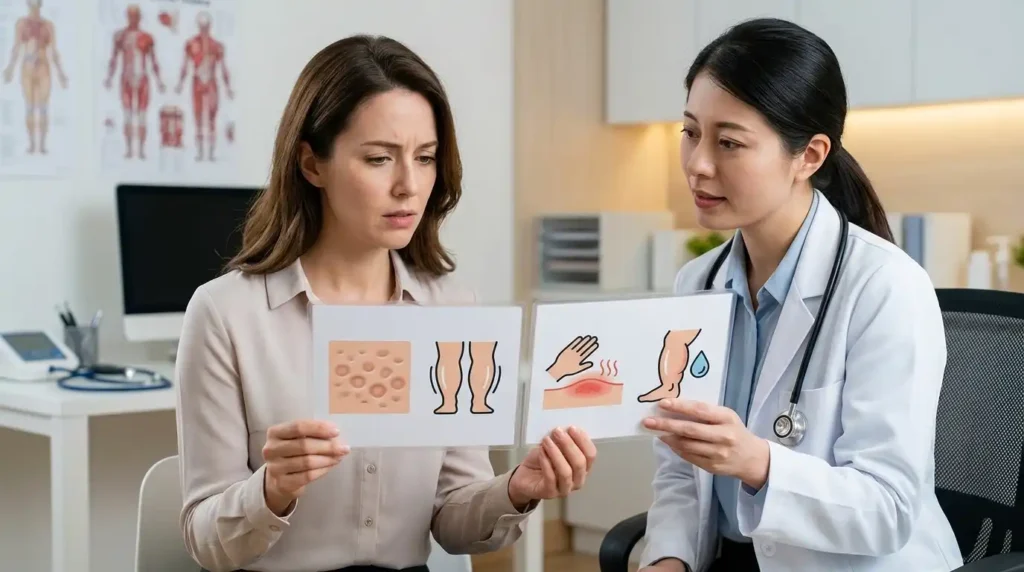
Cellulitis is a skin infection. It needs urgent care. Cellulite is just dimpled skin. They are not the same.
2. Thinking lipedema is just weight gain.
Lipedema fat behaves differently. It often does not shrink with diet and exercise in the affected areas.
3. Confusing lipedema with lymphedema.
Lymphedema is swelling from fluid. It often hits one limb and can include the feet. Lipedema is fat tissue and is usually on both sides.
4. Wrong spellings.
Common errors are lipodema, lypedema, and lipoedema in a US article. Check your audience.
5. Skipping the doctor.
Do not diagnose yourself. Photos and articles can guide you. A trained doctor can confirm.
6. Believing all leg dimples mean lipedema.
Most dimples are cellulite. Lipedema is much less common.
Lipedema or Cellulite in Everyday Examples
In an email to a doctor:
“Hi Dr. Lee, my legs are painful and bruise easily. I think it may be lipedema, not cellulite. Can I book a visit?”
In a news headline:
“Lipoedema: The Hidden Condition Many Women Mistake for Cellulite”
On social media:
“For years I thought it was cellulite. Turns out it was lipedema. Get checked if your legs hurt. 💛”
In formal writing:
“Lipedema is a chronic disorder marked by symmetrical fat buildup. It should not be confused with cellulite, which is a cosmetic skin change.”
In a UK health leaflet:
“Lipoedema often begins during puberty, pregnancy, or menopause.”
Lipedema or Cellulite Google Trends & Usage Data

Search habits tell a clear story.
- Cellulite is a household word. People have searched for it for many years. Interest is high around summer and holiday seasons.
- Lipedema was once rare in search. Interest has grown in recent years as more women share stories online and more doctors talk about it.
- By country: The spelling lipedema leads in the US and Canada. Lipoedema leads in the UK, Ireland, and Australia. Some countries, like Germany, use “Lipödem,” a form of the same word.
- By context: People search “cellulite” for beauty and skin care. People search “lipedema” for symptoms, diagnosis, and treatment. Many also search “lipedema vs cellulite” to compare.
Tip: Open Google Trends and type both spellings. Set the region to your country. You will see which form your audience uses most. Numbers change over time, so check for fresh data.
Keyword Variations Side by Side
| Keyword | Meaning | Where Common | Best Use |
| lipedema | Fat disorder (US spelling) | US, Canada | US content |
| lipoedema | Fat disorder (UK spelling) | UK, Ireland, Australia | UK content |
| cellulite | Dimpled skin | Everywhere | Beauty and skin content |
| cellulitis | Skin infection | Everywhere | Medical warnings only |
| lymphedema | Fluid swelling | Everywhere | Comparing swelling types |
| lipedema vs cellulite | Comparison search | Everywhere | Guides like this one |
FAQs
Is lipedema the same as cellulite?
No. Cellulite is harmless dimpled skin. Lipedema is a medical condition with fat buildup, often with pain.
Is it lipedema or lipoedema?
Both are correct. Lipedema is the US spelling. Lipoedema is the UK spelling.
Can you have both lipedema and cellulite?
Yes. Some women with lipedema also have cellulite. Having one does not rule out the other.
Does lipedema hurt?
Often, yes. Many women feel soreness, heaviness, or tenderness in the legs. Cellulite usually does not hurt.
Can diet and exercise get rid of lipedema?
Not fully. They help overall health and comfort. But lipedema fat in the legs and hips often stays.
Who can diagnose lipedema?
A doctor who knows the condition. This may be a vascular specialist, a lymphatic specialist, or a doctor with experience in fat disorders. Diagnosis is based on your history and a physical exam.
Is cellulite the same as cellulitis?
No. Cellulitis is a skin infection with redness, heat, and pain. See a doctor fast if you think you have it.
When should I see a doctor?
See one if your legs hurt, bruise easily, or grow out of scale with your body. Also go if diet and exercise do not change the affected areas.
Conclusion
So, lipedema or cellulite? Here is what to remember.
Cellulite is common and harmless. It shows up as skin dimples. It does not usually hurt. Most women have it.
Lipedema is different. It is a long-term condition. Fat builds up in the legs, hips, or arms in a way that looks out of scale with the rest of the body. The area can be sore and bruise easily. The feet are often spared.
The words also have roots. Lipedema comes from Greek. Cellulite comes from French. That old Greek spelling is why we have lipedema in the US and lipoedema in the UK.
For writing, pick the spelling your audience uses. Use lipedema for US readers. Use lipoedema for UK and Commonwealth readers. For global readers, use one form and mention the other once.
Avoid common mistakes. Do not mix up cellulite with cellulitis. Do not mix up lipedema with lymphedema or plain weight gain.
Most of all, listen to your body. If you feel pain, heaviness, or easy bruising, book a visit with a doctor. Early answers lead to better care. This article is for information only. It is not medical advice.

I’m Raheela Rani, a professional content writer and author with 3 years of experience in writing, editing, and storytelling. Through VisitLivo.com, I create clear, engaging, and well-crafted content that helps readers learn, connect, and communicate with confidence.