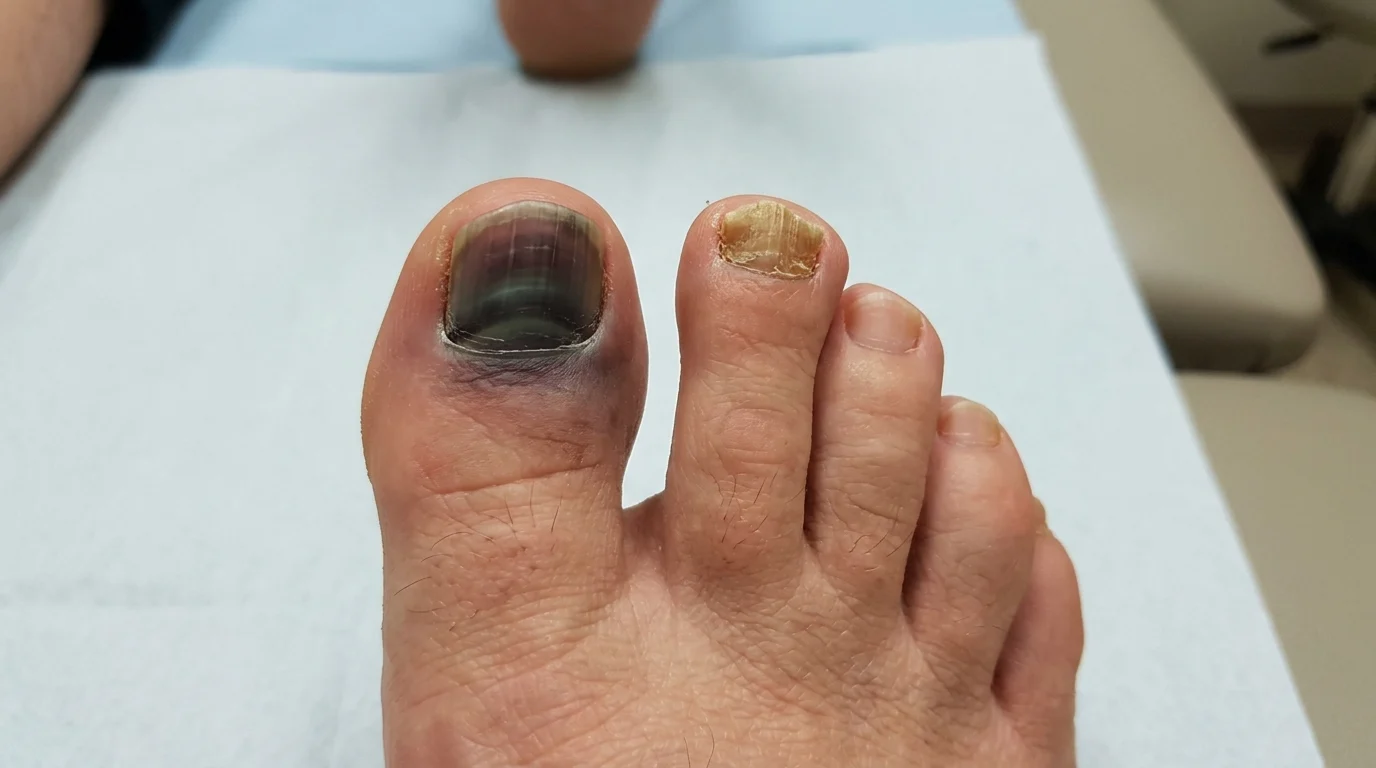
You look down at your toenail. It’s dark. Maybe yellow. Maybe thick. And you think: “Is this a bruise, or is this fungus?”
This is one of the most common foot health questions people search online. Both problems change the color and shape of a toenail. Both can look scary at first. But they have different causes, different treatments, and different timelines for healing. Mixing them up can lead to the wrong treatment like using antifungal cream on a bruise that just needs time, or ignoring a fungal infection that will only spread.
This confusion is normal. A bruised toenail and a fungal toenail can look almost the same, especially in the early stages. Both can turn the nail black, brown, yellow, or white. Both can make the nail feel odd or loose.
This guide gives you a clear, simple way to tell them apart. You’ll get a quick answer, a full comparison, real-life examples, and answers to the most common questions people ask. By the end, you’ll know which one you likely have and when to see a doctor.
Bruised Toenail or Fungus Quick Answer
Here’s the short version:
- A bruised toenail comes from an injury. You dropped something on your foot, wore tight shoes, or stubbed your toe. The nail turns dark red, purple, or black right after the injury. It usually grows out and heals on its own in a few months.
- Toenail fungus comes from an infection. It grows slowly over weeks or months. The nail turns yellow, white, or brown. It often gets thick, crumbly, or brittle. It does not go away on its own.
Simple test: Did something hit or press your toe recently? That points to a bruise. Did the color change slowly, with no injury, and the nail also feels thick or smells odd? That points to fungus.
Why This Mix Up Happens
People confuse these two conditions for a good reason: the symptom looks the same, even though the cause is different.
A bruise happens when blood collects under the nail after trauma. This is called a subungual hematoma. The color comes from trapped blood, which changes shade as it heals from red to purple to black to brown, then fades as the nail grows out.
Fungus is different. It’s a living organism (usually a dermatophyte) that grows in the warm, damp space under the nail. It doesn’t fade like a bruise. Instead, it spreads and gets worse without treatment.
Because both start with a dark or discolored nail, many people search “bruised toenail or fungus” to figure out which one they’re actually dealing with often before deciding If to see a doctor.
Bruised Toenail vs Fungus Full Comparison
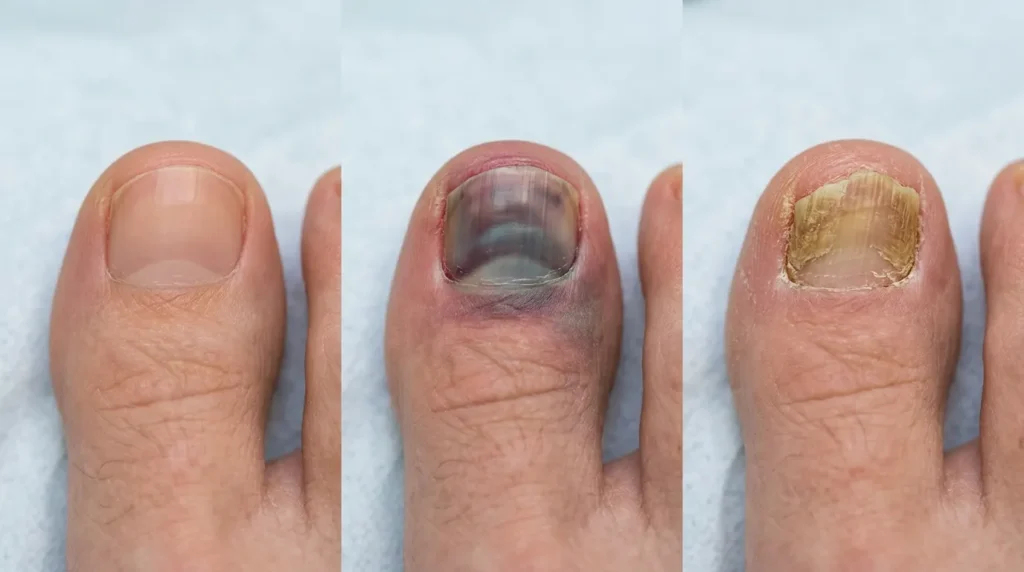
| Feature | Bruised Toenail | Toenail Fungus |
| Cause | Injury or pressure | Fungal infection |
| Onset | Sudden (right after injury) | Slow (weeks to months) |
| Color | Red, purple, black, fading to brown | Yellow, white, or brown |
| Nail texture | Usually stays smooth at first | Thick, crumbly, or brittle |
| Pain | Often painful right after injury | Usually painless unless severe |
| Smell | No smell | Can have a mild odor |
| Spread | Does not spread to other nails | Can spread to other toes or fingers |
| Healing | Grows out on its own, 6–12 months | Needs treatment; won’t heal alone |
| Nail lifting | Can happen after a hard hit | Common as infection worsens |
Which One Do You Likely Have?
If you remember an injury you dropped a weight on your foot, ran a long distance in tight shoes, or stubbed your toe a bruise is the likely cause. Watch the color. It should slowly fade and grow out with the nail.
If there was no injury and the color change came on slowly, especially with thickening or crumbling, fungus is more likely. This is common in people who:
- Wear closed shoes for long hours (athletes, factory workers, nurses)
- Use public showers, pools, or locker rooms
- Have sweaty feet
- Are older adults, since nail growth slows with age
If you’re not sure, a podiatrist or doctor can check with a simple nail scraping test. This is the only way to confirm fungus for certain.
Common Mistakes People Make
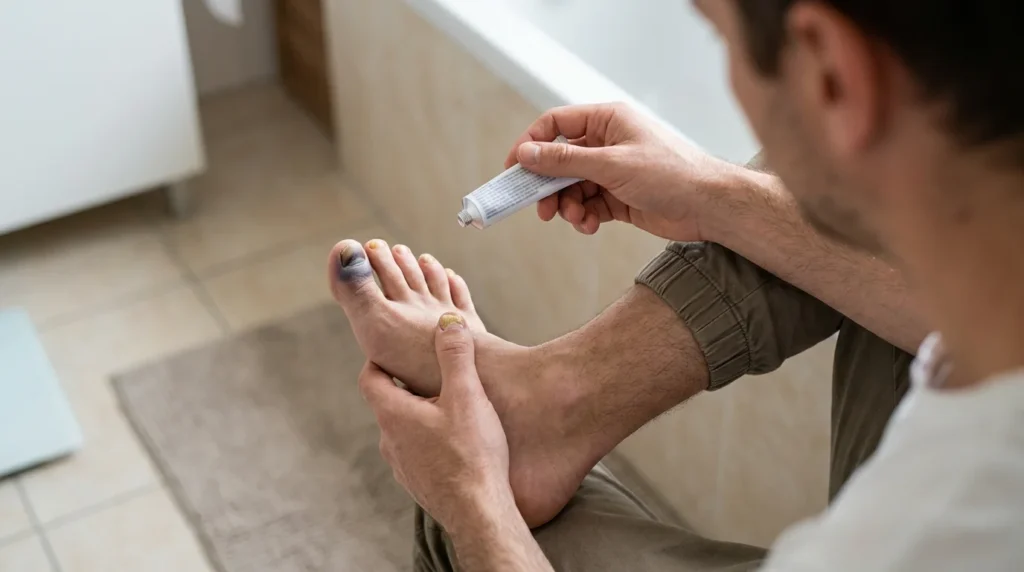
- Treating a bruise with antifungal cream. This does nothing for trapped blood and wastes time.
- Ignoring fungus because “it doesn’t hurt.” Fungus often causes no pain early on, which lets it spread unnoticed.
- Assuming all dark nails mean fungus. Fungus is usually yellow or white, not black or purple. Black or purple points to a bruise.
- Removing the nail without checking the cause. A lifted nail from a bruise heals differently than one lifted by infection.
- Waiting too long to see a doctor when the nail is very painful, swollen, or oozing this could signal infection beyond fungus, like bacteria.
Bruised Toenail or Fungus in Everyday Life
Runners and athletes: A common online post reads, “Finished a marathon and my big toenail turned black is this a bruise or fungus?” This is almost always a bruise from repeated pressure inside the shoe.
Nail salon customers: A frequent search is, “Got a pedicure and now my nail looks yellow fungus or bruise?” If tools weren’t properly sanitized, this can point to a new fungal infection.
Parents asking about kids: “My child dropped a toy on their toe and the nail is dark, should I worry about fungus?” In children, sudden color change after an injury is a bruise, not fungus.
Workplace forums: People in jobs with steel-toe boots often ask, “Nail bed pain and dark color, but no memory of injury is it fungus?” This can go either way, which is why a professional check matters.
Bruised Toenail or Fungus Search Trends & Data

Search interest in this topic rises during warmer months, when people wear sandals and notice their nails more. It also spikes after marathon season and among gym-goers, since foot injuries and sweaty shoes both increase around this time.
In the United States and United Kingdom, “toenail fungus” is searched far more often than “bruised toenail,” largely because fungus is a long-term problem people research repeatedly for treatment options. “Bruised toenail” searches are shorter and more urgent people usually want quick reassurance right after an injury.
Globally, interest in both terms is highest in countries with active running and fitness cultures, including the U.S., UK, Australia, and Canada.
Keyword Variation Comparison
| Search Term | Typical Intent |
| Bruised toenail or fungus | Comparing two possible causes |
| Black toenail fungus or bruise | Focused on black/dark nail color |
| Toenail turning yellow fungus or injury | Focused on yellow discoloration |
| Discolored toenail causes | Broad, general search |
| How to tell if toenail is bruised | Narrow, bruise-focused |
| Toenail fungus symptoms | Narrow, fungus-focused |
Frequently Asked Questions
Can a bruised toenail turn into fungus?
Not directly. But a bruised or lifted nail creates a gap where fungus can enter more easily, so watch it as it heals.
How long does a bruised toenail take to heal?
Usually 6 to 12 months, since the nail must fully grow out. The color fades gradually during this time.
Does toenail fungus go away on its own?
No. Fungus needs treatment, such as antifungal cream, medicated nail polish, or oral medication for stronger cases.
Why is my toenail black but doesn’t hurt?
A painless black nail with no injury history can still be a bruise from repeated small pressure, such as running or tight shoes. It’s less commonly fungus, since fungus rarely causes black color.
Can I paint over a bruised or fungal nail?
Yes for a bruise, since it’s just healing. For fungus, nail polish can trap moisture and make treatment less effective, so it’s best to avoid it during treatment.
When should I see a doctor?
See a doctor if the nail is very painful, swollen, oozing, spreading to other nails, or if you have diabetes or poor circulation.
Is toenail fungus contagious?
Yes. It can spread through shared shoes, socks, nail clippers, and damp public floors like showers and pools.
Conclusion
A bruised toenail and toenail fungus can look similar, but they come from very different causes. A bruise happens fast, after an injury, and fades over time as the nail grows out. Fungus builds slowly, without injury, and causes thickening, crumbling, or a yellow-white color that won’t go away without treatment.
The fastest way to tell them apart is to think back: was there an injury? If yes, it’s likely a bruise. If the change was slow and there’s no memory of injury, fungus is more likely, especially with thickening or odor.
When in doubt, a podiatrist can confirm the cause with a simple test. Don’t guess with treatment using the wrong one wastes time and can let a real infection spread. If it’s a bruise healing quietly or a fungus that needs medication, knowing the difference is the first step to treating it the right way.

“I’m Ibadat Fatima, a professional content writer and author with 3 years of experience in writing, editing, and storytelling. I share my work through visitlivo.com, where I help readers connect with clear, engaging, and well-crafted content.”