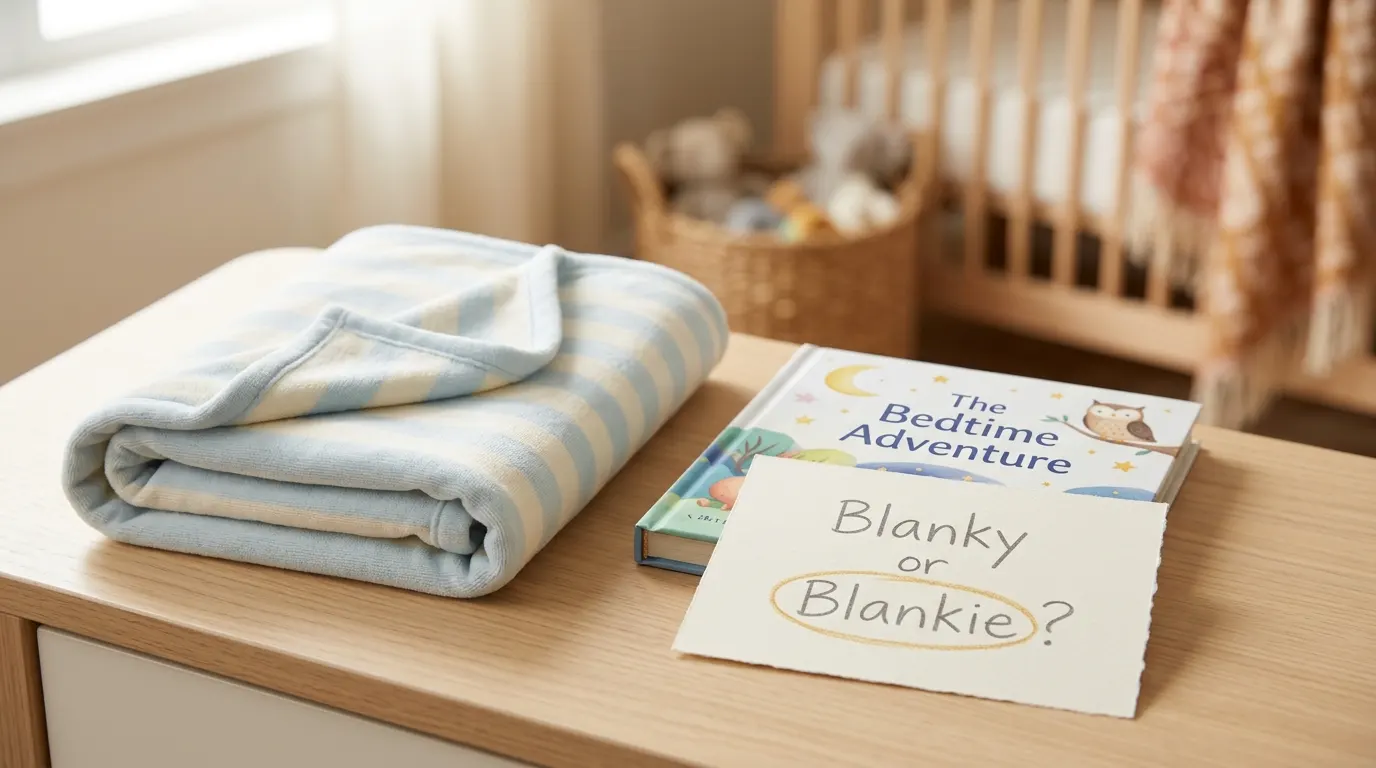
If you’ve ever typed “blanky” or “blankie” into a search bar, you’re not alone. Millions of parents, gift shop owners, and writers face this same question every day. You want to write about your child’s favorite comfort object, but the spelling looks wrong no matter which way you type it.
This confusion happens because the word is informal. It never went through the strict spelling rules that “definitely” or “necessary” did. Instead, it grew out of baby talk, and baby talk doesn’t follow a rulebook.
The good news: there is a clear answer. One spelling is the standard. The other is a rare variant with its own, unrelated meanings. This article gives you the quick answer first, then walks through the history, the spelling logic, and real examples so you never have to guess again.
Blanky or Blankie Quick Answer
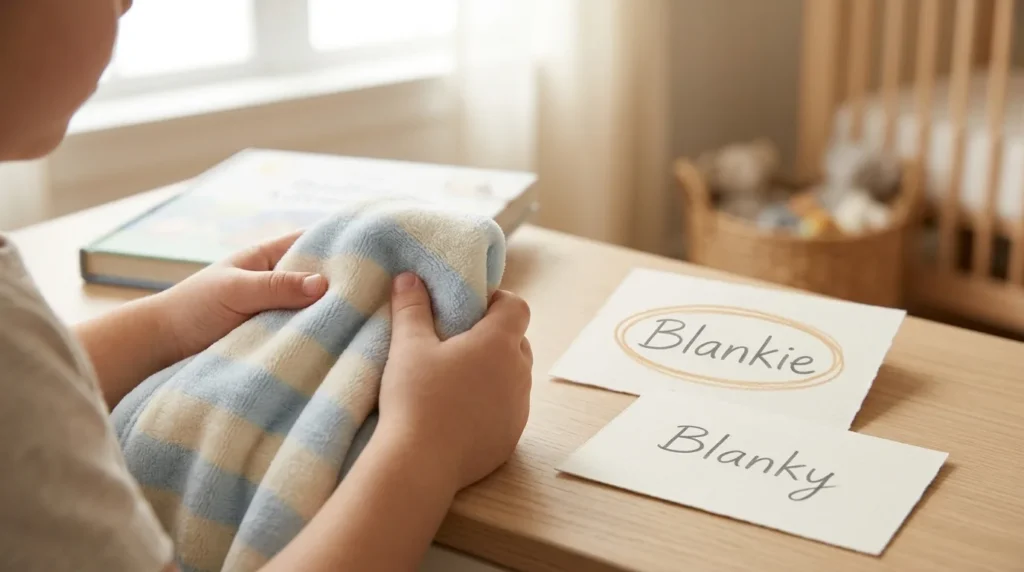
“Blankie” is the correct and standard spelling. It means a small, soft blanket that a child loves and carries around for comfort.
- “She won’t go to sleep without her blankie.”
- “He packed his blankie for the trip.”
“Blanky” is a rare, informal variant. Dictionaries do not list it with this meaning. It can also mean something else entirely, like a euphemism for a swear word in British and Australian slang, or a person’s last name. Because of this, “blanky” can confuse readers.
Bottom line: use “blankie” when you write about a comfort blanket.
The Origin of Blanky or Blankie
The word comes from “blanket.” English speakers added the ending “-ie” to make it sound small, soft, and affectionate. This pattern is common in English baby talk. Think of “doggie,” “cookie,” and “birdie.” The “-ie” ending softens a word and makes it feel warm and childlike.
Merriam-Webster records the first known use of “blankie” in 1899. The dictionary lists its word origin as “blank(et)” plus the suffix “-ie.” This confirms “blankie” as the long-standing, recognized spelling.
“Blanky,” on the other hand, grew from a different pattern. English speakers also use “-y” as a diminutive ending, as in “silly” or “chilly.” Some people applied this same ending to “blanket” out of habit. It never became standard, though, and it carries other unrelated meanings, which adds to the confusion.
British English vs American English Spelling
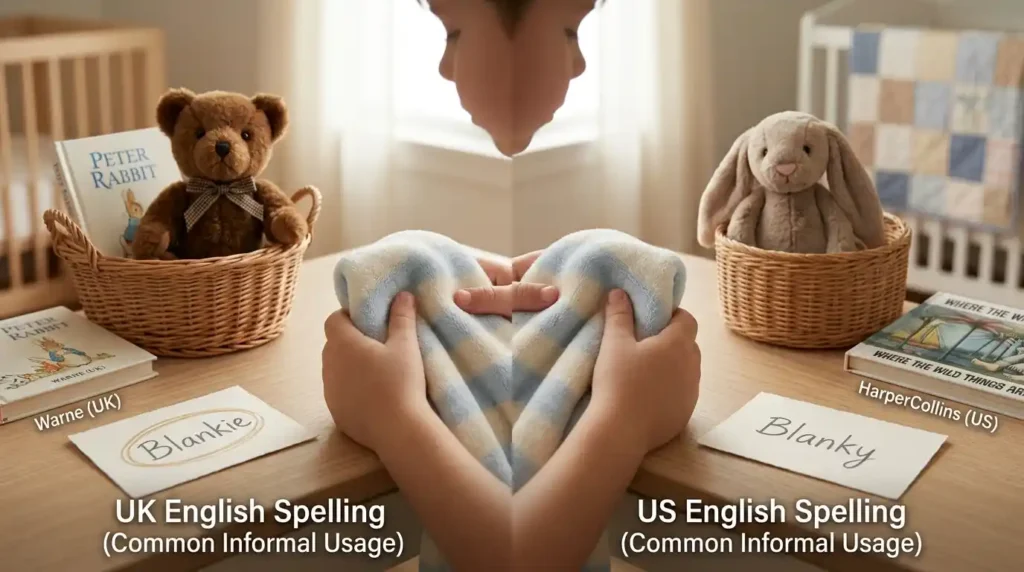
This is not a true British-versus-American spelling split, like “colour” versus “color.” Both “blankie” and “blanky” are informal words, not standardized ones. Still, some patterns show up:
- American English favors the “-ie” ending in casual words: cookie, movie, sweetie. “Blankie” fits this pattern and is the spelling found in US dictionaries.
- British and Australian English use “blanky” mostly as slang for a swear word, not as a child’s comfort object. This creates real risk of confusion for UK writers.
- Globally, “blankie” appears far more often in books, parenting sites, and children’s media.
| Feature | Blankie | Blanky |
| Dictionary status | Listed (Merriam-Webster) | Not standard |
| Common meaning | Child’s comfort blanket | Swear-word euphemism (UK/AUS), surname, rare blanket variant |
| Region most used | United States, global parenting content | Limited, mostly UK/Australian slang |
| Formality | Informal, but recognized | Informal and non-standard |
| Risk of confusion | Low | High |
Which Spelling Should You Use?
Your audience decides your best choice.
- US audience: Use “blankie.” It is the dictionary-recognized spelling and the one readers expect.
- UK or Commonwealth audience: Still use “blankie” for a comfort blanket. Avoid “blanky,” since it can read as a censored swear word in these regions.
- Global or mixed audience: Choose “blankie.” It travels well and avoids misunderstanding.
- Formal or professional writing: Skip both spellings. Use “comfort blanket” or “security blanket” instead.
Common Mistakes with Blanky or Blankie
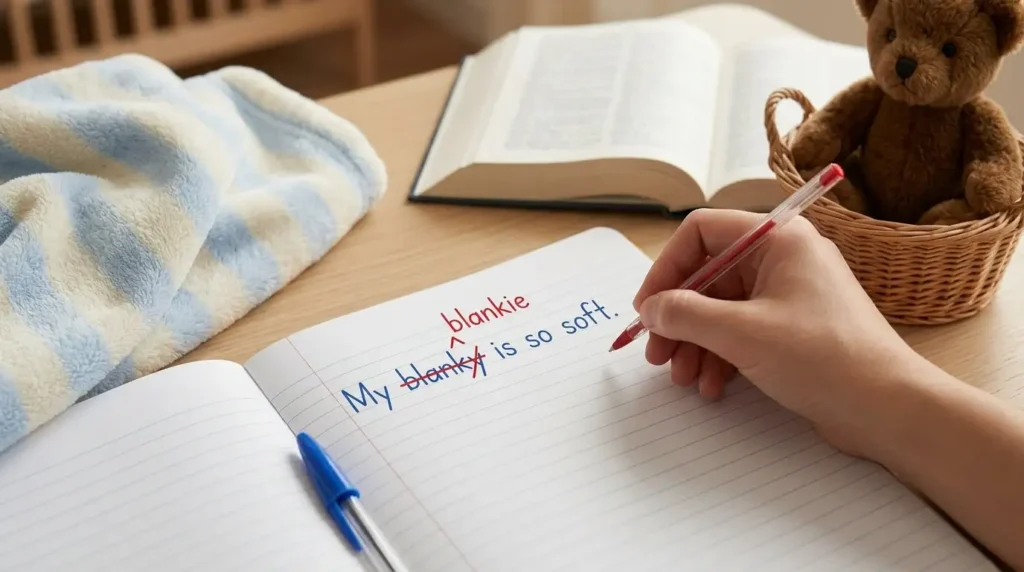
- Using “blanky” for a comfort blanket. This spelling risks confusion with unrelated slang. Fix: write “blankie.”
- Treating it as formal vocabulary. It’s a casual word. Fix: swap in “security blanket” for reports or professional writing.
- Adding unnecessary apostrophes. Some write “blanky’s” for a plural. Fix: the plural is “blankies,” no apostrophe.
- Capitalizing it like a proper noun. Fix: keep it lowercase unless it starts a sentence or is a book title, like Blankie by Leslie Patricelli.
- Assuming there is no correct spelling. Fix: “blankie” is the standard choice, even in casual writing.
Blanky or Blankie in Everyday Examples
In emails:
“Can you grab Emma’s blankie before we leave for grandma’s house?”
In news and magazine writing:
Major outlets use the word often. People magazine described a child asking for his blankie by name, and Travel + Leisure called a soft oversized throw a cozy “blankie” travelers loved.
In social media captions:
“Rainy day essentials: blankie, hot cocoa, and cartoons. ☔🍫”
In formal writing:
“The toddler became distressed when separated from her security blanket.”
Blanky or Blankie Google Trends & Usage Data
“Blankie” is the far more searched and used term worldwide. It appears in major dictionaries, national news outlets, and children’s books. Search interest for “blankie” stays steady year-round, with small spikes around baby shower and back-to-school seasons, when parents look for gift ideas or packing lists.
“Blanky” shows much lower and inconsistent search volume. Part of this traffic actually looks for unrelated meanings, such as the slang euphemism or the surname Blanky. This mix makes “blanky” a less reliable and less clear choice for writers.
| Term | Typical Usage Level | Main Search Intent |
| Blankie | High, steady | Child’s comfort blanket |
| Blanky | Low, mixed | Slang, surname, occasional blanket reference |
| Comfort blanket | Moderate | Formal or descriptive writing |
| Security blanket | Moderate | Formal, psychological, or parenting content |
FAQs
Is “blanky” a real word?
It appears in some informal word lists, but not in major dictionaries with the meaning “comfort blanket.” It also has other meanings, like slang for a swear word.
Is “blankie” in the dictionary?
Yes. Merriam-Webster defines “blankie” as “a child’s blanket.”
What is the plural of blankie?
The plural is “blankies.” No apostrophe is needed.
Can adults use the word “blankie”?
Yes. Many adults use it playfully for a favorite throw blanket, not just for children’s items.
Is “blankie” appropriate for formal writing?
No. Use “security blanket” or “comfort blanket” in reports, resumes, or professional documents.
Why do some sites spell it “blanky”?
Usually by mistake, or because the writer applied the “-y” diminutive pattern instead of “-ie.” It’s not the standard spelling for this meaning.
Does British English use a different spelling?
No separate British spelling exists for the comfort-blanket meaning. British writers should still use “blankie” and avoid “blanky” due to its slang meaning in that region.
Conclusion
“Blankie” is the correct, standard spelling for a child’s comfort blanket. It has a documented history going back to 1899, appears in major dictionaries, and shows up consistently across news, social media, and everyday conversation. “Blanky” is a rare variant that risks confusion, since it carries other meanings in British and Australian slang and has no solid dictionary backing for this use.
For everyday and casual writing, choose “blankie.” It works for any audience, anywhere in the world. For formal or professional writing, skip the informal spelling altogether and use “security blanket” or “comfort blanket” instead.
Getting this small detail right matters more than it seems. The correct spelling builds trust with your reader and avoids the confusion that comes with slang meanings tied to “blanky.” If you’re writing a parenting blog, a product listing, or a heartfelt caption about your child’s favorite object, “blankie” is the safe, clear, and correct choice.

I’m Raheela Rani, a professional content writer and author with 3 years of experience in writing, editing, and storytelling. Through VisitLivo.com, I create clear, engaging, and well-crafted content that helps readers learn, connect, and communicate with confidence.