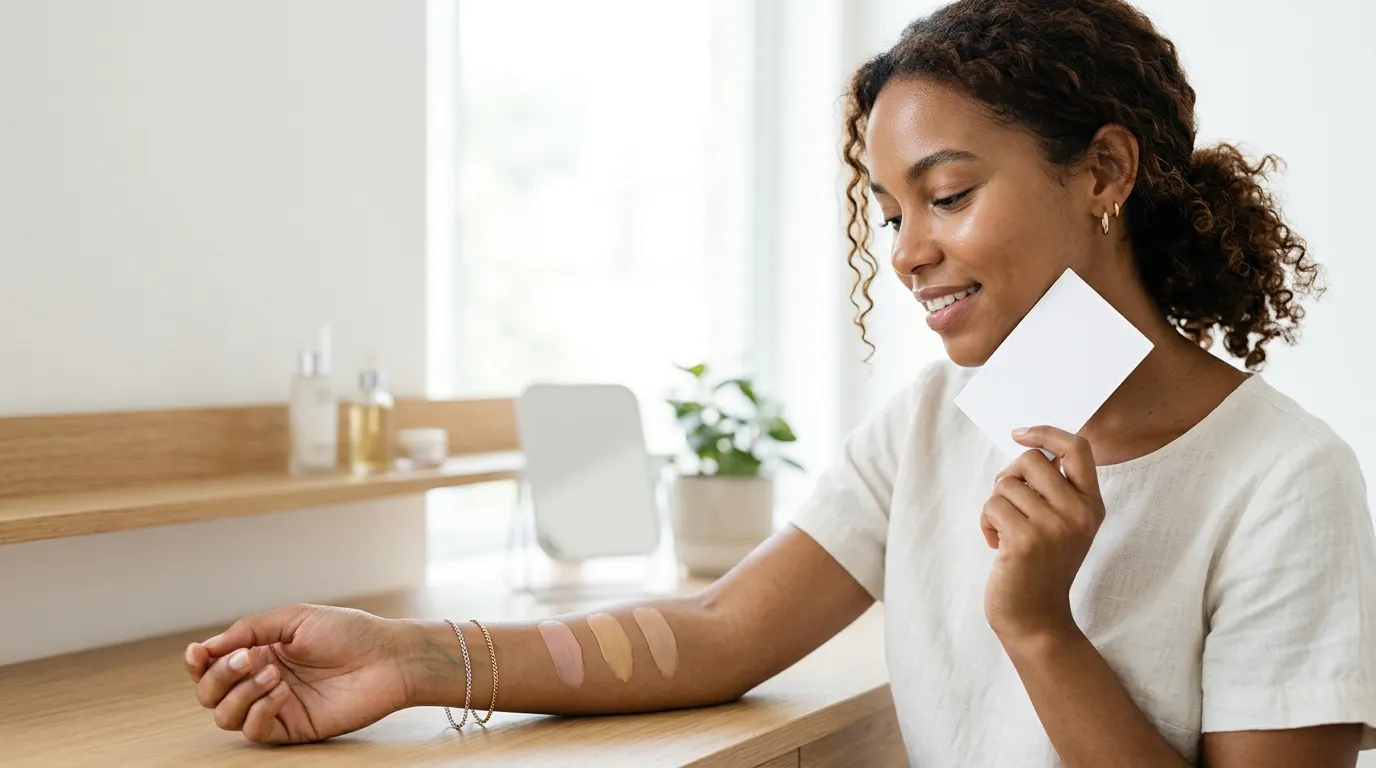
You hold two foundation bottles up to your face. Both match your skin. Yet one looks gray and the other looks orange. What went wrong?
The answer is your undertone.
Every day, people search for “cool or warm undertones” because they want a simple answer. Stores use big words. Videos say different things. Friends disagree. It gets confusing fast.
Here is the good news. Undertone is not hard. It is the soft color under the top layer of your skin. It stays the same, even when you tan or blush. Your skin can be light, medium, or deep and still be cool, warm, or neutral.
In this guide, you will get a quick answer first. Then you will learn where the idea came from, how spelling changes between countries, and which mistakes to skip. You will also see easy tests to try at home. By the end, you will know your undertone. You can then pick makeup, clothes, and jewelry with more trust.
Cool or Warm Undertones Quick Answer

Cool undertones have a pink, red, or blue hue under the skin.
Warm undertones have a yellow, golden, or peachy hue under the skin.
Neutral undertones have a mix of both.
Try these quick tests:
- Vein test: Look at your inner wrist in daylight. Blue or purple veins often mean cool. Green veins often mean warm. Both colors mean neutral.
- Jewelry test: Silver looks best on cool skin. Gold looks best on warm skin. Both look good on neutral skin.
- White paper test: Hold white paper by your face. Pink skin next to it points to cool. Yellow skin points to warm.
- Sun test: If you burn fast, you may lean cool. If you tan easily, you may lean warm.
No single test is perfect. Try two or three and see what repeats.
The Origin of Cool or Warm Undertones
People have talked about “warm” and “cool” colors for hundreds of years. Artists used the words to describe paint. Red, orange, and yellow felt like fire and sun, so they were called warm. Blue, green, and purple felt like water and ice, so they were called cool.
In the early 1900s, color teachers such as Albert Munsell and Johannes Itten built neat systems to explain color. Later, in the 1980s, a book called Color Me Beautiful made “seasonal color analysis” famous. It sorted people into Spring, Summer, Autumn, and Winter. Spring and Autumn were warm. Summer and Winter were cool.
Makeup brands then took the idea. They used “undertone” to help people pick the right foundation.
Why are the labels so mixed up today? Because there is no single rulebook. Brands do not agree on names. One says “neutral.” Another says “olive.” Others use the letters C, W, and N. Each brand makes its own map, so the words can feel different from shop to shop.
British English vs American English Spelling
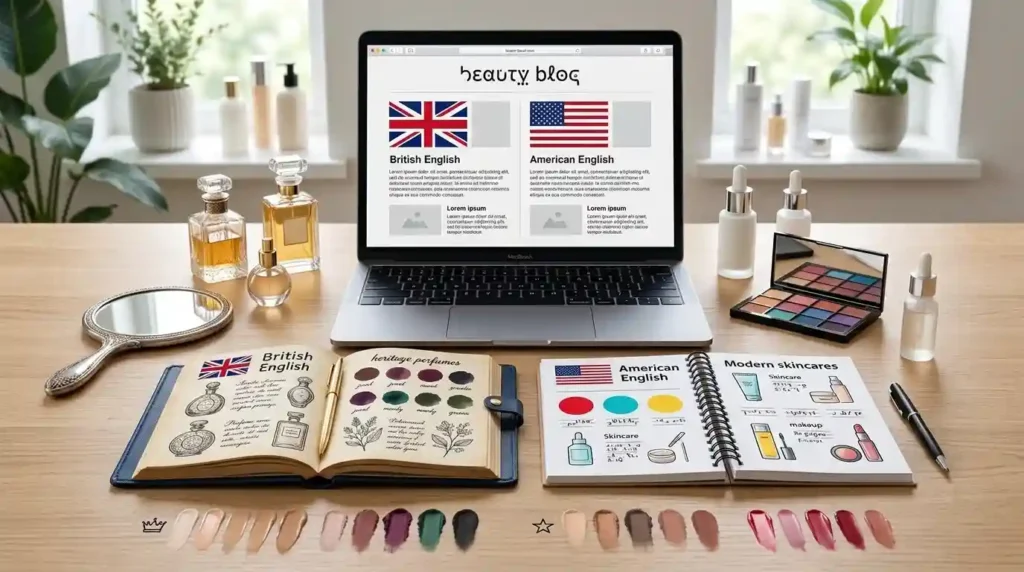
The word undertone is spelled the same in both places. The small difference is in the word color.
| American English | British English | Notes |
| color | colour | Most common spelling gap |
| colorist | colourist | A person who works with color |
| coloring | colouring | Also used for hair dye |
| undertone | undertone | Same everywhere |
| warm / cool | warm / cool | Same everywhere |
| neutral | neutral | Same everywhere |
| skin tone | skin tone | Same everywhere |
| foundation shade | foundation shade | Same everywhere |
The “our” spelling comes from old French. Noah Webster, an American writer, made “color” popular in the US in the early 1800s. He wanted spelling to be shorter and simpler. The UK kept the older form.
Which Spelling Should You Use?
Pick the spelling that fits your readers.
- US readers: Use color. Example: “Find your best color.”
- UK, Australia, New Zealand, India, Pakistan, and most Commonwealth readers: Use colour.
- Global readers: Choose one and stay with it. Do not mix them in the same page.
The key phrase “cool or warm undertones” stays the same in every country. So you can use it anywhere. If your site serves many countries, write the main text in one style. Then use the other spelling once in a helpful spot, like a subheading or a small note. That helps people find you in both searches.
Common Mistakes with Cool or Warm Undertones
Mistake 1: Mixing up skin tone and undertone.
Skin tone is the surface color: fair, medium, or deep. Undertone is the hue beneath. Two people with the same skin tone can have different undertones.
Mistake 2: Thinking a tan changes your undertone.
A tan changes the surface. Your undertone stays the same.
Mistake 3: Trusting only the vein test.
Lighting, skin thickness, and even a blue shirt can fool you. Use more than one test.
Mistake 4: Assuming “olive” means warm.
Olive skin often has green or gray in it. It can lean warm, cool, or neutral.
Mistake 5: Picking makeup by hair or eye color.
A blonde can be cool. A brunette can be warm. Hair does not decide undertone.
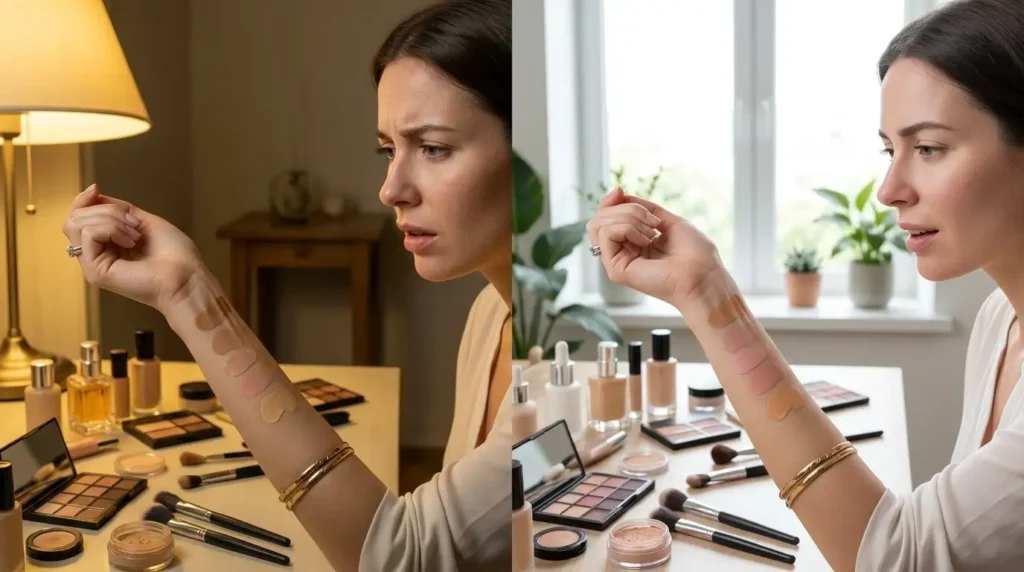
Mistake 6: Testing under bad light.
Yellow bulbs make everyone look warm. Test near a window in daylight.
Mistake 7: Thinking you must pick one side.
Neutral is real. Many people sit in the middle.
Cool or Warm Undertones in Everyday Examples
In an email (to a friend):
“Hi Sara, I finally found my foundation. I have cool undertones, so I picked a pink-beige shade.”
In an email (from a brand):
“Not sure about cool or warm undertones? Take our two-minute quiz and find your match.”
In the news:
“Beauty experts say knowing your undertone helps you shop with less waste and fewer returns.”
On social media:
“Warm undertones, rise up! Gold jewelry hits different. ✨ #undertones #makeuptips”
In formal writing:
“Undertone refers to the subtle hue beneath the skin’s surface and is commonly classified as cool, warm, or neutral.”
In a shop:
“Do you have cool or warm undertones? Neutral? Let me match you to the right shade.”
Cool or Warm Undertones Google Trends & Usage Data
I can’t pull live Google Trends numbers here, so I won’t make any up. What I can share are the patterns that this kind of beauty topic usually shows:
- Countries: Interest tends to be strong in English-speaking countries such as the US, UK, Canada, and Australia. It also shows up in places with big beauty and fashion audiences, like India and Pakistan.
- Seasons: Searches often rise before holidays, weddings, and back-to-school times. People shop for makeup and clothes then.
- Context: Most people search while buying foundation, picking hair color, choosing jewelry, or building a wardrobe.
- Related searches: Many people also look up “how to know my undertone,” “neutral undertone,” and “olive skin undertone.”
To see the real data, open Google Trends. Type the keyword, then compare countries and time ranges. Try “colour” and “color” versions to see spelling split.
Cool vs Warm vs Neutral: Side-by-Side Comparison
| Feature | Cool Undertones | Warm Undertones | Neutral Undertones |
| Hue under skin | Pink, red, blue | Yellow, golden, peach | Mix of both |
| Vein color | Blue or purple | Green | Blue-green |
| Best jewelry | Silver, platinum | Gold, copper | Both |
| Sun reaction | Burns easily | Tans easily | Varies |
| White paper test | Skin looks pink | Skin looks yellow | Hard to tell |
| Foundation tip | Look for pink or rosy tones | Look for golden or yellow tones | Look for balanced or “neutral” |
| Flattering colors | Blue, emerald, plum | Orange, olive, mustard | Many shades work |
FAQs
How do I know if I have cool or warm undertones?
Try the vein test, jewelry test, and white paper test in daylight. If most tests agree, that is your answer.
Can my undertone change over time?
Not really. Your surface tone can change with sun, age, or health. Your undertone stays the same.
What if I have both cool and warm signs?
You likely have neutral undertones. That is common, and it gives you the most choices.
Is olive skin cool or warm?
Olive can be either. It often has a green or gray hint. Many olive people fall in warm or neutral, but not all.
Do undertones matter for hair color?
Yes. Cool skin often looks great with ash or icy shades. Warm skin often glows with golden or copper shades.
Does undertone depend on race?
No. Every skin tone and every background can have cool, warm, or neutral undertones.
Which is right: color or colour?
Both are right. Use color for US readers and colour for UK and most Commonwealth readers.
Should I use undertone to pick clothes too?
It can help. Cool skin often loves blues and pinks. Warm skin often loves earthy tones. But wear what makes you feel good.
Conclusion
Now you know the big idea. Cool undertones lean pink or blue. Warm undertones lean yellow or golden. Neutral undertones sit in the middle. Your undertone stays with you for life, even when your skin tone shifts with the sun.
Remember the simple tests. Check your veins in daylight. Compare silver and gold jewelry. Hold white paper by your face. Do more than one test, because no single test is perfect. Also avoid common traps, like mixing up skin tone with undertone or trusting bad lighting.
The spelling rule is easy too. The word undertone never changes. Only color and colour differ. Use color for US readers and colour for UK and Commonwealth readers. Then stay consistent.
Most of all, use this knowledge as a guide, not a rule. If a shade makes you feel great, wear it. Undertone is a tool to help you shop smarter and look your best, not a box to lock you in.
Take five minutes today. Try the tests. Then pick your next foundation, lipstick, or necklace with confidence.

“I’m Ibadat Fatima, a professional content writer and author with 3 years of experience in writing, editing, and storytelling. I share my work through visitlivo.com, where I help readers connect with clear, engaging, and well-crafted content.”