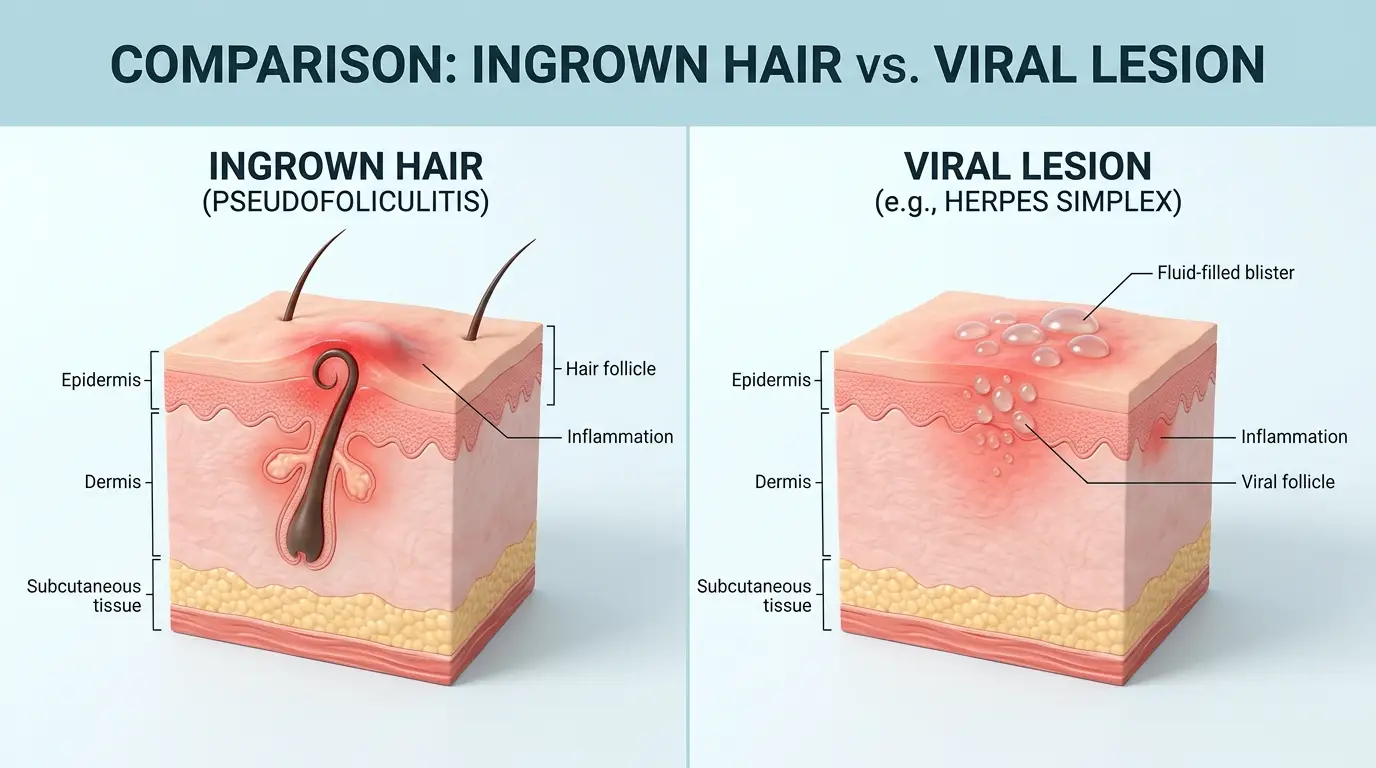
Finding a bump in a sensitive area can cause instant panic. Is it just an ingrown hair from shaving? Or is it something more serious, like herpes? This question is one of the most searched health concerns online, and for good reason the two conditions can look surprisingly similar at first glance.
People search “ingrown hair or herpes” because they want fast, clear answers without an awkward doctor visit. They’re comparing symptoms, checking photos in their head, and trying to figure out if they need to worry. The confusion is real. Both conditions can appear as small red bumps near the groin, thighs, or bikini line. Both can be uncomfortable. But their causes, treatments, and health implications are completely different.
This guide breaks down the key differences in simple terms. You’ll learn what causes each condition, how to spot the warning signs, and when it’s time to stop guessing and see a professional. No fear-mongering. No confusing medical jargon. Just clear facts to help you understand what your body is telling you.
Ingrown Hair or Herpes Quick Answer
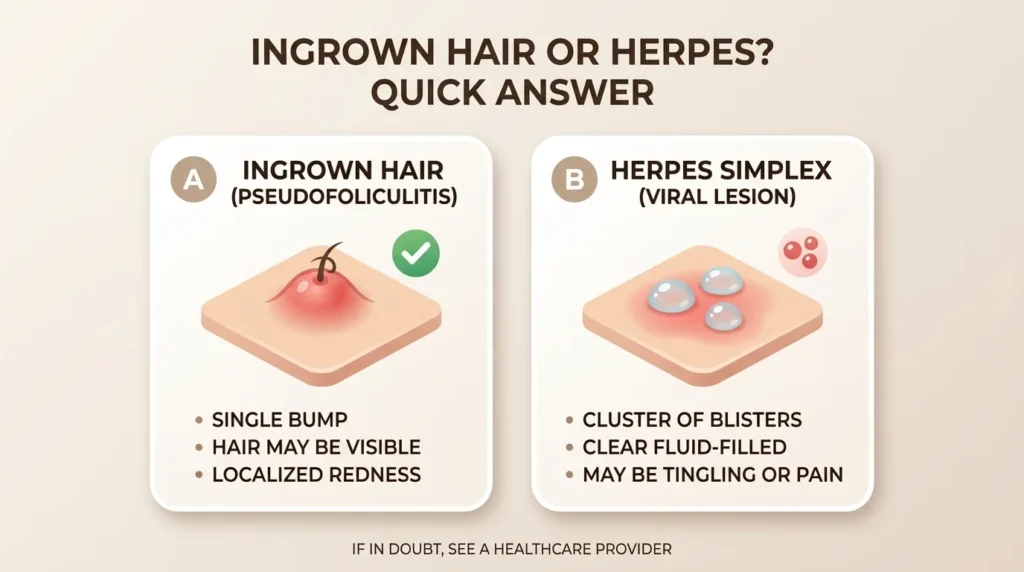
Here’s the short version.
Ingrown hairs happen when a hair curls back and grows into the skin instead of out of it. This often happens after shaving, waxing, or tweezing. They show up as small, single red bumps, sometimes with a visible hair trapped inside. They are not contagious.
Herpes is a viral infection. It causes clusters of small blisters that are often painful. These blisters break open, ooze, and then form sores as they heal. The infection spreads through direct skin-to-skin contact, even when no visible sores are present. It is contagious, which is what makes early recognition so important.
Quick checklist:
- One bump near a hair follicle, after shaving? Likely an ingrown hair.
- A group of blisters that sting, burn, or itch, with no clear link to shaving? Possibly herpes.
- Fever, body aches, or swollen glands along with the bumps? This points more toward herpes.
If you are still unsure, a doctor or clinic can confirm it with a simple exam or test. Guessing is risky when it comes to your health.
What Causes an Ingrown Hair vs Herpes
Understanding the root cause makes it much easier to tell these two apart.
Ingrown hair causes:
- Shaving against the grain
- Waxing or plucking coarse, curly hair
- Tight clothing that rubs the skin
- Dead skin cells blocking the follicle
Herpes causes:
- The herpes simplex virus (HSV-1 or HSV-2)
- Skin-to-skin contact with an infected person, even without visible sores
- Contact during oral, vaginal, or anal activity
- The virus can stay dormant in the body and flare up later, often during stress or illness
The key difference: ingrown hairs are a physical skin problem. Herpes is a viral infection. One is caused by hair growth patterns. The other is caused by a virus passed between people.
Symptom Comparison Ingrown Hair vs Herpes
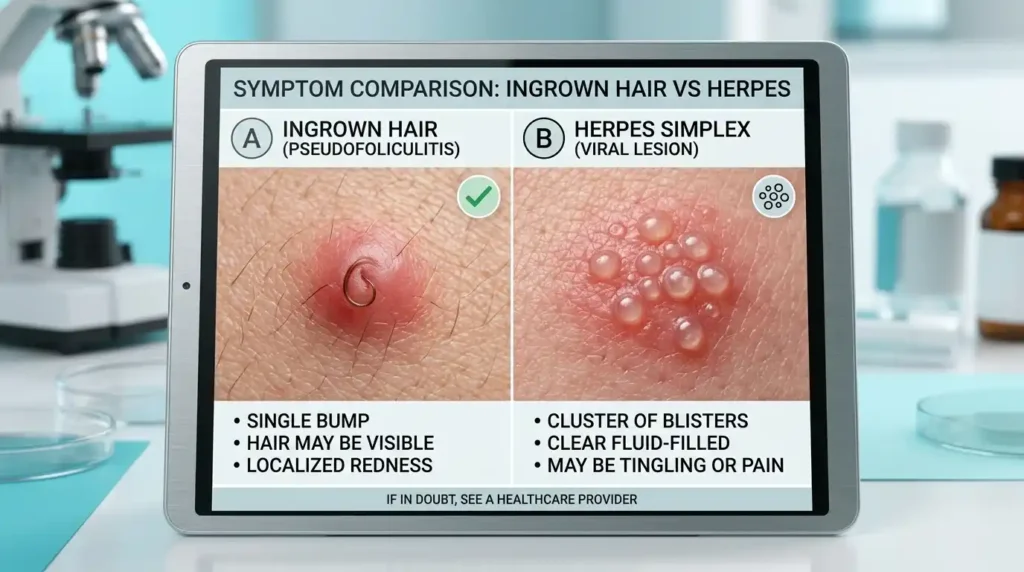
Use this table to compare the two side by side.
| Feature | Ingrown Hair | Herpes |
| Appearance | Single, round bump | Cluster of small blisters |
| Color | Red or skin-colored | Red base with clear or white fluid |
| Pain type | Mild soreness, itching | Burning, tingling, stinging |
| Visible hair | Often trapped hair inside | No trapped hair |
| Location | Where hair was removed | Genitals, mouth, or nearby skin |
| Contagious | No | Yes |
| Fever or body aches | No | Sometimes, especially first outbreak |
| Healing time | A few days to two weeks | Blisters break and scab in 7–10 days |
| Recurrence | Only if shaving habits repeat | Can return periodically for life |
| Treatment | Warm compress, gentle exfoliation | Antiviral medication |
How to Tell Them Apart at Home
Follow these steps to check your symptoms.
Step 1: Look at the shape.
One bump usually means ingrown hair. Several small blisters grouped together lean toward herpes.
Step 2: Check for a trapped hair.
Ingrown hairs often show a visible hair curling under the skin. Herpes sores never contain a hair.
Step 3: Notice the pain.
Ingrown hairs feel like a sore pimple. Herpes often causes burning or tingling before the blisters even appear.
Step 4: Think about timing.
Did the bump show up right after shaving or waxing? That points to an ingrown hair. Did it appear after new sexual contact, or with no clear trigger? That raises concern for herpes.
Step 5: Watch for other symptoms.
Fever, swollen lymph nodes, and general fatigue often go along with a first herpes outbreak. Ingrown hairs never cause these symptoms.
Step 6: When in doubt, get tested.
A doctor can do a quick swab test on an active sore to confirm herpes. This is the only way to know for certain.
Common Mistakes People Make
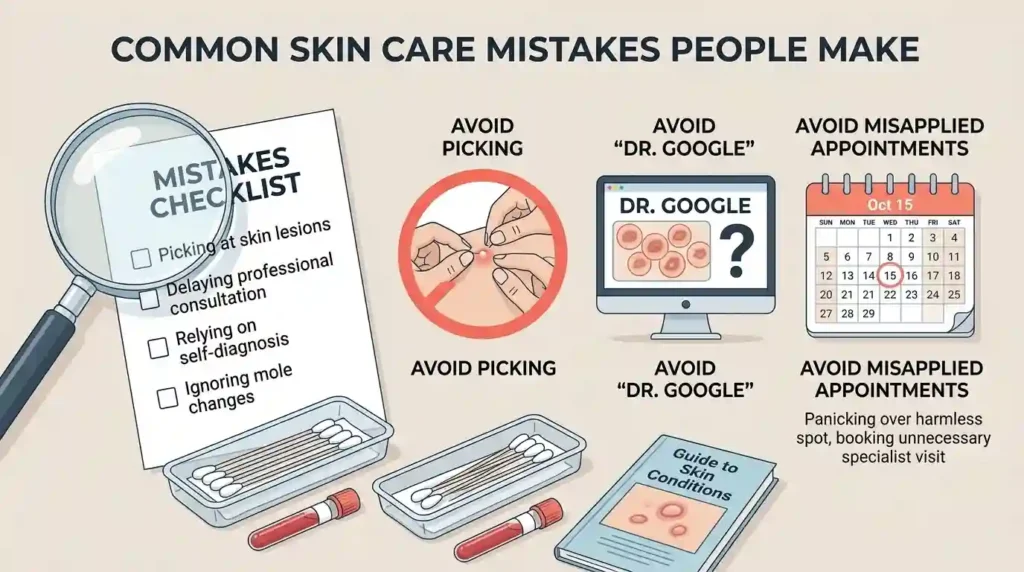
- Assuming any bump “down there” is an STI. Most bumps in that area are ingrown hairs, razor burn, or clogged pores not herpes.
- Popping or picking at the bump. This can cause infection or scarring, If it’s an ingrown hair or a herpes sore.
- Ignoring recurring symptoms. Herpes often comes back in the same spot. Repeated “ingrown hairs” in the exact same location deserve a second look.
- Self-diagnosing from online photos alone. Skin conditions can look nearly identical in pictures. A professional exam is far more reliable.
- Waiting too long to get tested. Early antiviral treatment works best when started right when symptoms appear.
- Confusing folliculitis with herpes. Folliculitis (infected hair follicles) can also cause small red bumps and is often mistaken for herpes.
Real-World Examples
In online forums: Someone posts: “Shaved yesterday and now there’s this one bump with a hair trapped under the skin. Ingrown hair, or should I be worried it’s something else?” Classic ingrown hair single bump, visible trapped hair, clear trigger (shaving).
In a text to a partner: “Hey, I noticed a few small blisters and I’m a little nervous. Can we both get tested this week, just to be safe?” Direct, calm, and exactly the right move after a new encounter no drama, just responsibility.
In a doctor’s office note: “Exam reveals clustered vesicular lesions with erythematous base; HSV-2 confirmed via PCR swab.” Precise clinical language grouped blisters, lab-confirmed diagnosis, no ambiguity.
On social media health pages: Many skincare accounts post side-by-side photos comparing razor bumps, ingrown hairs, and herpes lesions to help followers self-check before panicking.
Ingrown Hair or Herpes Google Trends & Usage Data
Search interest in “ingrown hair or herpes” tends to spike after common triggers:
- After shaving or waxing appointments searches rise noticeably in the days following, especially around holidays and summer months when people groom more often.
- After new sexual partners searches increase when people notice unfamiliar bumps and want quick reassurance before seeking medical care.
- Younger adults (18–34) search this phrase more than older age groups, often turning to search engines before booking a doctor’s visit.
- Search volume is highest in English-speaking countries, including the US, UK, Canada, and Australia, reflecting both the popularity of hair removal practices and open online health-seeking behavior.
- Many people pair this search with related terms like “razor bump vs STD,” “bump after shaving still there,” or “herpes vs ingrown hair pictures.”
Keyword Variations Comparison
| Search Phrase | Typical Intent |
| Ingrown hair or herpes | Comparing symptoms to self-diagnose |
| Ingrown hair vs herpes pictures | Visual comparison |
| Razor bump or STD | Post-shaving concern |
| Herpes or folliculitis | Comparing two infection types |
| Bump after shaving still there | Concern about a lingering ingrown hair |
| How to tell if it’s herpes | Direct symptom check |
| STD or ingrown hair on pubic area | Location-specific search |
FAQs
Can an ingrown hair look exactly like herpes?
They can look similar at a glance, but ingrown hairs are usually single bumps with a visible trapped hair. Herpes appears in clusters of fluid-filled blisters.
Does an ingrown hair hurt like herpes?
Ingrown hairs cause mild soreness or itching. Herpes often causes burning or tingling before any bump appears, which is a distinct warning sign.
Can you get an STI test to rule out herpes?
Yes. A doctor can swab an active sore or run a blood test to check for HSV-1 or HSV-2 antibodies.
Is it normal to get ingrown hairs in the genital area?
Yes, this is very common after shaving or waxing coarse hair, especially in tight-fitting underwear or clothing.
How long does an ingrown hair take to heal?
Most ingrown hairs clear up in a few days to two weeks with gentle care, such as warm compresses and light exfoliation.
Can herpes go away without treatment?
The visible sores can heal on their own in 7–10 days, but the virus stays in the body and can cause future outbreaks. Antiviral medication helps manage symptoms and reduce spread.
Should I see a doctor if I’m not sure which one it is?
Yes. If symptoms don’t clear up in two weeks, keep coming back, or come with fever or fatigue, book an appointment. A quick exam removes all the guesswork.
Conclusion
Telling an ingrown hair apart from herpes comes down to a few clear signs: the shape of the bump, if a hair is trapped inside, the type of pain, and if other symptoms like fever appear. Ingrown hairs are a common, harmless side effect of shaving or waxing. Herpes is a viral infection that requires medical attention and ongoing management.
The good news is that most bumps people worry about turn out to be simple ingrown hairs, not herpes. Still, the only way to know for sure is a professional exam or test. Don’t rely on guesswork or comparing photos online. If a bump is painful, keeps coming back, or comes with flu-like symptoms, make an appointment. Early diagnosis makes treatment easier and reduces anxiety.
If it turns out to be a harmless razor bump or something that needs antiviral care, getting a clear answer brings peace of mind and that’s exactly what this search was looking for all along.

I’m Raheela Rani, a professional content writer and author with 3 years of experience in writing, editing, and storytelling. Through VisitLivo.com, I create clear, engaging, and well-crafted content that helps readers learn, connect, and communicate with confidence.