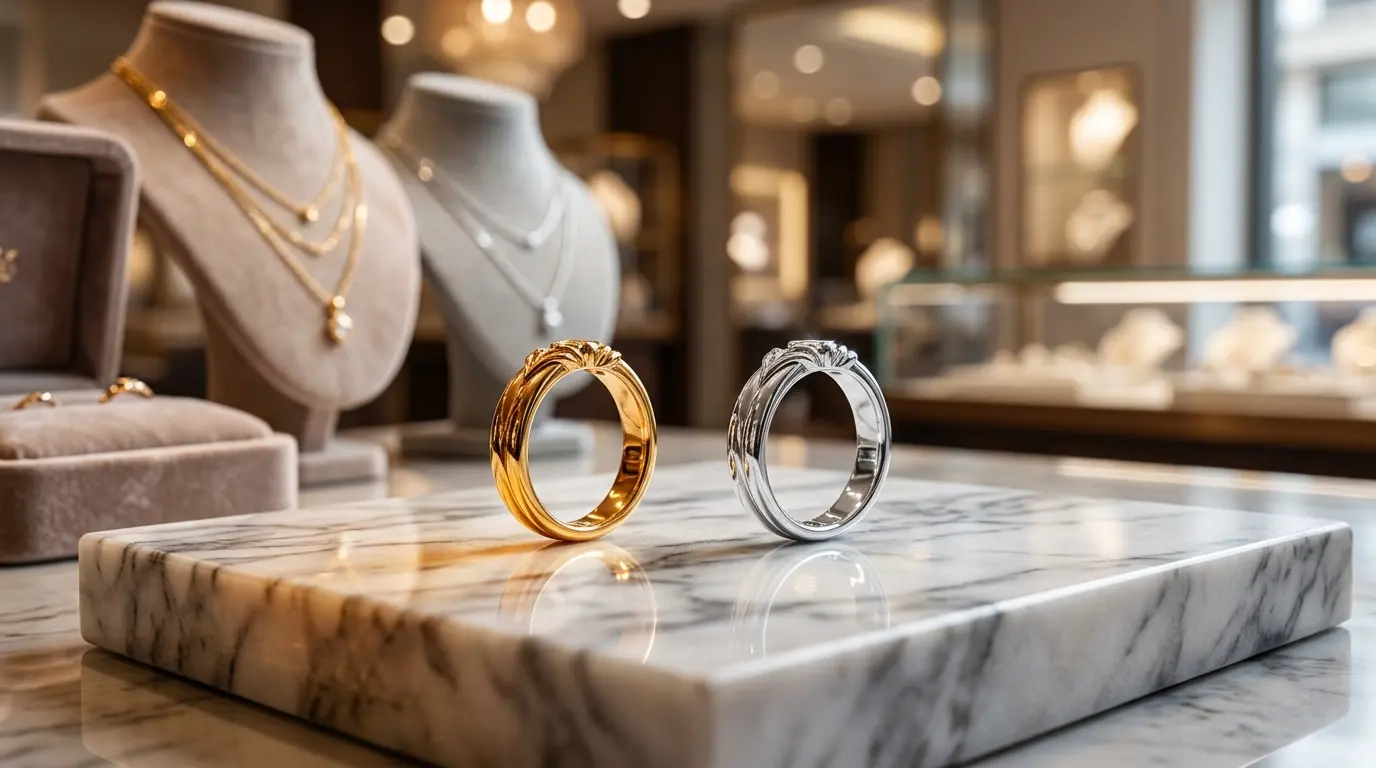
You’re standing in a jewelry store, staring at two rings. One is warm and yellow. One is cool and bright. Your hand freezes. Which one is “you”?
This is why so many people type “gold or silver” into Google. The question shows up everywhere: engagement rings, watches, home decor, phone cases, and even investing. People aren’t just curious about looks. They want to know what fits their skin tone, their budget, their style, and sometimes their portfolio.
The confusion is real because there’s no single right answer. Gold and silver serve different purposes, cost different amounts, and suit different people. A wedding band pick has nothing to do with an investment pick. A fashion choice has nothing to do with a home decor choice.
This article breaks down the gold vs. silver decision by context. You’ll get a quick answer, a look at where the debate comes from, practical advice for different situations, common mistakes people make, and real-world examples. By the end, you’ll know exactly which one fits your need.
Gold or Silver Quick Answer
Here’s the short version: it depends on what you’re choosing it for.
- Jewelry and skin tone: Gold suits warmer skin tones. Silver suits cooler skin tones. Neither is “better.”
- Budget: Silver costs less than gold, both in jewelry and as a raw metal.
- Investing: Gold is more stable and holds value better long-term. Silver is more volatile but can offer bigger short-term gains.
- Home decor: Gold reads as warm and luxurious. Silver reads as modern and cool.
- Durability: Gold resists tarnish better. Silver tarnishes faster and needs more upkeep.
If you want one-line advice: choose gold for warmth, tradition, and long-term value. Choose silver for cost savings, a modern look, and short-term flexibility.
The Origin of the Debate
Gold and silver have been compared for thousands of years, long before jewelry stores or stock markets existed. Ancient civilizations used both metals as currency. Egyptians prized gold for its link to the sun and the gods. Many cultures valued silver for its connection to the moon and its use in trade.
Over time, gold became the metal of kings, weddings, and lasting wealth. Silver became the metal of everyday trade, tools, and later, fashion-forward style. This history still shapes how we think about the two metals today. Gold feels traditional and formal. Silver feels practical and modern.
The debate also grew because both metals are used in the same categories jewelry, coins, and investments but they behave differently in each one. That overlap is exactly why people keep comparing them.
Gold vs Silver Key Differences
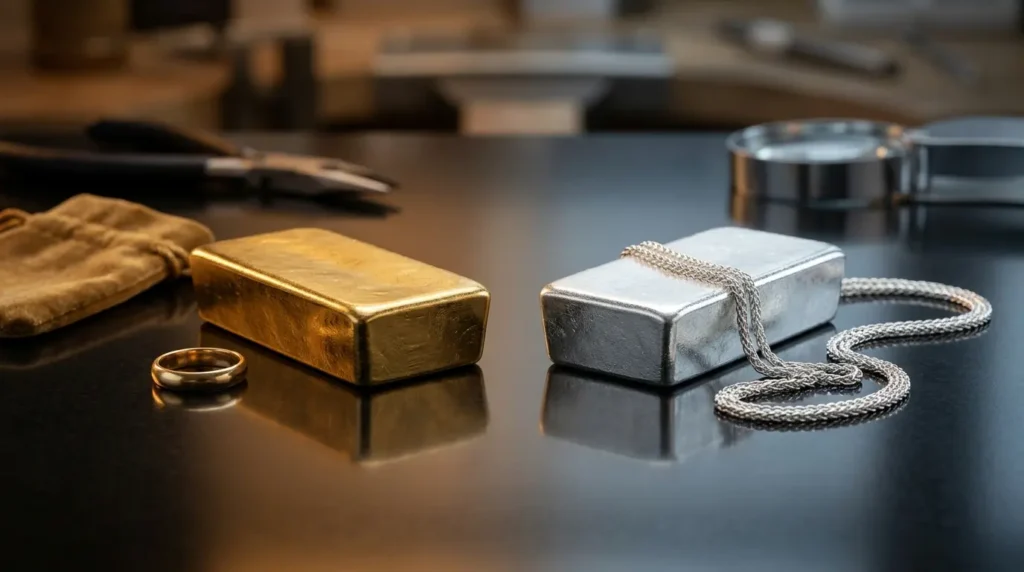
Just like spelling has rules, gold and silver have measurable differences that explain why one might suit you better than the other.
Color and tone: Gold is warm and yellow (or rose, or white, depending on alloy). Silver is cool and bright white.
Price: Gold trades at a much higher price per ounce than silver. As of recent years, gold has often traded at 70–90 times the price of silver.
Tarnish resistance: Gold does not tarnish. Silver tarnishes with air exposure and needs regular cleaning.
Weight: Gold is denser and heavier than silver.
Market behavior: Gold is seen as a “safe haven” asset. Silver is more industrial and swings more with market demand.
| Factor | Gold | Silver |
| Color | Warm, yellow/rose/white | Cool, bright white |
| Price (per ounce) | Higher | Lower |
| Tarnish | Resistant | Tarnishes over time |
| Best for skin tone | Warm undertones | Cool undertones |
| Investment style | Stable, long-term | Volatile, short-term |
| Common uses | Wedding rings, bullion, luxury decor | Fashion jewelry, flatware, industrial use |
| Maintenance | Low | Higher (needs polishing) |
Which One Should You Choose?
The right choice depends on your situation. Here’s how to decide by use case.
For jewelry and wedding rings: Check your skin’s undertone. Look at the veins on your wrist. Blue or purple veins usually mean cool undertones silver, white gold, or platinum will suit you. Green veins usually mean warm undertones yellow gold or rose gold will suit you.
For everyday accessories: Silver is more affordable and pairs well with casual, modern outfits. Gold pairs well with formal or classic looks.
For investing: If you want stability and are investing for the long term, gold is the safer bet. If you have a higher risk tolerance and want to try for bigger short-term returns, silver can offer that but expect more price swings.
For home decor: Gold accents suit warm, traditional, or luxury-style rooms. Silver accents suit modern, minimalist, or industrial-style spaces.
For gifts: When in doubt, silver is a safer, lower-cost gift. Gold signals a bigger, more formal gesture.
Common Mistakes People Make
Mistake 1: Assuming one metal is “better” overall. There is no universal winner. The right choice depends entirely on the use case.
Mistake 2: Ignoring skin tone when buying jewelry. People often buy based on trends instead of what actually flatters them, then wonder why the piece doesn’t look right.
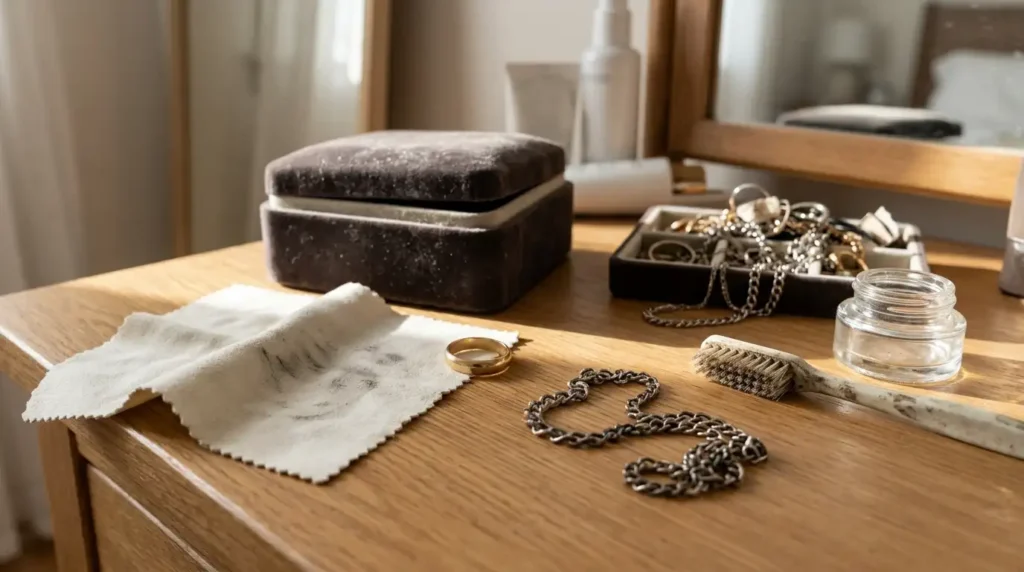
Mistake 3: Treating silver jewelry like gold jewelry. Silver needs more frequent cleaning and polishing. Skipping this care leads to tarnish and disappointment.
Mistake 4: Investing in gold or silver without a plan. Some buyers jump into precious metals during a price spike without understanding long-term versus short-term goals. This often leads to buying high and selling low.
Mistake 5: Mixing metals without a plan. Wearing gold and silver together can look great, but doing it randomly (not intentionally) often looks messy instead of stylish.
Gold or Silver in Everyday Examples
In emails: “I’m torn between gold or silver for the wedding bands can we look at both in person before deciding?”
In news headlines: “Gold or Silver: Which Metal Should You Buy During Inflation?”
On social media: A caption under a jewelry photo reading “gold or silver, which one is your vibe? 🤍✨”
In formal writing: “When evaluating precious metal investments, analysts often debate gold or silver as the more prudent long-term holding, given their differing volatility profiles.”
In retail: A product page offering the same necklace “available in gold or silver” as a dropdown option.
Gold or Silver Search Trends & Usage Data

Search interest in “gold or silver” spikes around two main periods: engagement season (November through February, tied to holiday proposals) and periods of economic uncertainty, when investment searches rise.
By region, searches skew differently. In the US and UK, jewelry-related searches dominate, especially around wedding planning. In markets with strong gold-buying traditions, such as India and parts of the Middle East, searches lean more toward investment and cultural gifting occasions, like weddings and festivals.
Context matters too. On shopping sites, “gold or silver” usually reflects a styling decision. On financial news sites and forums, it usually reflects an investment question. Recognizing which context you’re in helps you find the right answer faster instead of sorting through unrelated advice.
| Keyword Variation | Typical Search Intent |
| gold or silver | General comparison, jewelry or investing |
| gold or silver ring | Jewelry, style/skin tone decision |
| gold or silver wedding band | Jewelry, formal/traditional decision |
| gold or silver for skin tone | Jewelry, personal styling |
| gold vs silver investment | Finance, long-term vs short-term strategy |
| gold or silver jewelry | Fashion and accessories |
| is gold or silver better | Open-ended, needs context-based answer |
Frequently Asked Questions
Is gold or silver better for engagement rings?
Neither is objectively better. Gold (especially white gold) is a classic, durable choice. Silver is more affordable but softer and less common for daily-wear engagement rings because it scratches more easily.
Is gold or silver a better investment right now?
Gold tends to be more stable and is often used as a hedge against inflation. Silver is more volatile, with potential for bigger gains or losses. Your choice depends on your risk tolerance and timeline.
How do I know if gold or silver suits my skin tone?
Check the veins on your wrist in natural light. Blue or purple veins usually suit silver or white gold. Green veins usually suit yellow or rose gold.
Does gold or silver tarnish faster?
Silver tarnishes much faster than gold. Gold resists tarnish and oxidation, which is why it holds its shine longer with less maintenance.
Is gold or silver more expensive?
Gold is significantly more expensive than silver per ounce, often by 70 to 90 times, depending on current market prices.
Can I wear gold and silver together?
Yes. Mixing metals is a common, modern styling choice. The key is doing it intentionally, such as layering necklaces of both tones or picking one dominant metal and using the other as an accent.
Which is better for everyday jewelry, gold or silver?
Gold is more durable for daily wear and needs less upkeep. Silver is more budget-friendly but requires more frequent cleaning to avoid tarnish.
Conclusion
So, gold or silver? The answer is simple: let the purpose decide.
If you want warmth, tradition, and something that lasts with little upkeep, pick gold. It suits warm skin tones, holds its shine, and tends to hold its value over time. If you want a modern look, a lower price, and don’t mind occasional polishing, pick silver. It suits cool skin tones and works well for everyday pieces or short-term financial plays.
Buying jewelry? Start with your skin tone. Thinking about investing? Start with your risk tolerance and timeline. Shopping for decor or a gift? Start with your budget and the mood you want to create.
There’s no universal winner here, and that’s the whole point. Gold and silver aren’t competing for the same job. Once you’re clear on what you actually need daily durability, long-term value, a lower price, or a specific look the right metal picks itself.

“I’m Ibadat Fatima, a professional content writer and author with 3 years of experience in writing, editing, and storytelling. I share my work through visitlivo.com, where I help readers connect with clear, engaging, and well-crafted content.”