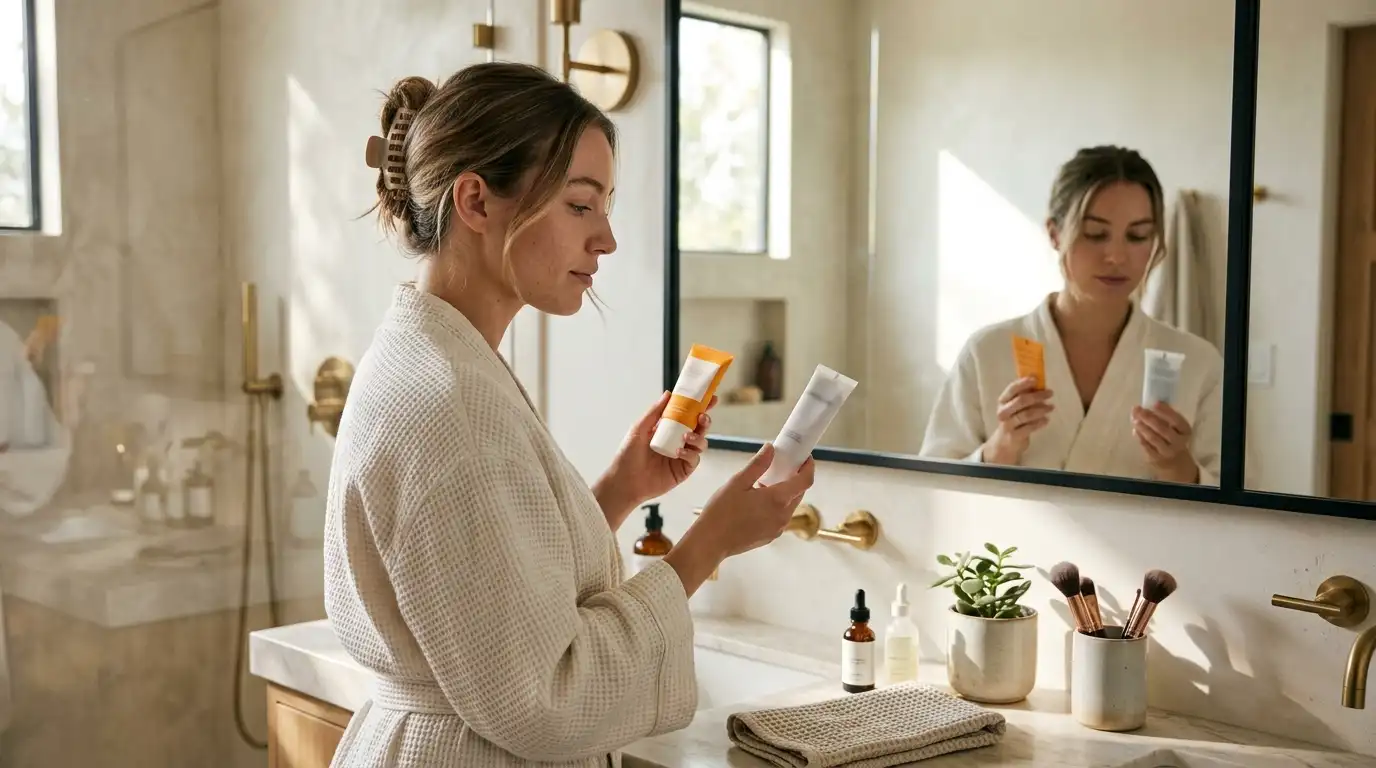
If you’ve ever stood in front of your mirror holding two bottles, wondering which one goes on your face first, you’re not alone. “Sunscreen or primer first” is one of the most searched skincare-makeup questions online. Beauty routines have changed. Sunscreen used to be a beach-day item. Now it’s a daily skincare step. Primer used to be the first makeup step. Now these two rules bump into each other, and people get stuck.
The confusion is simple to explain. Skincare experts say sunscreen needs to sit on clean skin to protect it. Makeup experts say primer needs to be the first layer so makeup lasts longer. Both can’t be first. So which wins?
This article gives you the quick answer, the reasons behind it, common mistakes, and real examples so you never have to guess again.
Sunscreen or Primer First Quick Answer
Sunscreen goes first. Primer goes second.
Here’s the simple order:
- Cleanser
- Moisturizer
- Sunscreen
- Primer
- Foundation and rest of makeup
Sunscreen is skincare. It needs direct contact with your skin to work. Primer is makeup. It sits on top to help your foundation glide on and stay put. Think of sunscreen as your shield and primer as the smooth base for paint. The shield goes on first. The paint base goes on next.
Example: You wake up, wash your face, apply moisturizer, wait a minute, apply sunscreen, wait a few minutes, then apply primer before foundation.
The Origin of This Skincare Confusion
This question is fairly new. Daily sunscreen use only became a mainstream habit in the last 10 to 15 years. Before that, sunscreen was mostly for summer or the beach. Primer, on the other hand, has been part of makeup routines for decades, mostly used by makeup artists.
As dermatologists pushed daily SPF for skin health, and beauty brands pushed primer for flawless makeup, both products landed in the same routine. Nobody agreed on an order at first. That’s why searches for “sunscreen or primer first” grew fast, especially after skincare and makeup content merged on social media.
The short answer settled over time: skincare always goes before makeup. Sunscreen counts as the last skincare step. Primer counts as the first makeup step.
Sunscreen First vs Primer First Comparison
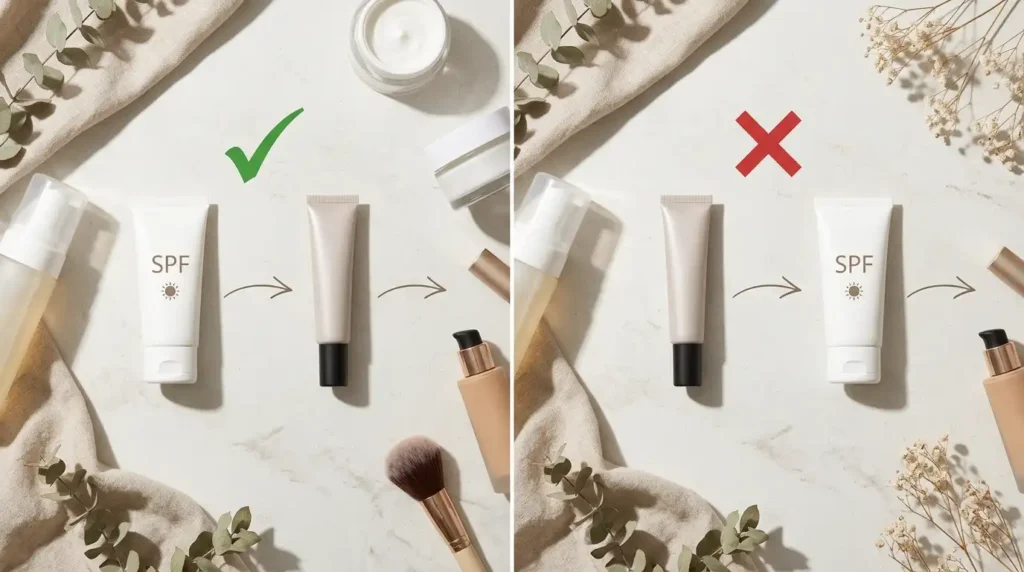
Some people still apply primer before sunscreen by habit or confusion. Here’s how the two approaches compare.
| Factor | Sunscreen First (Correct) | Primer First (Incorrect) |
| Sun protection | Full, direct contact with skin | Reduced, sunscreen can’t fully absorb |
| Makeup longevity | Normal to good | Can look patchy or slide |
| Skin barrier | Protected | Less protected |
| Dermatologist recommendation | Yes | No |
| Common in tutorials | Yes, standard order | Rare, usually a mistake |
Which Order Should You Use
If you wear makeup daily: Sunscreen, wait 2–3 minutes, then primer, then foundation. This is the standard routine most dermatologists and makeup artists agree on.
If you have oily skin: Use a lightweight, matte sunscreen first. Then a mattifying primer. This avoids a greasy layer under makeup.
If you have dry skin: Use a hydrating sunscreen first. Then a hydrating or glow-boosting primer. This prevents flaking.
If you’re new to SPF: Start simple. Sunscreen always comes before any makeup step, no exceptions. Once that’s a habit, layering primer on top becomes easy.
If you use tinted sunscreen or a sunscreen-primer combo: Some products combine both. In that case, one step replaces two, and you apply it where sunscreen would normally go.
Common Mistakes with Sunscreen and Primer Order
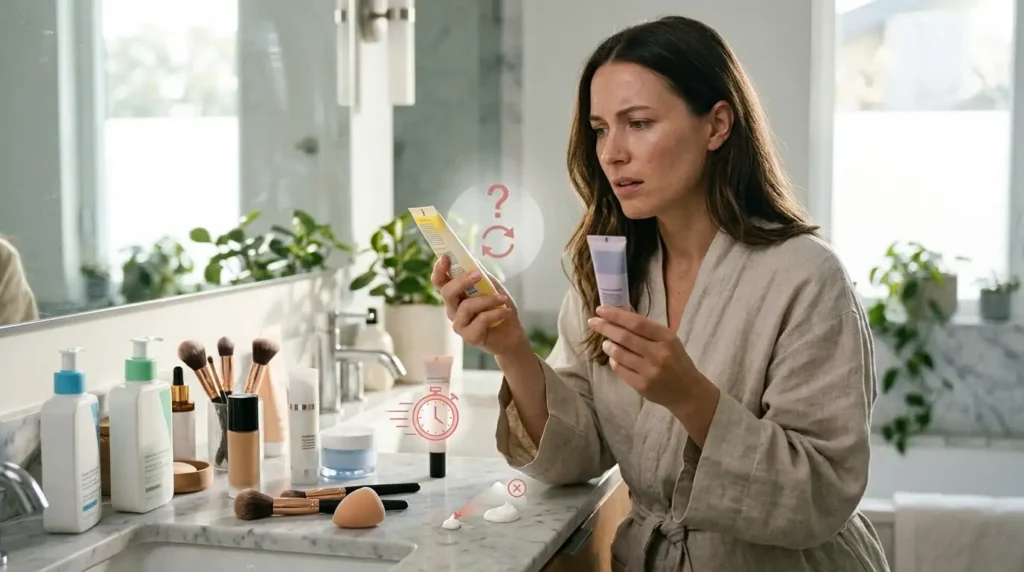
- Applying primer before sunscreen. This blocks sunscreen from bonding with skin properly.
- Not waiting between steps. Apply sunscreen, then wait a few minutes before primer so it sets.
- Skipping sunscreen on cloudy or indoor days. UV rays still reach your skin through clouds and windows.
- Using too little sunscreen. Most people apply half the amount needed for real protection.
- Mixing sunscreen and moisturizer to save a step. This weakens the SPF strength. Apply them as separate layers.
- Rubbing products in too fast. Sunscreen needs gentle, even application, not quick rubbing, to protect skin evenly.
Sunscreen or Primer First in Everyday Life
In a text to a friend: “Wait, do I put sunscreen or primer first? I always mix it up 😅”
In a beauty influencer’s video caption: “Sunscreen ALWAYS goes before primer. Skincare first, makeup second. Save this for your morning routine!”
In a dermatologist’s article: “Patients often ask If sunscreen or primer comes first. Sunscreen should always be applied directly to clean skin to ensure proper protection.”
In a product review: “This primer works great, but only after sunscreen. I tried it the other way and my makeup didn’t set well.”
In a workplace beauty forum post: “New to office life and need a fast morning routine. Is it sunscreen or primer first? Trying to keep my skin protected under office lights too.”
Sunscreen or Primer First Search Trends and Popularity

This question spikes every spring and summer, when sun exposure and makeup routines both increase. It’s especially popular among:
- Beginners in skincare, often teens and young adults building their first routine.
- Makeup users switching to SPF-first habits after dermatologist advice trends online.
- Countries with strong sun exposure, like the US, Australia, and parts of Southeast Asia, where SPF awareness is high.
- Beauty content platforms, where short videos explaining “get ready with me” routines often repeat this exact question.
Searches for this term have grown alongside general interest in skincare routines, layering order, and SPF education. It’s now considered a beginner-level skincare question, similar to “cleanser or toner first.”
Keyword Variations Compared
| Search Phrase | Meaning | Answer |
| Sunscreen or primer first | Order of skincare vs makeup | Sunscreen first |
| Moisturizer or sunscreen first | Order within skincare | Moisturizer first |
| Primer or foundation first | Order within makeup | Primer first |
| Sunscreen before or after makeup | General placement | Before makeup |
| Do you put sunscreen under makeup | Confirms sunscreen is a base step | Yes |
FAQs
Does sunscreen go before or after primer?
Sunscreen goes before primer. Apply sunscreen on clean, moisturized skin, then follow with primer.
Can I skip primer and just use sunscreen?
Yes. Primer is optional. Sunscreen is essential every day, with or without makeup.
How long should I wait between sunscreen and primer?
Wait 2 to 3 minutes so the sunscreen sets and doesn’t mix with the primer.
Does putting primer first ruin sun protection?
It can reduce it. Sunscreen needs direct skin contact to form an even, protective layer.
What if my primer has SPF in it?
Primer with SPF is a bonus, not a replacement. Still apply a full-coverage sunscreen first for reliable protection.
Is the order different for oily skin?
No, the order stays the same. Choose lightweight, oil-free formulas for both steps instead.
Do dermatologists agree on this order?
Yes. Most dermatologists recommend sunscreen as the final skincare step, applied before any makeup, including primer.
Conclusion
The sunscreen or primer question has one clear answer: sunscreen always comes first. It’s a skincare step that protects your skin from sun damage, and it needs to touch your skin directly to work well. Primer comes after, as the first step of your makeup routine, helping foundation apply smoothly and last longer.
The confusion made sense at first, since skincare and makeup routines used to be separate. Now they blend together every morning, and the simple rule to remember is skincare first, makeup second.
Stick to this order: cleanser, moisturizer, sunscreen, primer, then makeup. Wait a few minutes between sunscreen and primer so each layer sets properly. If you have oily, dry, or combination skin, this sequence keeps your skin protected and your makeup looking good all day.
Once this order becomes a habit, you’ll never have to second-guess your morning routine again.
Discover More Article

I’m Raheela Rani, a professional content writer and author with 3 years of experience in writing, editing, and storytelling. Through VisitLivo.com, I create clear, engaging, and well-crafted content that helps readers learn, connect, and communicate with confidence.