You are typing fast. You reach the word and pause. Is it label or lable? You search for the answer. You are not alone. Many people do the same every day.
Why does this happen? The word sounds like it could end with “-able.” Think of table, cable, and stable. So the brain guesses “lable.” Then doubt sets in. Some people also wonder if the UK and the US spell it differently. That adds to the confusion.
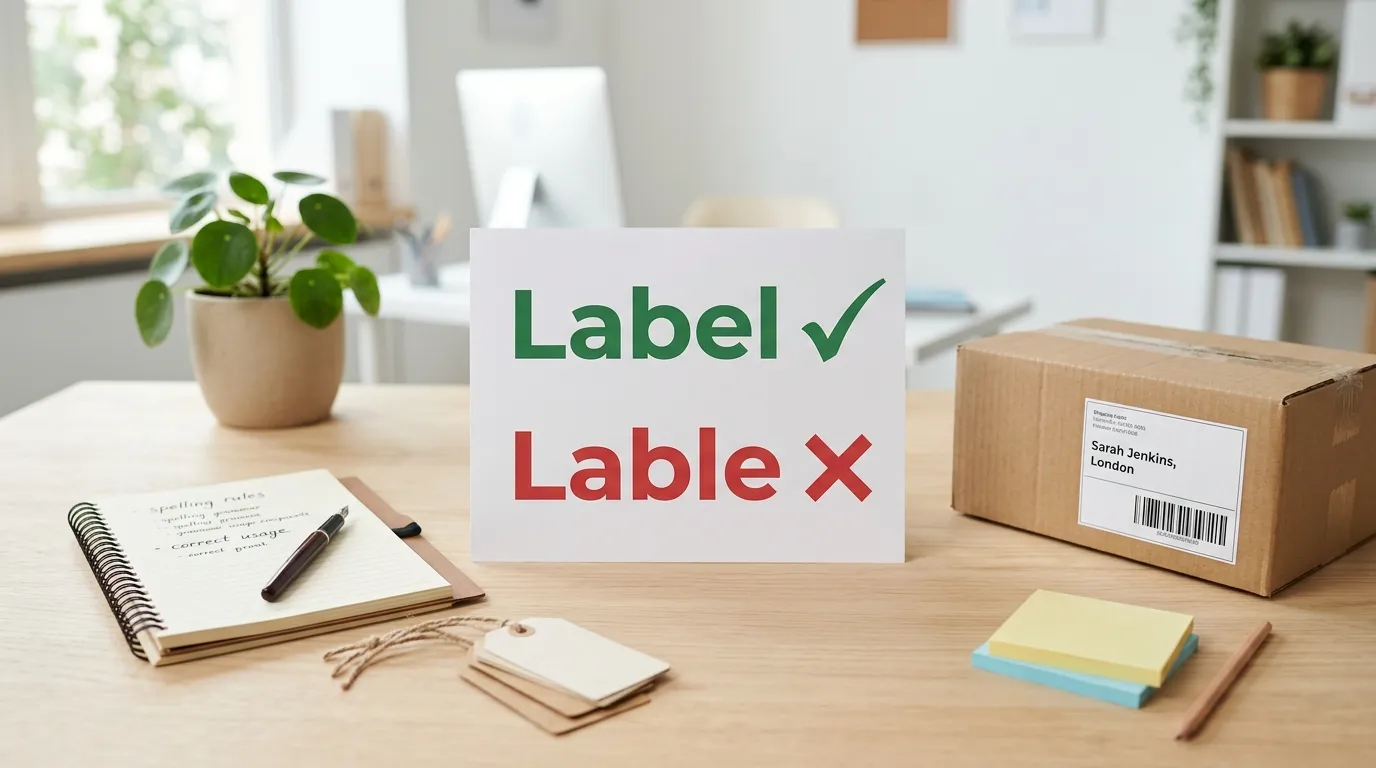
Here is the short truth. Label is the correct spelling. Lable is a typo. It is the same in British and American English. The real difference lies in words like labeled and labelled.
This guide clears it up. You will get a quick answer first. Then you will learn the word’s history, see clear examples, and spot common mistakes. You will also learn which spelling fits your readers. It only takes a few minutes to read. Let’s settle it once and for all.
Label or Lable Quick Answer
Label is correct. Lable is wrong.
There is no “lable” in any major English dictionary.”Lable” is not British. It is not American. It is a typo, plain and simple.
Right and wrong examples:
- ✅ Put a label on the box. ❌ Put a lable on the box.
- ✅ Please label each folder. ❌ Please lable each folder.
- ✅ The labels are red. ❌ The lables are red.
Memory trick: Label starts and ends with the letter L. It does not end with E.
The Origin of Label

The word label comes from Old French. It entered English around the 1300s. Back then, it meant a ribbon or a thin strip of cloth. Experts think the French word likely came from an older Germanic word for a flap or rag.
Over time, the meaning grew. A label became a strip of paper or cloth attached to something. Today it means a tag on a product, a name for a group, or a music company. It is also a verb: “to label.”
Why does “lable” exist? It comes down to sound. We say “LAY-bul.” The ending sounds like the end of table, cable, and fable. Many English words end in “-ble,” so writers copy that pattern by mistake.
Old English spelling was messy. But “lable” never became a standard form. It has always been an error, not a real variation.
British English vs American English Spelling
Here is the good news. The base word is the same in both. There is no UK version and US version of “label.” The difference shows up only when you add endings like -ed and -ing.
The rule: British English usually doubles the final L before -ed, -ing, and -er. American English usually keeps a single L.
| Word Form | American English | British English | Note |
| Base word | label | label | Same everywhere |
| Past tense | labeled | labelled | US single L, UK double L |
| Ongoing | labeling | labelling | US single L, UK double L |
| Person who labels | labeler | labeller | Rare word |
| Plural | labels | labels | Same everywhere |
| “Lable” | ❌ | ❌ | Always a typo |
The same pattern appears in other words:
- traveled (US) / travelled (UK)
- canceled (US) / cancelled (UK)
- modeling (US) / modelling (UK)
Which Spelling Should You Use?
The base word is easy. Always write label. Then choose your ending based on your readers.
- US audience: Use labeled and labeling.
- UK, Australia, New Zealand, and most Commonwealth readers: Use labelled and labelling. Canada also usually follows this style.
- Global audience: Pick one style and stick with it. If you are unsure, follow your company style guide. If you have none, match the country of most of your readers.
The most important rule is to stay consistent. Do not write “labeled” in one line and “labelled” in the next.
Common Mistakes with Label
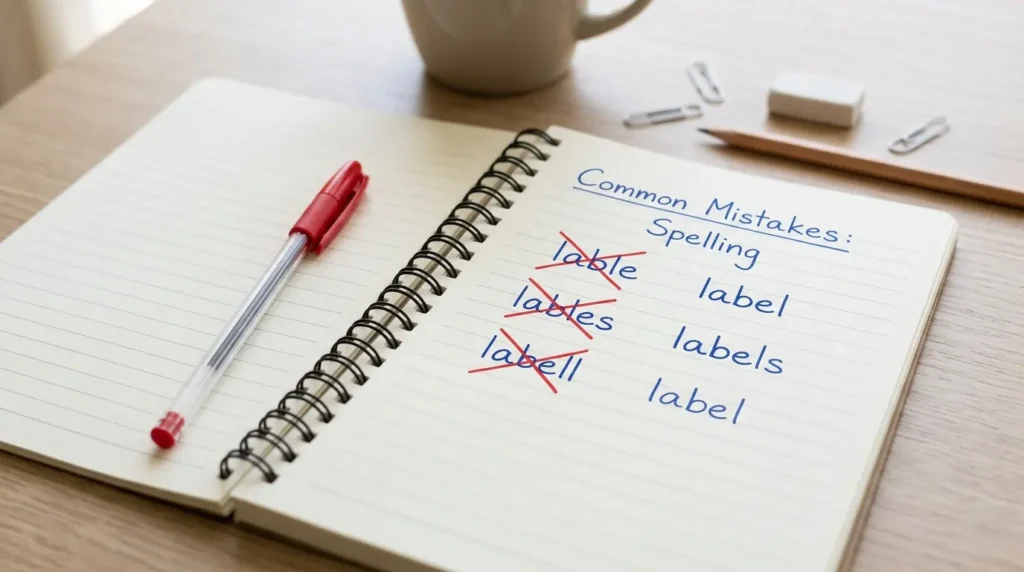
| Mistake | Fix | Why it happens |
| lable | label | Sounds like table or cable |
| lables | labels | Same typo, plural form |
| labell | label | Extra L added by accident |
| lablled | labelled | Typo plus double L |
| labeled and labelled in one text | Choose one | Mixing UK and US styles |
| <lable> in code | <label> | Code will not work with the typo |
The last one matters for web developers. HTML uses the tag <label>. A typo means the tag will not work.
Label in Everyday Examples
Emails
- “Please label the attachments before you send them.”
- “I have labelled each section for easy reading.” (UK style)
News
- “The company will label all products made in the country.”
- “Officials said the bottles were mislabeled.” (US style)
Social media
- “Don’t label people. Get to know them.”
- “New label, same great taste!”
Formal writing
- “All samples must be clearly labeled with the date and time.”
- “The report labels each risk as low, medium, or high.”
Label or Lable Google Trends & Usage Data
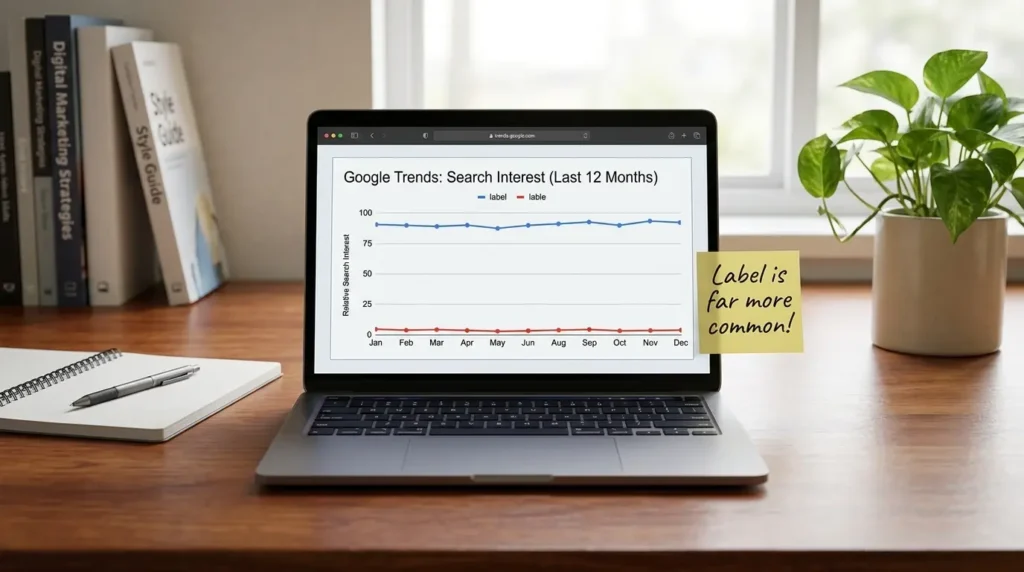
I can’t pull live Google Trends numbers here, so I won’t make any up. But here is what you can expect, and how to check it yourself.
- “Label” is far more common than “lable.” Real writing uses “label” almost every time. “Lable” shows up mostly as a typo or as a search from someone who is unsure.
- Country patterns. The variation you are most likely to see is between “labeled” (more US) and “labelled” (more UK, Australia, and Canada). It will not be between “label” and “lable.”
- Context patterns. “Label” is popular in shopping, food, music, and tech searches. “Lable” searches usually come from people checking spelling.
How to check: Go to Google Trends. Enter “label” and “lable.” Set the region and date range you want. Then compare the lines.
Comparison Table: Keyword Variations Side by Side
| Variation | Correct? | Where used | Example |
| label | ✅ Yes | Worldwide | Add a label. |
| lable | ❌ No | Nowhere (typo) | — |
| labels | ✅ Yes | Worldwide | Check the labels. |
| lables | ❌ No | Nowhere (typo) | — |
| labeled | ✅ Yes | US | The jar is labeled. |
| labelled | ✅ Yes | UK, Commonwealth | The jar is labelled. |
| labeling | ✅ Yes | US | Labeling takes time. |
| labelling | ✅ Yes | UK, Commonwealth | Labelling takes time. |
FAQs
Is it label or lable?
It is label. “Lable” is a common typo.
Is “lable” a British spelling?
No. British English also uses “label.”
Why do people type “lable”?
The word sounds like table and cable. The brain copies that pattern.
Is it labeled or labelled?
Both are correct. Use “labeled” in US English. Use “labelled” in UK and Commonwealth English.
Is it labeling or labelling?
Same rule. “Labeling” is US. “Labelling” is UK and Commonwealth.
Will spell check catch “lable”?
Usually, yes. But some tools miss it in code, product names, or all-caps text. Always proofread.
What does “label” mean?
It can mean a tag on an item, a word used to describe someone, or a music company. As a verb, it means to attach a tag or give a name.
Can I use “lable” as a brand name?
You can, but readers may think it is a mistake. It may also hurt search results.
Conclusion
So, label or lable? The answer is simple. Label is right. Lable is wrong.
The word came from Old French and has kept the same spelling for a long time. It sounds like words such as table and cable, and that is why the typo happens. But sound does not change spelling.
Remember these key points. First, “label” is the same in the US, the UK, and everywhere else. Second, the only real difference is in the forms with endings. Americans write labeled and labeling. British, Australian, and Canadian writers usually write labelled and labelling. Third, pick one style and stay consistent.
Watch for common slips like lable, lables, and lablled. A quick read-through will catch them. Turn on spell check. Also check code and product screens, since a typo there can cause bugs or look unprofessional.
Here is a final trick. Label starts and ends with L. Say it, picture it, and you will not forget it. Now you can write it with confidence.

“I’m Ibadat Fatima, a professional content writer and author with 3 years of experience in writing, editing, and storytelling. I share my work through visitlivo.com, where I help readers connect with clear, engaging, and well-crafted content.”